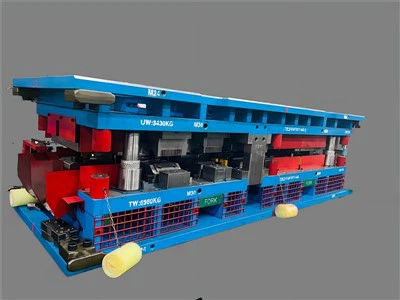
Hey there! As a supplier of checking fixtures, I've got a lot to share about the different types of these super useful tools. In the manufacturing world, checking fixtures are like the unsung heroes. They help ensure that parts are made to the right specifications, which is crucial for the quality and functionality of the final product. So, let's dive into the various types of checking fixtures.
1. Manual Checking Fixtures
Manual checking fixtures are the most basic and commonly used type. They're pretty straightforward – you use them by hand to check the dimensions and features of a part. These fixtures are often made of simple materials like aluminum or steel, and they're designed to be easy to handle.
One of the big advantages of manual checking fixtures is their cost - they're usually cheaper to produce compared to other types. They're also easy to set up and don't require any complex programming or electrical connections. For small - scale manufacturing or for checking parts that don't require extremely high precision, manual checking fixtures are a great choice.
For example, if you're making small plastic parts for a consumer product, a manual checking fixture can quickly tell you if the part's holes are in the right place, if the overall shape is correct, and if the part fits within the specified tolerances. You just place the part in the fixture and visually or manually check the critical dimensions.
However, manual checking fixtures do have some limitations. They rely on the operator's skill and consistency, so there can be some human error involved. Also, they're not very efficient for high - volume production because the checking process is relatively slow.
2. Automated Checking Fixtures
Now, let's talk about automated checking fixtures. These are the high - tech cousins of manual checking fixtures. Automated checking fixtures use sensors, cameras, and other advanced technologies to quickly and accurately measure parts.
With automated checking fixtures, you can check multiple dimensions and features of a part simultaneously. They're really fast, which makes them ideal for high - volume production lines. For instance, in an automotive manufacturing plant, where thousands of parts are produced every day, automated checking fixtures can keep up with the production speed and ensure that each part meets the strict quality standards.
Automated checking fixtures can also provide detailed data about the parts they check. This data can be used for process improvement, quality control analysis, and traceability. You can easily track which parts passed or failed the inspection, and you can identify any trends or patterns in the manufacturing process that might be causing quality issues.
But, automated checking fixtures do come with a higher price tag. They require more complex programming and maintenance, and you need to have trained technicians to operate them. Also, they're more sensitive to environmental factors like temperature and vibration, which can affect their accuracy.
If you're interested in the components that make up these checking fixtures, you can check out Checking Fixture Components. It has a great selection of parts that are used in both manual and automated checking fixtures.
3. Auto Checking Fixtures
Auto checking fixtures are a special type of automated checking fixture that are specifically designed for the automotive industry. As you know, the automotive industry has very high standards for quality and safety, and auto checking fixtures play a crucial role in meeting those standards.
These fixtures are used to check a wide range of automotive parts, from engine components to body panels. They can measure things like the flatness of a surface, the alignment of holes, and the overall shape of a part with extremely high precision.
Auto checking fixtures often use advanced measurement techniques like coordinate measuring machines (CMMs) and laser scanning. These technologies can capture detailed 3D data of the part, allowing for a more comprehensive inspection.
For example, when checking a car door panel, an auto checking fixture can measure the thickness of the panel at multiple points, check the alignment of the hinges, and ensure that the panel fits properly within the car's body. This helps to prevent issues like water leaks, wind noise, and misaligned doors in the final vehicle.
If you're in the automotive manufacturing business and need high - quality auto checking fixtures, take a look at Auto Checking Fixture. It offers a range of solutions tailored to the specific needs of the automotive industry.
4. Jig Checking Fixtures
Jig checking fixtures are another important type. Jigs are used to hold a part in a specific position during the manufacturing process, and jig checking fixtures are used to ensure that the jig is set up correctly and that it's holding the part accurately.
Jig checking fixtures are often used in machining operations, where precise positioning of the part is crucial. For example, when drilling holes in a metal part, the jig holds the part in place, and the jig checking fixture verifies that the jig's holes are in the correct location and that the part is properly aligned.
These fixtures can also be used to check the wear and tear of the jig over time. As jigs are used repeatedly, they can start to wear out, which can affect the accuracy of the parts being produced. By regularly checking the jig with a jig checking fixture, you can identify any issues early and make the necessary adjustments or replacements.
If you're looking for jig checking fixtures, Jig Checking Fixture has some great options. They offer fixtures that are designed to be reliable and accurate, helping you maintain the quality of your manufacturing process.
5. Functional Checking Fixtures
Functional checking fixtures are designed to test the functionality of a part rather than just its dimensions. These fixtures simulate the real - world conditions in which the part will be used and check if the part performs as expected.


For example, if you're making a switch for an electrical device, a functional checking fixture will test if the switch turns on and off properly, if it can handle the specified electrical current, and if it has the right amount of resistance.
Functional checking fixtures are very important for ensuring the reliability and safety of the final product. They can catch issues that might not be detected by dimensional checking alone. However, designing and building functional checking fixtures can be more complex because you need to accurately simulate the real - world conditions.
Conclusion
So, there you have it – the different types of checking fixtures. Each type has its own advantages and limitations, and the choice of which type to use depends on factors like the production volume, the required precision, the type of part being checked, and the budget.
As a checking fixture supplier, I understand the importance of having the right fixture for your manufacturing process. Whether you need a simple manual checking fixture for a small - scale operation or a high - tech automated checking fixture for a large - scale production line, we can help you find the best solution.
If you're interested in learning more about our checking fixtures or if you want to discuss your specific requirements, don't hesitate to reach out. We're always happy to have a chat and see how we can help you improve your quality control and manufacturing efficiency.
References
- "Manufacturing Engineering Handbook"
- "Quality Control in Manufacturing"
- Industry reports on checking fixture technologies