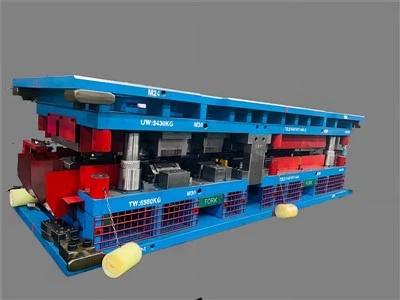
As a seasoned supplier of prototype dies, ensuring the proper ejection of parts from a prototype die is a critical aspect of our manufacturing process. This process not only affects the quality of the final product but also the efficiency and cost - effectiveness of production. In this blog, I will share some key strategies and techniques we use to guarantee the smooth ejection of parts.
Understanding the Basics of Part Ejection
Before delving into the methods, it is essential to understand the basic principles of part ejection. When a metal stamping operation is carried out using a prototype die, the formed part needs to be removed from the die cavity. If the ejection is improper, the part may get damaged, the die may be worn out prematurely, and the production process can come to a halt.
The ejection process is influenced by several factors, including the design of the die, the material properties of the part, and the stamping conditions. For example, the surface finish of the die, the draft angles, and the presence of undercuts all play significant roles in determining how easily a part can be ejected.
Die Design for Proper Part Ejection
The design of the prototype die is the first line of defense in ensuring proper part ejection. Here are some design considerations:
Draft Angles
Draft angles are crucial in die design. They are the taper added to the vertical walls of the die cavity to facilitate the ejection of the part. A draft angle of at least 1 - 3 degrees is typically recommended, depending on the material and complexity of the part. For materials with high friction coefficients, larger draft angles may be necessary. By incorporating appropriate draft angles, we can reduce the force required to eject the part and minimize the risk of part damage.
Ejection Pins Placement
Ejection pins are commonly used to push the formed part out of the die cavity. Proper placement of these pins is essential. They should be located in areas where the part is most likely to stick to the die, such as near deep recesses or areas with high surface contact. The number of ejection pins also needs to be carefully determined. Too few pins may not provide enough force for ejection, while too many can cause marks on the part surface.
Undercut Elimination
Undercuts are areas on the part where the shape prevents it from being easily removed from the die. In the design phase, we try to eliminate undercuts as much as possible. If undercuts cannot be avoided, we use special ejection mechanisms such as slides or lifters to release the part. For instance, in a Precision Progressive Die, which is often used for high - volume production, careful consideration of undercuts is crucial to ensure continuous and efficient part ejection.
Material Selection and Treatment
The choice of material for both the part and the die can significantly impact part ejection.
Part Material
The material properties of the part, such as its ductility, hardness, and friction coefficient, affect the ejection process. For example, materials with high ductility may deform during ejection, while materials with high friction coefficients may stick to the die. We work closely with our customers to select the most suitable material for their specific application. If necessary, we can recommend materials with lower friction properties or treat the part material to reduce friction.
Die Material
The die material also plays a vital role. High - quality die steels with good wear resistance and low friction coefficients are preferred. We often use materials such as D2 or H13 steel for our prototype dies. Additionally, surface treatments like nitriding or coating can be applied to the die to further reduce friction and improve the ejection process. These treatments create a hard, smooth surface that allows the part to slide out of the die more easily.
Stamping Process Optimization
The stamping process itself can be optimized to ensure proper part ejection.
Stamping Speed
In a high speed stamping die, the stamping speed needs to be carefully controlled. If the speed is too high, the part may not have enough time to fully deform and release from the die, leading to ejection problems. On the other hand, if the speed is too low, productivity will be affected. We conduct extensive testing to determine the optimal stamping speed for each prototype die, taking into account the material, part geometry, and die design.
Lubrication
Lubrication is another important factor. A proper lubricant can reduce the friction between the part and the die, making it easier to eject the part. The type of lubricant used depends on the material of the part and the stamping conditions. We have a range of lubricants available and can select the most appropriate one for each application. Lubrication also helps to extend the life of the die by reducing wear and tear.


Quality Control and Monitoring
Ensuring proper part ejection is an ongoing process that requires strict quality control.
Inspection During Production
During the production process, we conduct regular inspections of the ejected parts. We check for any signs of damage, such as scratches, cracks, or deformation. If any issues are detected, we immediately stop the production and investigate the cause. This may involve checking the die for wear or misalignment, adjusting the stamping process parameters, or changing the lubricant.
Die Maintenance
Regular die maintenance is crucial to ensure the long - term performance of the prototype die. This includes cleaning the die regularly to remove any debris or residue that may affect part ejection. We also inspect the ejection pins and other components for wear and replace them as needed. By keeping the die in good condition, we can minimize the risk of ejection problems and ensure consistent product quality.
Contact for Purchase and Negotiation
If you are looking for high - quality prototype dies that ensure proper part ejection, we are here to help. Our team of experienced engineers and technicians can work with you to design and manufacture the perfect prototype die for your specific needs. Whether you require a Precision Progressive Die, a high speed stamping die, or a Metal Stamping Tool And Die, we have the expertise and resources to deliver superior products. Contact us today to discuss your requirements and start the negotiation process.
References
- Dieter, G. E. (1988). Engineering Metallurgy: Principles and Applications. McGraw - Hill.
- Kalpakjian, S., & Schmid, S. R. (2009). Manufacturing Engineering and Technology. Pearson Prentice Hall.
- Lindberg, R. (1999). Metal Stamping Handbook. Society of Manufacturing Engineers.