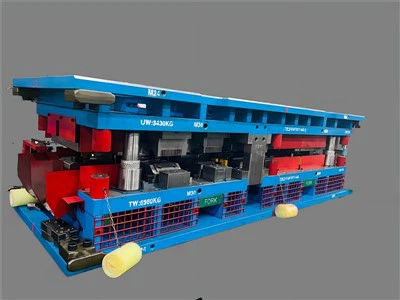
In the world of manufacturing, stamping parts play a crucial role in various industries, from automotive to electronics, and even Medical and Fiber Optic Parts. As a stamping parts supplier, I understand the significance of using the right software tools to ensure precision, efficiency, and cost - effectiveness in the design process. In this blog, I will explore some of the essential software tools used for stamping parts design.
CAD (Computer - Aided Design) Software
CAD software is the cornerstone of stamping parts design. It allows designers to create detailed 2D and 3D models of the stamping parts. With CAD, we can visualize the part from every angle, make accurate measurements, and perform various design modifications before moving on to the manufacturing stage.
One of the most popular CAD software packages in the industry is AutoCAD. AutoCAD offers a wide range of tools for drafting, dimensioning, and creating parametric models. Its user - friendly interface makes it accessible for both novice and experienced designers. For stamping parts, AutoCAD can be used to design the flat pattern of the part, which is crucial for the stamping process. The flat pattern design helps in determining the blank size and shape, which directly affects the material usage and the cost of production.
Another powerful CAD software is SolidWorks. SolidWorks is known for its advanced 3D modeling capabilities. It allows designers to create complex geometries, perform assembly modeling, and conduct virtual simulations. In stamping parts design, SolidWorks can be used to simulate the stamping process, predict potential defects such as wrinkles and cracks, and optimize the part design accordingly. For example, we can use the simulation tools in SolidWorks to analyze the stress distribution during the stamping operation and make design changes to reduce stress concentrations.
CAM (Computer - Aided Manufacturing) Software
Once the stamping part design is completed in CAD, CAM software comes into play. CAM software is used to generate the toolpaths and machining instructions for the stamping machines. It bridges the gap between the design and the manufacturing process.
Mastercam is a widely used CAM software in the stamping industry. It offers a comprehensive set of features for programming stamping operations. Mastercam can generate toolpaths for various stamping processes, including blanking, punching, bending, and forming. It also allows for the optimization of toolpaths to reduce machining time and improve the quality of the stamped parts. For instance, the software can automatically calculate the best cutting sequence and feed rates to minimize the wear and tear of the stamping tools.


PowerMill is another high - end CAM software that is suitable for stamping parts manufacturing. PowerMill is known for its ability to handle complex machining operations with high precision. It can generate smooth and efficient toolpaths for multi - axis stamping machines. This is particularly useful for producing Precision Stamped Parts that require tight tolerances.
FEA (Finite Element Analysis) Software
FEA software is used to analyze the mechanical behavior of the stamping parts under different loading conditions. It helps in predicting the performance of the parts and identifying potential design flaws before production.
ANSYS is a leading FEA software in the engineering industry. ANSYS can be used to simulate the stamping process by analyzing the deformation, stress, and strain of the metal sheet during the stamping operation. It can also be used to study the effects of different material properties on the stamping results. For example, we can use ANSYS to compare the stamping performance of different grades of steel and select the most suitable material for the part.
Abaqus is another powerful FEA software that is widely used in the stamping industry. Abaqus offers a wide range of material models and element types, which makes it suitable for simulating complex stamping processes. It can accurately predict the formation of defects such as springback, which is a common problem in stamping operations. By using Abaqus to analyze and optimize the design, we can reduce the need for costly trial - and - error in the production process.
DFM (Design for Manufacturing) Software
DFM software focuses on evaluating the manufacturability of the stamping part design. It helps designers to identify potential manufacturing issues early in the design phase and make necessary modifications to improve the production efficiency and reduce costs.
DFMA (Design for Manufacture and Assembly) is a well - known DFM software. It provides a set of guidelines and rules for designing stamping parts that are easy to manufacture and assemble. DFMA can analyze the part design in terms of material selection, part complexity, and manufacturing processes. For example, it can recommend the best way to reduce the number of stamping operations by simplifying the part geometry or combining multiple features into one.
Stampack is a specialized DFM software for stamping parts. It offers a comprehensive solution for evaluating the stamping process from start to finish. Stampack can simulate the entire stamping process, including material flow, die filling, and defect formation. It can also provide detailed reports on the manufacturability of the part, such as the feasibility of the stamping operation, the required press force, and the expected scrap rate.
The Importance of Integrating Software Tools
In modern stamping parts design, it is essential to integrate these software tools to achieve the best results. For example, by integrating CAD and CAM software, we can ensure that the design created in CAD can be accurately translated into machining instructions for the stamping machines. The seamless transfer of data between the two software reduces the risk of errors and improves the overall efficiency of the design - to - manufacturing process.
Integrating FEA and DFM software with CAD and CAM can also provide a more comprehensive approach to stamping parts design. By using FEA to analyze the mechanical performance of the part and DFM to evaluate its manufacturability, we can optimize the design to meet both the functional requirements and the manufacturing constraints. This integrated approach helps in reducing the development time, improving the quality of the stamped parts, and ultimately increasing the competitiveness of our products in the market.
Conclusion
As a stamping parts supplier, the use of appropriate software tools is crucial for delivering high - quality products to our customers. CAD, CAM, FEA, and DFM software each play a unique role in the stamping parts design process. By leveraging these software tools effectively, we can improve the design accuracy, optimize the manufacturing process, and reduce costs.
If you are in need of stamping parts for your project, whether it is Medical and Fiber Optic Parts or Precision Stamped Parts, we are here to help. Our team of experienced designers and engineers is well - versed in using these advanced software tools to meet your specific requirements. We invite you to contact us for a detailed discussion on your stamping parts needs and to explore the possibilities of a successful partnership.
References
- "CAD/CAM: Principles and Applications" by Paul W. Graham
- "Finite Element Analysis: Theory and Application with ANSYS" by J.N. Reddy
- "Design for Manufacture and Assembly" by Boothroyd Dewhurst Inc.