


Electronic Components
Company Profile
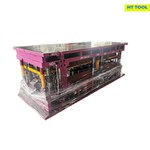
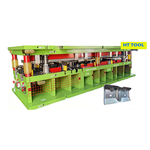
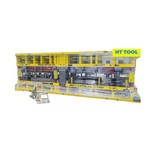
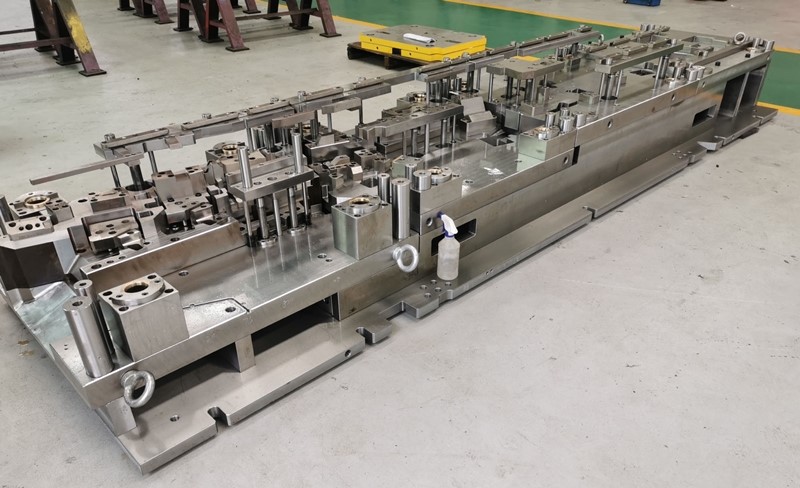
HT TOOL is highly experienced with Progressive Tooling from medium to high complex parts up to 1300mm width. Our costumers can expect to achieve the maximum productivity/quality from our progressive tools.
Why Choose Us
Rich Experience
Continuously providing our customers with diverse and highest quality die making services and delivering first-class metal stamping dies and parts with precision, accuracy, speed and efficiency.
One-stop Solution
HT TOOL is committed to providing reliable one-stop solutions for the tool and die industry, and through our strengths to become the preferred supplier within the metal stamping die industry.
Professional Team
In tooling design department, we are able to provide a comprehensive service to our customers. Our project managers (x2) are in permanent contact with our customers during the project development process and during the mass production of the dies.
Customized services
Our assembly units offer maximum flexibility to meet our customers' needs, adding value to each part with customer satisfaction in mind.

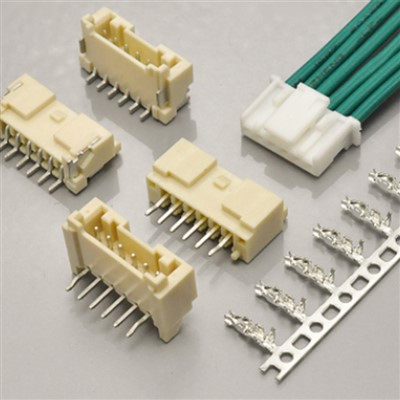

Electronic components are the parts used in devices that construct electronic circuits. They change the electric current so it can carry information and help in the functions of that circuit. Generally, these components can be classified into two types – active components and passive components.
Electronic components can be found in nearly every device that touches our fingertips. They are vital to a multitude of gadgets throughout the world; from the military jet engine, to smart home devices and automobiles, to simply switching on a light.
Benefits of Electronic Components
Weight and small size
Electronic components are usually extremely lightweight and small, which helps make them best for use in portable gadgets. For instance, manufacturers use lighter and smaller electronic components to make smartphones than the components that they use to manufacture a computer.
Low energy consumption
Manufacturers can design electrical components to consume very little energy, which helps manufacturers use them to make battery-powered gadgets. For instance, a smartwatch’s electrical components consume less energy than a laptop computer’s electrical components.
High reliability
Manufacturers can design extremely reliable electronic components, which tells us that they can remain intact even after getting exposed to extreme atmospheres and operate for several years. For instance, manufacturers equip the electronic components in a vehicle’s engine control unit with the ability to tolerate extreme vibrations and temperatures. They can produce highly reliable electrical components by taking these steps.
Utilize high-quality materials
The materials that manufacturers use to make electrical components play a significant role in making them reliable. Manufacturers can use high-quality substances that are resistant to heat, corrosion, and other atmospheric factors.
Utilize precision production procedures
Manufacturers must employ precision production methods to minimize defects. This will help them ensure that they produce highly reliable and precise electrical components.
Type of Electronic Components
Resistor(R1 R2 R3......)
Resistors are one of the most commonly used components in electronic circuits. They are used to limit the size of current and play the roles of voltage reduction, shunting, and current limiting. In the circuit, it acts like a "traffic policeman", ensuring that the current flows along the prescribed route and direction.
Capacitor(C1 C2 C3......)
Capacitor is a component that can store electrical energy and is widely used in filtering, coupling, tuning and other circuits. It is like a "reservoir" in the electronic world, capable of releasing stored electrical energy when needed.
Inductor(L.....)
Inductor is a component that can store magnetic field energy and is mainly used in circuits such as filtering, oscillation, and voltage transformation. In AC circuits, it can hinder the change of current through self-induction phenomenon and play a role in stabilizing the current.
Diode(D....)
A diode is a semiconductor device with unidirectional conductivity and is widely used in circuits such as rectification, detection, and voltage stabilization. It is like a "one-way valve" in the electronic world, ensuring that current can only flow in the specified direction.
Transistor(T1 T2 T3.......)
The transistor is a semiconductor device with amplification and switching functions. It is a key component to achieve amplification, oscillation and other functions of electronic circuits. In the circuit, it is like an "amplifier" that can amplify weak signals into stronger signals.
Field effect transistor(FET.....)
Field effect transistor is a semiconductor device that uses electric field effect to control current. It has the advantages of high input resistance and low noise. It is widely used in amplification, switching and other circuits.
Surface Finishes For Parts For Electronic Components
Surface finishes can provide parts with enhanced aesthetics, durability, and functionality. Here are five commonly used surface finishes, with examples of how they could be used in electronic components-related applications.
Anodizing
Anodized aluminum surfaces with enhanced corrosion resistance and an attractive finish find application in electronic components like aerospace components and medical instruments, where durability and appearance are critical.
Electroplating
Electroplated coatings like gold or chrome enhance the conductivity and appearance of connectors, switches, and buttons in various electronic systems, including telecommunications equipment and automotive electronic components.

Painting and powder coating
These finishes provide customized colors and protective layers for plastic and metal components in electronic applications such as industrial control panels and outdoor electronic components, ensuring both functionality and aesthetics.
Brushed and polished finishes
Stainless steel and aluminum components can be brushed or polished to achieve a premium appearance in electronic devices like high-end audio equipment, laboratory instruments, and precision measurement tools, enhancing their overall appeal.
Raw Materials Used in the Manufacture of Electronic Components
Metals
Copper is often used for its excellent conductivity and malleability (the ability to be shaped and mashed). Nckel, chromium, aluminum, lead, silver and tin are also used. These metals go into components such as resistors, capacitors and transducers.
Plastics and Other Petroleum-Based Materials
Plastics and other petroleum-based materials are used in electronic components mostly for their insulating and heat-resistant properties. Polystyrene, polyethylene terephthalate (PET) and polyvinylchlorate (PVC) are widely used in components such as capacitors and thermistors.
Minerals and Non-Metallic Materials
Silicon — considered a metalloid, or semimetal — is used in microchips and semiconductors. Other nonmetal or semimetal materials are antimony, bismuth, cobalt, fluorite, garnet, magnesium and talc.
Other Raw Materials
Ceramics are used as insulators in a variety of electronic components. Certain clays, glasses, calcium (in various forms), gold and carbon (in various forms are also often used.
The uses for Electronic Components
Many applications, including automation, robotics, biomechanics, power electronics, mechatronics, renewable energy applications, photovoltaic systems, etc., require electronic components. We’ll also go over how electronics are used in various applications.
Robotics:
Manufacturing industries, semiconductor industries, packing, material assembly, material handling procedures, etc., employ robots to carry out various automated activities. Diodes, LEDs, rectifiers, power supplies, voltage regulators, transistors, and relays are some of the electrical components utilized in the robotics industry. In addition, each mechanized operation needed electronic parts to build a model. Hence, the electronic component is essential in every industry.
Automation:
Several electronic components are employed in a variety of devices that are used in the automation sector.
Electronic power
The conversion or control of electric power using electronic equipment is known as power electronics. Inverters, batteries, converters, variable speed motors, etc., are examples of common components. For greater effectiveness, power loss prevention is required. Thus, the electronic component is necessary for the power electronics system’s quick reaction.
Mechatronics
Mechatronics, as its name suggests, combines mechanical and electrical elements. The system, operations, construction, design, and procedures are all subject to enhanced control. Actuators, sensors, mechanical parts, and controls make up the majority of mechatronics.
How Electronic Components Work
Electronic components work by manipulating the flow of electrical current within electronic circuits to perform specific functions. Each component has a unique role and behavior that contributes to the overall operation of the circuit.
Resistors:
Resistors restrict the flow of electrical current in a circuit by introducing resistance.
Resistors are used to control the amount of current in a circuit, limit voltage, divide voltage, or act as voltage or current sensors.
Capacitors:
Capacitors store and release electrical energy in the form of an electric field between two conductive plates separated by an insulating material (dielectric).When voltage is applied across a capacitor, it charges up, storing energy. When the voltage is removed, the capacitor discharges, releasing stored energy. Capacitors are used for filtering, coupling, decoupling, timing, and energy storage in circuits.
Inductors:
Inductors store energy in the form of a magnetic field when current flows through them.
The magnetic field induces a voltage (back EMF) that opposes changes in current, leading to properties such as self-inductance.Inductors are used to filter signals, store energy, and block AC signals while allowing DC signals to pass.
Diodes:
Diodes are semiconductor devices that allow current to flow in one direction (forward bias) while blocking it in the opposite direction (reverse bias).They have a p-n junction that conducts current when forward biased and acts as an open circuit when reverse biased.
Diodes are used in rectification, voltage regulation, signal demodulation, and switching applications.
Transistors:
Transistors are semiconductor devices with three terminals (emitter, base, collector for BJTs; source, gate, drain for FETs) that amplify or switch electronic signals. By controlling the flow of current between two terminals (collector and emitter for BJTs; source and drain for FETs) using the third terminal (base for BJTs; gate for FETs), transistors amplify signals in amplifiers and act as switches in digital circuits.
Integrated Circuits (ICs):
Integrated circuits (ICs) contain multiple electronic components, such as transistors, resistors, capacitors, and diodes, fabricated on a single semiconductor chip. They perform complex functions, such as processing, amplification, signal conditioning, and memory storage, in various electronic devices.ICs are essential components in modern electronics, providing high levels of integration, performance, and reliability.
Active components are the dynamic powerhouses that drive the functionalities of electronic devices. Unlike passive components, active components require an external power source to operate and have the ability to control the flow of electricity.
Transistor
The transistor is a fundamental semiconductor device that can amplify or switch electronic signals. It serves as a building block for electronic devices, such as computers, mobile phones, and audio amplifiers. Its ability to control the flow of current makes it indispensable in modern electronics.
Integrated Circuits (ICs)
Integrated circuits, also known as ICs or microchips, are miniaturized electronic circuits that contain a vast number of interconnected electronic components. These circuit parts are the backbone of modern electronic devices. ICs facilitate complex functionalities in a compact form. From microprocessors to memory chips, ICs are omnipresent in today’s electronic landscape.
Diode
Diodes are crucial in controlling the direction of current flow within electrical circuits. They are commonly used in rectification, signal demodulation, and voltage regulation. The simple yet indispensable nature of diodes makes them a cornerstone of electronic systems.
Switches
Switches play a pivotal role in controlling the flow of electrical current within a circuit. They enable users to open or close the circuit, thereby initiating or disrupting the flow of electricity as per the requirement.
Operational Amplifiers
Operational amplifiers, or op-amps, are versatile components used for a wide range of applications, such as signal conditioning, filtering, and mathematical operations. Their high gain and differential input characteristics make them indispensable in analog electronic circuits.
Thyristor
Thyristors are semiconductor devices that exhibit nonlinear conduction characteristics. They are ideal for controlling high-power circuit parts. They are extensively used in applications requiring precise control over large electrical loads, such as motor drives and power supplies.
Optoelectronic Devices
Optoelectronic devices encompass a diverse range of components that convert electrical signals to optical signals (and vice versa). Light-emitting diodes (LEDs) and photodiodes are prominent examples of optoelectronic devices. Their applications span from lighting and displays to data communication and sensing.
How To Clean Electronic Components
Cleaning your electronic components can be a tricky endeavour, care must be used when selecting what liquids and methods can be or shouldn’t be used. Some methods should only be used in specific situations. To learn more read on.
Water can be useful for certain types of components - most VLSI components are safe to immerse in water but components with chipsets and most mechanical components should avoid using water. Water can get under parts of the chipset and a certain amount will not dry immediately or can be wiped causing the residue to leave some corrosion which can cause a change in resistance or a short.
De-ionized or distilled water should be used - tap water can contain elements more conducive to creating further issues.
No you should not share drinks with your components! Isopropyl alcohol is the preferred choice. It evaporates quickly and can dissolve some elements water cannot. Given it also contains water caution should be used.
While some PCBs can be rinsed with alcohol, the recommended method is to use a cotton swab.
Acetone is not a highly recommended solution to use for cleaning components. It can dissolve polystyrene and other items used in PCBs and parts that get heated.
Dust and dirt can usually be treated with compressed air, while minor grime or corrosion can be treated with a spot-cleaning. Significant corrosion, however, should be treated with baking soda.
You may need to take covers off to get to some places and you generally want to keep the nozzle a few inches away from the parts, though you can get closer when cleaning things like exhaust fans or PCBs. Make sure to keep the canister upright as you spray, and spray in short, contained bursts.
Our Factory
With ISO9001 certification and a mature design system. The press capacity is from 200T to 800T. Relying on a perfect quality control system. We strive to provide our customers the best product.We offer a wide range of Other Metal Stamping Dies products.


Certificate
