


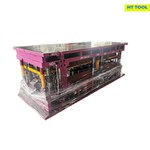
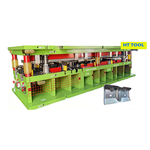
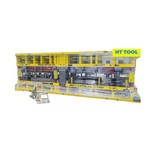
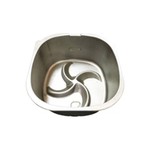
Auto Metal Stamped Part
Company Profile
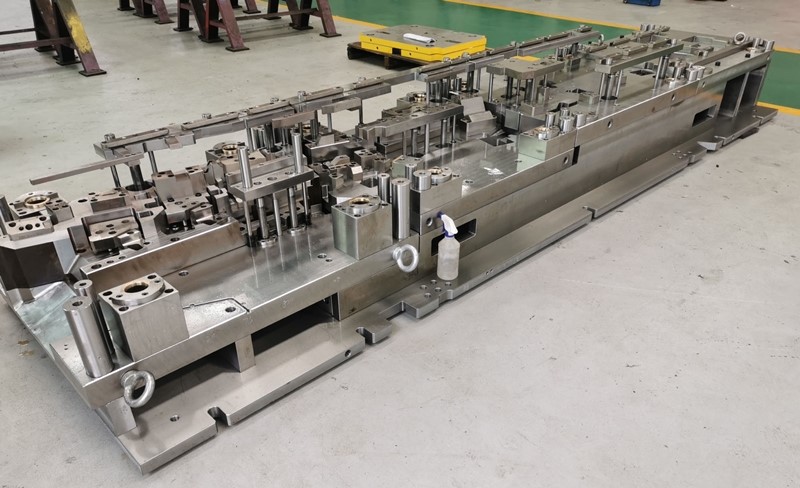
HT TOOL is highly experienced with Progressive Tooling from medium to high complex parts up to 1300mm width. Our costumers can expect to achieve the maximum productivity/quality from our progressive tools.
Why Choose Us
Rich Experience
Continuously providing our customers with diverse and highest quality die making services and delivering first-class metal stamping dies and parts with precision, accuracy, speed and efficiency.
One-stop Solution
HT TOOL is committed to providing reliable one-stop solutions for the tool and die industry, and through our strengths to become the preferred supplier within the metal stamping die industry.
Professional Team
In tooling design department, we are able to provide a comprehensive service to our customers. Our project managers (x2) are in permanent contact with our customers during the project development process and during the mass production of the dies.
Customized services
Our assembly units offer maximum flexibility to meet our customers' needs, adding value to each part with customer satisfaction in mind.

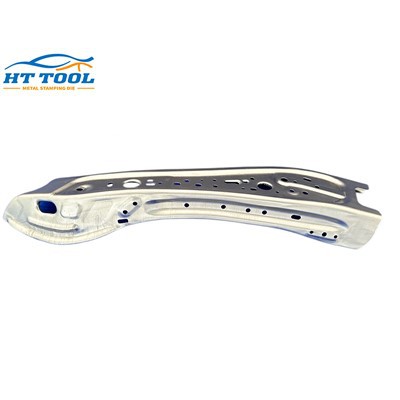


Auto metal stamped part is a common manufacturing process used to create a variety of precision metal parts by shaping and cutting sheet metal using a press and die. This process is widely used in various applications in the automotive, aerospace, electronics, and other industries. The use of auto metal stamped part allows manufacturers to produce high volumes of parts efficiently and cost-effectively, making it a popular choice for many industrial and commercial applications.
Auto metal stamped part manufacturing processes can quickly and cleanly create solid metal parts and forms. The process uses specialized dies that press sheets of metal into precisely the right form.
Benefits of Auto Metal Stamped Part
Cost-effective
By using automated equipment and processes, automotive auto metal stamped part can produce high-quality components at a lower cost compared to traditional manufacturing methods.
High precision
With computer-controlled machinery, automotive auto metal stamped part can produce components with high precision and accuracy, which is crucial in the automotive industry where tight tolerances are required.
Customization
Automotive auto metal stamped part can produce customized components according to specific designs and requirements, giving automotive manufacturers greater flexibility in their production processes.
Faster lead times
With the use of automated equipment and processes, automotive auto metal stamped part can produce components at a faster rate, resulting in shorter lead times and faster delivery of parts to automotive manufacturers.
Type of Auto Metal Stamped Part
Progressive Stamping
Progressive stamping involves a succession of stamping stations performing distinct functions that work on the same metal sheet to create complex and intricate parts. Once the sheet metal strip has run through all the stations, the part is complete and cut off. If running a coil of sheet metal, once the first part has progressed through all the stations, a finished part is completed every time the press closes.
Deep Draw Stamping
Deep draw stamping involves pulling a metal sheet into a die cavity to create a deep, cylindrical shape. This technique is often used to manufacture parts such as fasteners, eyelets, and enclosures.
Compound Die Stamping
Compound die stamping performs multiple operations to create a finished part in a single press stroke. This contrasts with progressive tooling, which uses multiple press strokes to create a finished part.
Transfer Die Stamping
This type of die is similar to progressive dies but uses fewer materials since there is no strip. The part is picked up and moved through the press to each station.
Four-Slide Stamping
Four-slide stamping uses four tools that bend and shape the metal in multiple directions. The process involves sliding the metal through a series of dies, with each die bending or shaping the metal in a different way. With more than four tools it is called a multi-slide. This process is similar to progressive stamping, except progressive die stamping takes less time to set up and is more accurate.
Key Materials for Automotive Metal Stamping
Metal stamping presses and dies can work with many different metals to create diverse parts. Some of the most commonly used metals in stamped automotive parts include aluminum, copper, and steel. Each metal has unique attributes that make it ideal for certain applications.
Aluminum
Manufacturers use aluminum for visible parts and details because of its attractive appearance and light weight. Companies can also easily form alloys with aluminum and other metals to make stronger or more durable varieties.
Copper
This metal resists corrosion, is ductile, has an attractive finish, and is affordable. Companies can also choose copper for environmentally conscious customers; the metal is easy to recycle and reuse.
Stainless Steel
This metal resists corrosion and rust because it has a makeup of at least 11% chromium. Not only does it have increased durability, but it also has a lustrous, attractive surface.
Steel and Steel Alloys
Steel alloys come in many different varieties, such as mild steel, high-strength steel, and specialized steel that can be used to create a variety of durable parts.
How are Metal Stamped Partsm used in the Automotive Industry?
The automotive industry has made use of metal stamping for a long period of time. It is used to create different kinds of automotive parts and components on a regular basis. These parts range from car transmission components, engine parts, wheels, seating, lighting, and even steering. Here is how metal stamped parts are used in the automotive industry.
Your engine is the heart of your car. It allows you to drive and move around. Engines get started through the process of ignition, which requires a number of important parts to perform properly. One of the parts used to help get the engine started is engine distribution cams, which are created using metal stamping. These parts are used in the vehicle’s ignition process, ensuring the car’s engine works without any issues.
Your car’s wheels and tires are designed to help your car move around while providing a comfortable and smooth drive. Your car’s tires are held in place using lug nuts, which can be removed when the tires need to be repaired or replaced. One of the important wheel parts created using metal stamping is tire lug nut lock springs. These help keep the lug nuts in place, preventing them from moving around or breaking while driving.
Along with your car’s tires, the transmission helps your car perform by transferring engine power into the driveshaft. It is also an important part of the vehicle’s suspension. Your car’s suspension can experience a lot of wear and tear while driving as it absorbs impact, which can cause damage. One of the metal stamped parts used in the suspension are bushings. These parts help absorb impact, reduce vibrations, and control the movement of different parts. Keeping you safe and comfortable while driving.
Your car’s steering is another important component when it comes to driving your car. It allows you to change direction. Steering wheel positioning is crucial as you need to have it centered to prevent any issues while driving. One of the most important parts used to keep your steering properly centered is positioning sensors. These sensors allow you to see if your steering wheel is positioned properly, allowing you to straighten it up while driving to avoid accidents.
What are the Tools used in Automotive Metal Stamping?
There are several tools that are used in automotive metal stamping to shape and cut the metal material into the desired form. Some of the key tools used in automotive metal stamping include:
Dies: Dies are tools used to shape the metal material by applying pressure to the metal surface. There are several types of dies used in metal stamping, including blanking dies, forming dies, piercing dies, and trimming dies.
Presses: Presses are machines used to apply pressure to the metal material in order to shape it into the desired form. There are several types of presses used in metal stamping, including mechanical, hydraulic, and servo-driven presses.
Feeds: Feeds are tools used to transport metal material into the press. There are several types of feeds used in metal stamping, including air feeds, servo feeds, and roll feeds.
Coil Handling Equipment: Coil handling equipment is used to handle the metal material in its raw form, typically in the form of a coil. This equipment includes uncoilers, straighteners, and recoilers.
Lubricants: Lubricants are used in metal stamping to reduce friction between the metal material and the dies, and to improve the quality of the finished part. Common lubricants used in metal stamping include oils, greases, and dry lubricants.
Gauges: Gauges are tools used to measure the thickness and dimensions of the metal material, as well as the finished parts produced through metal stamping.
Identify The Perfect auto metal stamped part Process
Following is the sequence of working which can determine the perfect auto metal stamped part process:
Design Process
The design drawing process should show all the parts of the product carefully in a flat 2-D way. Even the most complete parts should be drawn so that it can be seen in 2-D. Besides the axis and bending points, curve coordinates should be shown clearly in the drawing.
Correct Process
Each surface of a auto metal stamped part process can have different requirements for treatment than others. Each one should be examined carefully with measuring the chance of getting the quality of the metal at its best. For example, punching diameter should maintain K-factor for perfect results. If you follow the variants and process the surfaces accordingly, then it will give you the perfect process for auto metal stamped part.
Cutting Method
The cutting method for auto metal stamped part should be of high accuracy and efficiency. The die punching and punching give the desired shape to a product. For best results in CNC machining, you should insert the design and give proper commands to the software according to the design. Like lasers or jet cutting may be used for cutting a board to give it a better finishing through auto metal stamped part.
Stamping Sequence Formulation
This is the tricky part of the design principle where you need to design the stamping sequence according to the most effective and efficient manner. The sequence must go in such a way that an automated system may be introduced.
Assembly Method
Assembling the parts may require fasting or welding according to your design. You must find out which one is needed when. After that, you may proceed.
Stamped Metal Parts Across Industries


Stamped metal parts are pervasive across industries, and new designs are constantly being developed, making it impossible to mention all the uses. Below we touch on some of the common stamped parts in automotive, agricultural, industrial, and consumer industries.
Automotive manufacturers rely heavily on the high quality and precision of metal-stamped products to manufacture cars and trucks. Stamped sheet metal is used to make a large variety of parts, including the chassis, engine and transmission mechanical components, hub caps, fenders, and seat belts. Metal stamping allows automobile manufacturers to streamline manufacturing and ensure high-quality components are used in their automobiles.
The agricultural industry finds incredible value in the metal stamping process for providing durable, corrosion-resistant metal pieces. Heavy farm machinery and tractors, grain handling equipment, planting and harvesting equipment, livestock feeding machinery, and more have components that can be precision crafted using metal stamping.
The industrial market encompasses a broad spectrum of equipment and machinery. Some common stamped metal parts for this industry include brackets, gears, plates, housings, and fasteners. Automation and robotics industries have seen tremendous growth in recent years and depend on precision durability and consistent parts, making metal stamping ideal for producing structural components, gears, components of sensors and actuators, connectors and terminals, and robotic end effectors.
Like other industries, metal stamping provides excellent value for consumer product components. These products benefit from metal stamping’s ability to meet tight tolerances and precise manufacturing requirements. In a competitive industry, quality matters, and metal stamping delivers consistently. Components of virtually any shape and form can be stamped for appliances, lighting, home décor, furniture assembly components, and tools and fixtures.
Regular Inspection
Routine inspections are essential for identifying signs of wear, damage, or misalignment in auto metal stamped part. Inspect critical components such as punches, dies, guide pins, and springs for wear patterns, cracks, or deformation. Regularly check for any loose or damaged parts that may affect die performance. Conduct inspections before and after production runs to catch any issues early and address them promptly.
Cleaning and Lubrication
Auto metal stamped part must be kept clean to perform properly. Use proper cleaning procedures and solvents to remove debris, metal shavings, and residue from die surfaces. Ensure that die components are free of impurities that may impair precision and cause premature wear. Lubricants should be applied to moving parts to reduce friction, wear, and avoid sticking or galling during stamping operations.
Sharpening and Refurbishment
Maintain sharp cutting edges on punches and dies to ensure clean and precise part formation. Regularly inspect cutting edges for signs of wear, dullness, or damage. Use sharpening tools, such as abrasive stones or grinding wheels, to restore sharpness and remove burrs or nicks. For heavily worn or damaged dies, consider refurbishment techniques such as welding, machining, or regrinding to restore original dimensions and contours.
Die Protection
Protect auto metal stamped part from corrosion, oxidation, and environmental factors that can degrade their performance and lifespan. Apply rust inhibitors or protective coatings to die surfaces to prevent rust formation and surface deterioration. Store dies in a clean, dry environment with controlled humidity to minimize exposure to moisture and atmospheric contaminants. Implement proper handling practices to avoid dents, scratches, or other damage during transportation and storage.
Die Setup Optimization
Optimize die setup parameters, such as clearance, tonnage, and feed rates, to minimize wear and maximize efficiency during production runs. Ensure that dies are properly aligned and securely fastened in the stamping press to avoid unnecessary stress on components. Monitor press settings and make adjustments as needed to maintain consistent part quality and prolong die lifespan.
Our Factory
With ISO9001 certification and a mature design system. The press capacity is from 200T to 800T. Relying on a perfect quality control system. We strive to provide our customers the best product.We offer a wide range of Other Metal Stamping Dies products.


Certificate
