


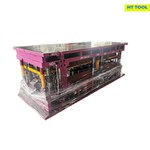
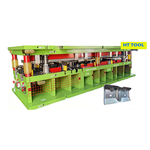
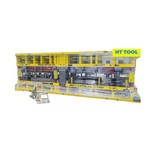
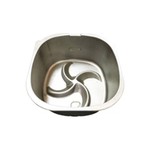

Rapid Prototype Machining
Material:steel
Numerical Control:CNC/Mnc
Drawing format:Step/STP/Igs/X-T/Stl/CAD/Pdf/Dwg and Other
Basic info.
|
Part No. |
Rapid prototype Machining parts |
|
Production type |
Mass production/samples production |
|
Material |
steel |
|
Numerical Control |
CNC/Mnc |
|
Drawing format |
Step/STP/Igs/X-T/Stl/CAD/Pdf/Dwg and Other |
|
Machining equipment |
3/4/5 Axis Center Machining/Milling/Lathe,etc |
|
Surface Roughness |
Ra0.2-Ra3.2 (Custom Available) |
|
Surface finish |
Anodizing,Electroplating,Painting,Coating,etc |
|
Surface treatment |
Anodizing |
|
Machining methods |
CNC Milling |
|
Tolerance |
0.01+/- 0.005mm (Custom Available) |
|
Material available |
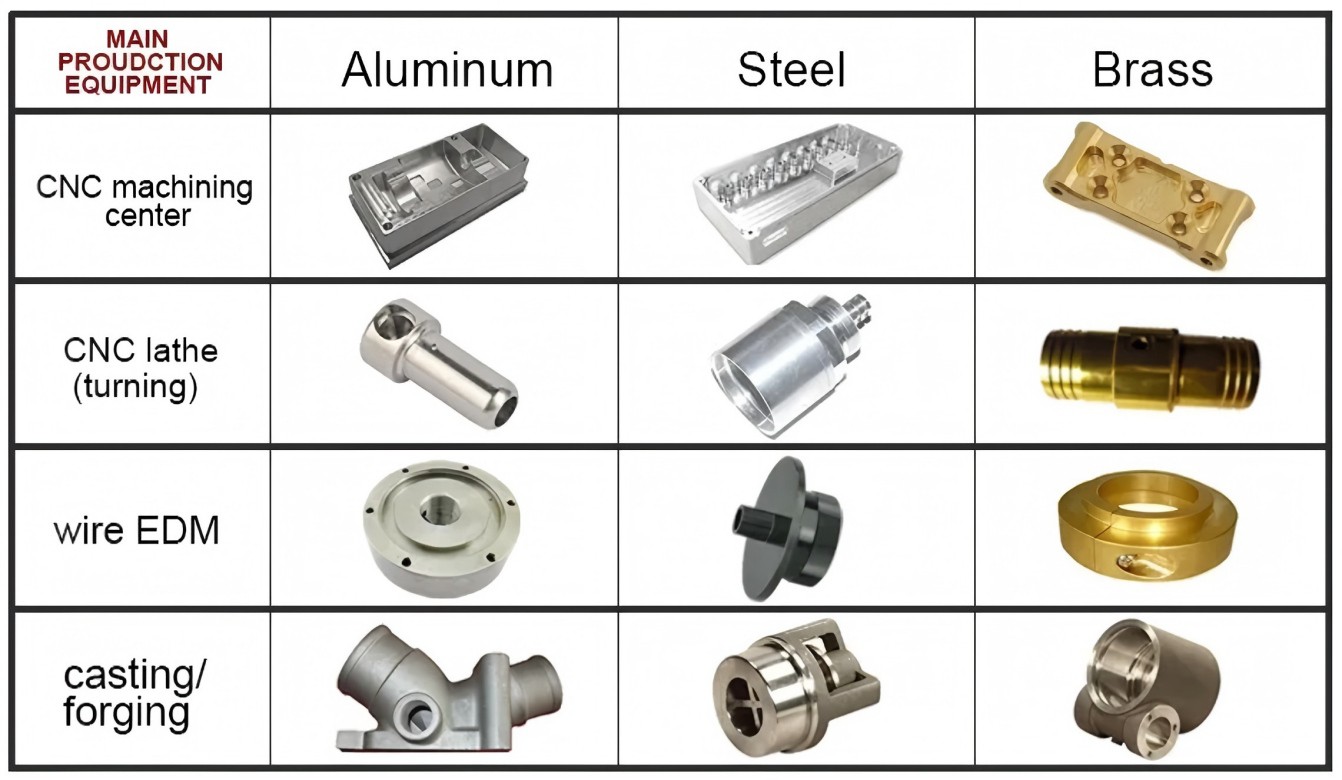
Aluminum,Brass,Stainless Steel,Steel Alloys,etc |
|
Certification |
GS, CE, RoHS, ISO 9001 |
|
Specification |
customized |
|
Product type |
Auto,Motorcycle,Electonic,Medical,Home Appliance |
|
Transport package |
Carton, plastic box, wooden cases |
ONE-STOP SERVICE FROM DESIGNING TO DELIVERY

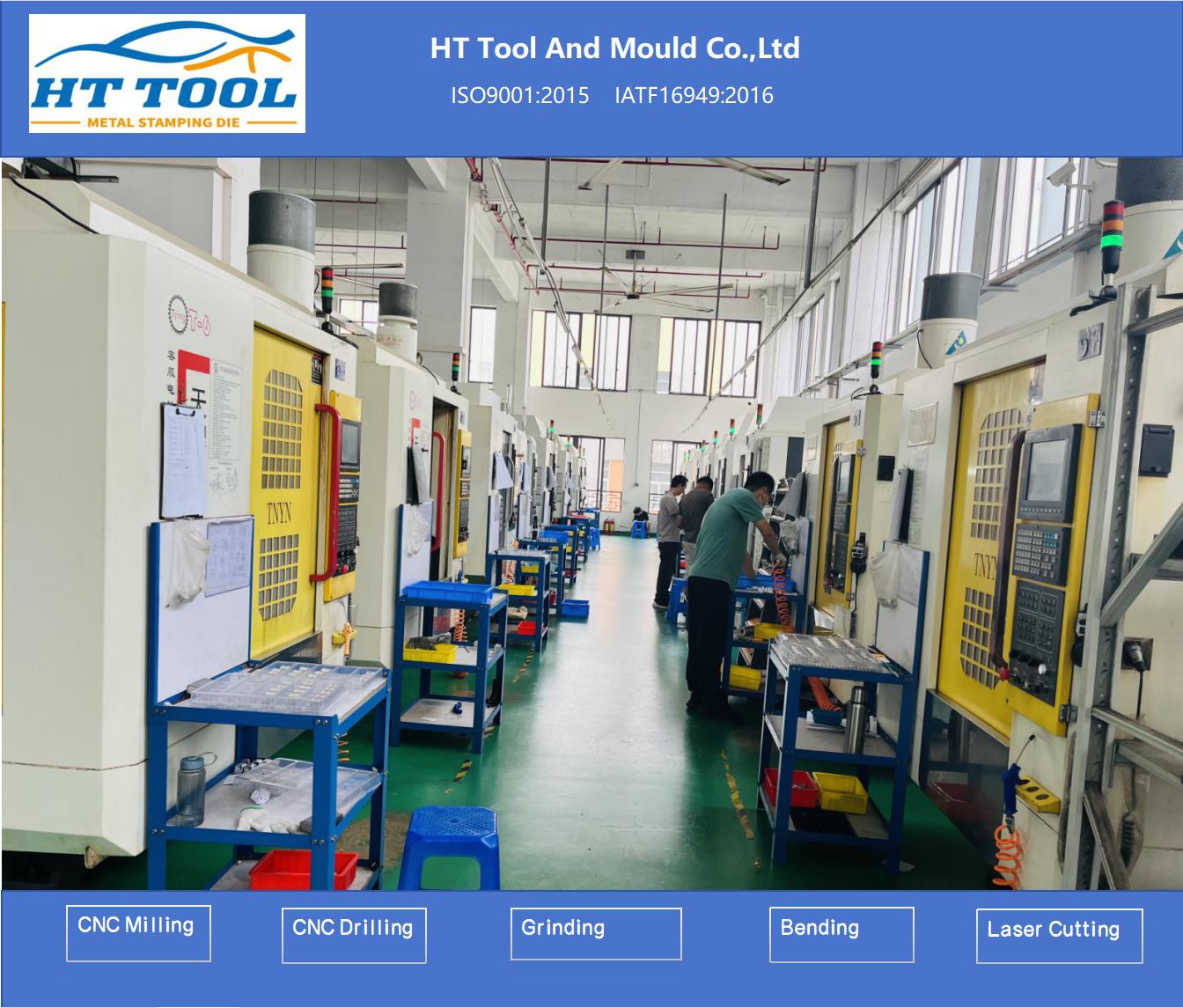
Rapid Prototype Machining – From Concept to Reality, Fast.
Accelerate your product development with our Rapid Prototyping Machining services.
Using advanced CNC machining and precision manufacturing technologies, we transform your designs into high-quality, functional prototypes - quickly, accurately, and reliably.
Key Advantages of Our Rapid Prototype Machining?
Rapid Prototype Machining, we called CNC Prototyping or Machined Prototyping, is a subtractive process where a solid block of material is shaped into a part using computer-controlled machine tools. It stands alongside 3D printing as a core rapid prototyping method, but with distinct advantages.
Here are some key advantages of Rapid Prototype Machining, broken down into categories:
Real Engineering Materials: Uses production-grade materials (metals like aluminum, stainless steel, titanium; and even engineering plastics like ABS, PC, Nylon, PEEK). The prototype has the same physical, thermal, and chemical properties as the final part.
Isotropic & Dense: Machined parts are fully dense and have consistent strength in all directions (unlike layered 3D prints, which can have weaknesses along layer lines).
High Performance: Can be used for functional testing under real-world stresses, loads, temperatures, and chemical exposure.
Tight Tolerances: Capable of holding extremely tight tolerances (often as low as ±0.02 or ±0.005MM), making it ideal for parts that must mate precisely with existing components.
Excellent Surface Finish: Produces smooth, commercial-grade finishes directly off the machine. Can be easily polished or coated to achieve exact final-product aesthetics.Surface Roughness can be reach to Ra0.2-Ra3.2
Geometric Precision: Ideal for high-precision features like thin walls, fine threads, true radii, and complex curvatures.
Rapid Turnaround: For 1-10 parts, CNC machining can often be faster than injection molding or casting, as it requires no tooling. Parts can be in hand in 1-3 days.
Straight from CAD to Part: The process uses 3D CAD models directly to generate toolpaths, minimizing setup complexity for geometry changes.
Bridge to Production: A machined prototype can often be a direct pre-production unit, used for final verification before mass-production tooling is commissioned.
Validates Design & Manufacturing (DFM): The process inherently tests the design for manufacturability with CNC or other machining methods, highlighting potential production issues early.
Creates Testable, Marketable Samples: Prototypes are robust enough for field testing, trade shows, and securing investor interest as they look and feel like the final product.
Ease of Iteration: Design changes can be quickly incorporated by modifying the CAD model and toolpaths without the cost of changing hard tooling (like molds).
Low-Volume Production: Serves as an excellent method for bridge manufacturing or low-volume production runs (tens to hundreds of parts) where investment in tooling is not justified.
Our Product Range

Machining materials available
Proven Quality
Certified by ISO9001,IATF16949.
Quality checks for Rapid Prototype Machining ensure a 99.98% shipping pass rate.


FAQ:
Q: 1. What Are Your Competitive Advantages?
A: a) We are a direct manufacturer for Rapid Prototype Machining, not a trading company. This eliminates intermediary costs, allowing us to offer more competitive pricing.
b) Over 13 years of specialized experience in precision machining.
c) Dedicated support throughout our partnership: Our complete organizational structure includes Quality Control, Sales, Engineering, Shipping, and After-Sales departments to serve you consistently.
Q: 2. What Production Equipment Do You Use?
A: a) Our facility is equipped with CNC machining centers, CNC turning centers, automatic lathes, conventional lathes, drilling machines, CD/texturing machines, screw cutting machines, diamond cutting machines, polishing machines, grinding machines, and more.
Q: 3. What Quality Inspection Equipment Is Available?
A: a) We utilize 2D projectors, height gauges, calipers, thickness testers, hardness testers, micrometers, and other precision measuring instruments.
Q: 4. What Are Your Payment Terms?
A: a) We generally accept T/T (Telegraphic Transfer) and irrevocable Letters of Credit at sight. For standard orders, our typical terms are 30% deposit in advance, with the remaining 70% due against copy of the Bill of Lading. More flexible payment arrangements can be discussed for established long-term partnerships.
Q: 5. What Delivery Terms Do You Offer?
A: a) We support standard Incoterms such as FOB and CIF. You may select the option most convenient or cost-effective for your logistics.
Q: 6. What Is Your Typical Lead Time?
A: a) Production generally requires 15 to 35 days after final sample approval and receipt of your deposit. The exact timeline depends on product specifications and order quantity. An additional 10-15 days may be needed for custom tooling or mold development for non-standard items.
Q: 7. How Is Tooling/Mold Cost Handled?
A: a) A one-time tooling charge applies only to the first order. This covers all future production runs, including normal tool maintenance and repairs, at no additional cost.
Q: 8. What Is Your Sample Policy?
A: a) Rapid Prototype Machining Sample costs are typically refundable upon placement of an order that meets our Minimum Order Quantity (MOQ).
Q: 9. Can You Manufacture Based on Provided Samples or Drawings?
A: a) Yes, we can produce according to your supplied samples or technical drawings. We have in-house capability to design and manufacture the necessary molds, fixtures, and tooling.
Q: 10. How Is Product Quality Verified Before Production?
A: a) Rapid Prototype MachiningQuality is assured through statistically valid inspection plans (standard AQL 2.5/4.0) or 100% full inspection, as required. Detailed Quality Control (QC) reports will be provided upon request prior to shipment.
Hot Tags: rapid prototype machining, China rapid prototype machining manufacturers, suppliers, factory, machined parts for promotion, machined parts for customer service, durable machined parts, machined parts for bearings, machined parts for pistons, machined parts for projectors
You Might Also Like


Send Inquiry