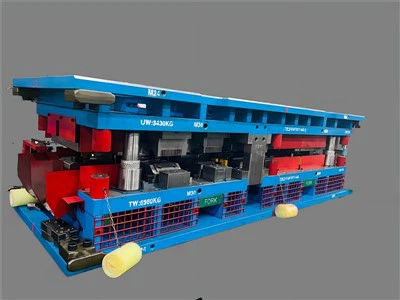
The tolerance range of a punch riveting die is a critical factor that significantly influences the quality, performance, and cost - effectiveness of the riveting process. As a seasoned punch riveting die supplier, I have witnessed firsthand how precise control of these tolerances can make or break a manufacturing project. In this blog, I will delve into the concept of tolerance range in punch riveting dies, exploring its various aspects and implications.
Understanding Tolerance in Punch Riveting Dies
Tolerance in the context of punch riveting dies refers to the allowable deviation from a specified dimension or parameter. These dimensions can include the diameter of the punch, the depth of the die cavity, the alignment between the punch and the die, and the surface finish of both components. A well - defined tolerance range ensures that the die can produce consistent, high - quality riveted joints.
Types of Tolerances
- Dimensional Tolerance: This is perhaps the most obvious type of tolerance. For example, the diameter of the punch must be within a certain range to ensure a proper fit with the rivet. If the punch diameter is too large, the rivet may not be held securely, leading to a weak joint. Conversely, if it is too small, the rivet may be damaged during the riveting process. Dimensional tolerances are typically specified in thousandths of an inch or hundredths of a millimeter, depending on the industry standards.
- Geometric Tolerance: Geometric tolerances deal with the shape and orientation of the die components. This includes flatness, straightness, perpendicularity, and concentricity. For instance, the punch must be perfectly perpendicular to the die surface to ensure even force distribution during riveting. Any deviation from the ideal geometric shape can result in unevenly formed rivets and compromised joint strength.
- Surface Finish Tolerance: The surface finish of the punch and die is also crucial. A smooth surface finish reduces friction during the riveting process, preventing the rivet from sticking to the die and ensuring a clean, consistent joint. Surface finish tolerances are often specified in terms of roughness average (Ra), which measures the average height of the surface irregularities.
Factors Affecting the Tolerance Range
Several factors influence the appropriate tolerance range for a punch riveting die. These factors must be carefully considered during the design and manufacturing process to ensure optimal performance.
Material Properties
The properties of the materials being riveted play a significant role in determining the tolerance range. Different materials have different hardness, ductility, and elasticity. For example, softer materials like aluminum may require looser tolerances compared to harder materials like steel. This is because softer materials are more forgiving of minor variations in the riveting process.
Rivet Design
The design of the rivet, including its size, shape, and head style, also affects the tolerance requirements. Larger rivets may require wider tolerance ranges to accommodate the increased material volume, while specialty rivet shapes may demand more precise tolerances to ensure proper formation.


Production Volume
The volume of parts to be produced is another important factor. For high - volume production runs, tighter tolerances are often necessary to maintain consistency across all parts. In contrast, low - volume production may allow for slightly looser tolerances, as the cost of achieving extremely tight tolerances may not be justified.
Importance of Maintaining the Right Tolerance Range
Maintaining the correct tolerance range in punch riveting dies is essential for several reasons.
Quality Assurance
Proper tolerances ensure that each riveted joint meets the required quality standards. This includes factors such as joint strength, appearance, and resistance to fatigue. By controlling the tolerances, we can minimize the number of defective parts and improve overall product quality.
Cost - Effectiveness
While achieving tight tolerances may require more precise manufacturing processes and higher - quality materials, it can ultimately lead to cost savings. Tight tolerances reduce the need for rework and scrap, which can be expensive in terms of both materials and labor. Additionally, a well - made die with proper tolerances has a longer lifespan, reducing the frequency of die replacements.
Process Efficiency
A die with the correct tolerance range operates more efficiently. It requires less force to form the rivets, reducing wear and tear on the equipment. This also leads to faster production cycles, increasing overall productivity.
Measuring and Controlling Tolerances
As a punch riveting die supplier, we use a variety of methods to measure and control tolerances.
Precision Measuring Tools
We employ precision measuring tools such as micrometers, calipers, and coordinate measuring machines (CMMs) to ensure that the die components meet the specified tolerances. These tools allow us to measure dimensions with high accuracy, enabling us to make any necessary adjustments during the manufacturing process.
Quality Control Checks
Throughout the manufacturing process, we conduct regular quality control checks to verify that the tolerances are being maintained. This includes visual inspections, functional tests, and statistical process control (SPC) techniques. SPC helps us to monitor the process variability and identify any trends or patterns that may indicate a potential issue with the tolerances.
Applications and Industry Standards
Punch riveting dies are used in a wide range of industries, each with its own specific requirements and standards.
Automotive Industry
In the automotive industry, punch riveting is used to assemble various components, such as body panels, chassis parts, and interior trim. The automotive industry typically has very strict tolerance requirements to ensure the safety and reliability of the vehicles. For example, the riveted joints in a car's body must be able to withstand significant forces and vibrations over the vehicle's lifespan.
Aerospace Industry
The aerospace industry also relies heavily on punch riveting for aircraft assembly. Due to the critical nature of aircraft components, the tolerance requirements in this industry are even more stringent. Aerospace riveting dies must be able to produce joints that are not only strong but also lightweight and corrosion - resistant.
Electronics Industry
In the electronics industry, punch riveting is used to assemble small components such as circuit boards and enclosures. The tolerance requirements in this industry are often driven by the need for miniaturization and high - density packaging. Tight tolerances are necessary to ensure proper alignment and connection of the components.
Related Products and Services
As a punch riveting die supplier, we also offer related products and services. We provide Progressive Sheet Metal Dies that can be used in conjunction with punch riveting dies for more complex manufacturing processes. Our Progressive Tool Sheet Metal services are designed to meet the diverse needs of our customers, offering high - quality and efficient solutions. Additionally, our Metal Stamping Tool And Die options provide comprehensive support for your stamping and riveting requirements.
Conclusion and Call to Action
The tolerance range of a punch riveting die is a complex but essential aspect of the riveting process. By understanding the factors that affect tolerances, the importance of maintaining the right range, and the methods for measuring and controlling them, we can ensure the production of high - quality riveted components.
If you are in need of punch riveting dies or related products and services, we invite you to contact us for a consultation. Our team of experts is ready to work with you to understand your specific requirements and provide customized solutions. Whether you are in the automotive, aerospace, electronics, or any other industry, we have the experience and expertise to meet your needs.
References
- "Metal Stamping Handbook" by Society of Manufacturing Engineers
- "Riveting Technology and Applications" by Industrial Riveting Association
- "Precision Manufacturing and Tolerance Control" by International Journal of Precision Engineering