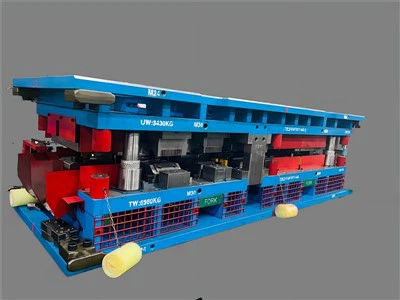
In the world of manufacturing, checking fixtures play a crucial role in ensuring the quality and accuracy of products. As a leading checking fixture supplier, I have witnessed firsthand the importance of understanding the tolerance of a checking fixture. In this blog post, I will delve into the concept of tolerance in checking fixtures, its significance, and how it impacts the manufacturing process.
Understanding Tolerance in Checking Fixtures
Tolerance refers to the allowable variation in the dimensions, shape, or other characteristics of a part or component. In the context of checking fixtures, tolerance defines the acceptable range within which the fixture can accurately measure and verify the quality of a workpiece. It is a critical parameter that determines the reliability and effectiveness of the checking process.
For example, when manufacturing automotive parts, a high - precision checking fixture is used to ensure that each component meets the strict design specifications. The tolerance of the checking fixture will specify how much deviation from the ideal dimension is acceptable during the measurement. If the tolerance is too loose, the fixture may not be able to detect small but significant defects in the parts, leading to potential quality issues in the final product. On the other hand, if the tolerance is too tight, it may result in unnecessary rejections of parts that are actually within an acceptable range of quality, increasing production costs and reducing efficiency.
Types of Tolerances in Checking Fixtures
There are several types of tolerances that are relevant to checking fixtures:
Dimensional Tolerance
This is the most common type of tolerance. It refers to the allowable variation in the size of a feature on a part. For instance, if a hole in a part is designed to have a diameter of 10 mm with a dimensional tolerance of ±0.1 mm, the actual diameter of the hole in the part can range from 9.9 mm to 10.1 mm and still be considered acceptable. The checking fixture must be able to measure this dimension accurately within this tolerance range.


Geometric Tolerance
Geometric tolerance deals with the shape, orientation, and location of features on a part. Examples include flatness, straightness, perpendicularity, and concentricity. A checking fixture for a machined block may need to verify that a surface is flat within a certain geometric tolerance. If the surface has a flatness tolerance of 0.05 mm, the fixture should be capable of detecting any deviations from a perfectly flat surface beyond this value.
Positional Tolerance
Positional tolerance defines the allowable variation in the position of a feature relative to other features on a part. In a complex automotive engine component, there may be multiple holes that need to be precisely located relative to each other. The checking fixture will be used to ensure that the holes are within the specified positional tolerance.
Significance of Tolerance in the Manufacturing Process
Quality Assurance
Tolerance in checking fixtures is the cornerstone of quality assurance. By accurately measuring parts against predefined tolerances, manufacturers can identify defective parts early in the production process. This helps to prevent faulty products from reaching the market, which can lead to customer dissatisfaction, recalls, and damage to the brand reputation.
Process Control
Checking fixtures with well - defined tolerances also play a vital role in process control. Manufacturers can use the data collected from the checking fixtures to monitor the stability of the manufacturing process. If the measured values of parts consistently approach or exceed the tolerance limits, it may indicate that there is a problem with the manufacturing equipment, such as tool wear or misalignment. By taking corrective actions in a timely manner, manufacturers can maintain the quality and consistency of their products.
Cost - Efficiency
Properly set tolerances in checking fixtures can contribute to cost - efficiency. As mentioned earlier, overly tight tolerances can lead to unnecessary rejections and increased production costs. By carefully determining the appropriate tolerance levels, manufacturers can balance the need for quality with the cost of production. This ensures that resources are used effectively, and the overall cost of manufacturing is optimized.
Our Expertise as a Checking Fixture Supplier
As a checking fixture supplier, we understand the importance of getting the tolerance right. We have a team of experienced engineers who are well - versed in the principles of tolerance design and measurement. When designing a checking fixture for a customer, we take into account the specific requirements of the part, including its function, the manufacturing process, and the expected level of quality.
We offer a wide range of checking fixtures, including Automotive Checking Fixture, which are specifically designed for the automotive industry. These fixtures are engineered to meet the high - precision requirements of automotive parts manufacturing, ensuring that each component meets the strict quality standards of the industry.
Our Jig Checking Fixture is another popular product. These fixtures are used in conjunction with jigs to ensure that the parts being machined or assembled are within the specified tolerances. They are designed to be highly accurate and reliable, providing consistent results in the production environment.
In addition, we also supply Checking Fixture Components that are essential for the proper functioning of checking fixtures. These components are manufactured to the highest quality standards, ensuring that they can withstand the rigors of industrial use and provide accurate measurements over an extended period of time.
Factors Affecting the Tolerance of a Checking Fixture
Several factors can affect the tolerance of a checking fixture:
Material Selection
The material used to manufacture the checking fixture can have a significant impact on its tolerance. For example, materials with high thermal expansion coefficients may cause dimensional changes in the fixture due to temperature variations. This can lead to inaccurate measurements. We carefully select materials with low thermal expansion and high stability to ensure the accuracy of our checking fixtures.
Manufacturing Process
The manufacturing process of the checking fixture itself must be precise. Any errors or variations in the machining, assembly, or calibration of the fixture can affect its ability to measure parts within the specified tolerances. We use advanced manufacturing techniques and strict quality control measures to ensure that our checking fixtures are manufactured to the highest standards of accuracy.
Environmental Conditions
Environmental factors such as temperature, humidity, and vibration can also affect the performance of a checking fixture. For example, a high - humidity environment may cause corrosion of the fixture components, leading to dimensional changes and inaccurate measurements. We design our checking fixtures to be resistant to these environmental factors and, in some cases, provide environmental control solutions to ensure consistent measurement results.
Calibration and Maintenance of Checking Fixtures
To ensure that a checking fixture maintains its accuracy within the specified tolerances, regular calibration and maintenance are essential. Calibration involves comparing the measurements of the fixture against a known standard to determine if it is still accurate. This should be done at regular intervals, depending on the frequency of use and the criticality of the measurements.
Maintenance includes cleaning, lubricating, and inspecting the fixture components for wear and damage. Any worn - out or damaged components should be replaced promptly to ensure the continued accuracy of the fixture.
Contact Us for Your Checking Fixture Needs
If you are in the market for high - quality checking fixtures that are designed to meet your specific tolerance requirements, we would love to hear from you. Our team of experts can work with you to understand your needs and provide customized solutions that will help you improve the quality and efficiency of your manufacturing process. Whether you are in the automotive, aerospace, or any other manufacturing industry, we have the expertise and experience to deliver the right checking fixtures for your application.
References
- ASME Y14.5 - 2018, "Dimensioning and Tolerancing"
- ISO 1101:2017, "Geometrical product specifications (GPS) — Geometrical tolerancing — Tolerances of form, orientation, location and run - out"
- Mott, R. L., & Untener, J. K. (2014). "Applied Fluid Mechanics". Pearson.