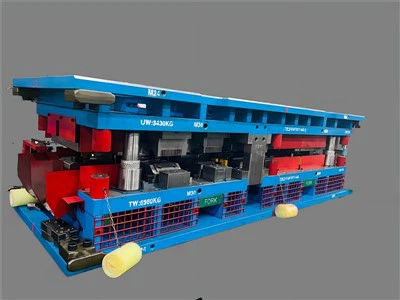
Hey there! As a supplier of punch riveting dies, I've been in the thick of this industry for quite some time. I've seen the ins and outs of these dies, and today I'm gonna share with you the key components of a punch riveting die.
1. The Punch
Let's start with the punch. It's like the workhorse of the punch riveting die. The punch is the part that actually makes the hole in the material. It's designed to be strong and durable because it has to withstand a lot of force during the riveting process. The shape and size of the punch are crucial. They need to be precisely engineered to match the size and shape of the rivet. A well - crafted punch ensures a clean and accurate hole, which is essential for a successful riveting operation.
The material of the punch also matters a great deal. High - quality tool steels are commonly used because they can resist wear and tear, and maintain their sharpness over time. If you're looking for more information on high - precision tools like punches, you can check out this High Precision Stamping Die.
2. The Die Block
Next up is the die block. The die block is the base where the whole riveting action takes place. It provides support for the punch and helps to guide it accurately. It has a cavity that is shaped to fit the rivet and the material being riveted. The die block needs to be made of a hard and stable material. Cast iron or steel alloys are often used because they can handle the high pressures and forces involved in the riveting process.
A good die block should have excellent dimensional stability. Any deviation in its dimensions can lead to misaligned rivets or poor - quality joints. It's also important to ensure that the die block is properly heat - treated to enhance its hardness and toughness. You can find more about the importance of high - quality die blocks in Metal Stamping Tool And Die.


3. The Stripper Plate
The stripper plate is another vital component. Its main job is to remove the punched material from the punch after each stroke. Without a stripper plate, the punched material could stick to the punch, causing jams and affecting the quality of the riveting. The stripper plate is usually made of a springy material that can exert enough force to strip the material off the punch.
It also helps to keep the material in place during the punching process. This ensures that the hole is punched in the right location and that the rivet is inserted accurately. The design of the stripper plate needs to be carefully considered. It should have the right amount of clearance to allow the punch to pass through smoothly while still providing enough stripping force.
4. The Guide Pins
Guide pins are like the navigators of the punch riveting die. They ensure that the punch and the die block are properly aligned. Misalignment can lead to uneven holes, bent rivets, and overall poor - quality joints. Guide pins are usually made of hardened steel and are precisely machined to fit into corresponding holes in the punch and the die block.
They need to be lubricated regularly to reduce friction and wear. Good alignment provided by guide pins is essential for the long - term performance of the punch riveting die. You can learn more about the importance of proper alignment in progressive dies, which also rely on guide pins, in Progressive Sheet Metal Dies.
5. The Spring Assembly
The spring assembly plays a crucial role in the operation of the punch riveting die. Springs are used to provide the necessary force for various functions. For example, they can be used to return the punch to its original position after a stroke, or to apply pressure to the stripper plate.
The type and strength of the springs need to be carefully selected. Too weak a spring won't provide enough force, while too strong a spring can cause damage to the components. Springs also need to be inspected regularly for signs of wear and tear, as a worn - out spring can lead to inconsistent performance.
6. The Rivet Feeder
In an automated punch riveting setup, the rivet feeder is an important component. It's responsible for delivering the rivets to the right position in the die. The rivet feeder needs to be reliable and accurate. It should be able to handle different types and sizes of rivets.
There are different types of rivet feeders, such as vibratory bowl feeders and linear feeders. The choice of the rivet feeder depends on the specific requirements of the riveting operation. A well - functioning rivet feeder can significantly increase the productivity of the punch riveting process.
7. The Clamping Mechanism
The clamping mechanism is used to hold the material in place during the riveting process. It ensures that the material doesn't move or shift, which could lead to misaligned rivets. There are various types of clamping mechanisms, including mechanical clamps, hydraulic clamps, and pneumatic clamps.
The choice of the clamping mechanism depends on factors such as the size and shape of the material, the required clamping force, and the speed of the riveting operation. A good clamping mechanism should be easy to operate and adjust, and it should provide consistent clamping force.
Why These Components Matter
All these components work together in harmony to make the punch riveting die function effectively. A high - quality punch riveting die can produce strong and reliable joints, which are essential in many industries, such as automotive, aerospace, and manufacturing.
If any of these components are of poor quality or not properly maintained, it can lead to a range of problems. For example, a dull punch can result in rough holes, a misaligned die block can cause rivets to be inserted at the wrong angle, and a malfunctioning rivet feeder can lead to downtime.
Upgrading and Maintaining Your Punch Riveting Die
To ensure the long - term performance of your punch riveting die, it's important to invest in high - quality components and to carry out regular maintenance. Upgrading components when necessary can also improve the efficiency and quality of the riveting process.
For example, if you notice that your punch is wearing out quickly, you might want to consider upgrading to a higher - quality punch made of a more wear - resistant material. Regularly cleaning and lubricating the components can also extend their lifespan.
Contact Us for Your Punch Riveting Die Needs
If you're in the market for a punch riveting die or need to replace some components, we're here to help. We've got a wide range of high - quality punch riveting dies and components to suit your specific requirements. Whether you're a small - scale manufacturer or a large industrial company, we can provide you with the right solutions.
Don't hesitate to reach out to us for a quote or to discuss your needs. We're always happy to have a chat and find the best punch riveting die setup for you.
References
- "Metal Stamping Handbook" by George E. Dieter
- "Tool and Manufacturing Engineers Handbook" by Society of Manufacturing Engineers