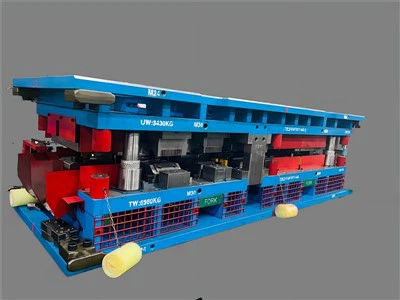
Automotive tooling plays a pivotal role in the automotive manufacturing industry, significantly influencing production speed. As a dedicated automotive tooling supplier, I've witnessed firsthand how the right tooling solutions can streamline operations and boost productivity. In this blog, I'll delve into the various ways automotive tooling impacts production speed and why choosing the right tools is crucial for automotive manufacturers.


Precision and Consistency
One of the primary ways automotive tooling affects production speed is through precision and consistency. High - quality tooling, such as Progressive casting die, is engineered to produce parts with exact specifications. When parts are made to precise measurements, there's less need for rework and adjustment during the assembly process.
For example, in the production of engine components, a well - designed progressive casting die can create parts that fit together seamlessly. This eliminates the time - consuming process of fitting misaligned parts, which could otherwise slow down the entire production line. The consistency provided by such tooling ensures that each part is identical to the next, allowing for a smooth and continuous production flow.
Reduced Setup Time
Automotive tooling can also significantly reduce setup time. Advanced tooling systems, like Automotive Metal Stamping Die, are designed for quick and easy installation. These dies are often modular, meaning that different sections can be easily replaced or adjusted for different production runs.
In a traditional manufacturing setup, changing the production process for a different part could take hours or even days. However, with modern automotive metal stamping dies, the setup time can be reduced to a matter of minutes. This allows manufacturers to switch between different production jobs rapidly, increasing the overall production speed and flexibility of the manufacturing facility.
Automation and Integration
The integration of automotive tooling with automation systems is another key factor in enhancing production speed. Tooling such as Steel sheet progressive die can be seamlessly integrated into automated production lines. Automated systems can perform tasks such as feeding the steel sheets into the die, stamping the parts, and ejecting the finished products with minimal human intervention.
Automation not only speeds up the production process but also reduces the risk of human error. Robots and automated machinery can work at a consistent pace 24/7, without breaks or fatigue. This continuous operation leads to a significant increase in the number of parts produced per hour, ultimately accelerating the overall production speed.
Durability and Maintenance
The durability of automotive tooling is directly related to production speed. High - quality tooling is built to withstand the rigors of continuous use. When tooling is durable, it requires less frequent maintenance and replacement. For instance, a well - crafted progressive casting die can last for thousands of production cycles before needing any major repairs.
Reduced maintenance means less downtime for the production line. Every time a tool needs to be repaired or replaced, the production process has to be halted, which can cause significant delays. By investing in durable automotive tooling, manufacturers can keep their production lines running smoothly and at a high speed for longer periods.
Cost - Efficiency and Production Volume
Cost - efficiency is also intertwined with production speed. When automotive tooling is cost - effective, manufacturers can afford to invest in more tooling, which can increase the production volume. For example, if a manufacturer can purchase multiple automotive metal stamping dies at a reasonable cost, they can set up multiple production lines or run parallel production jobs.
Increased production volume per unit of time is a clear indicator of improved production speed. Moreover, cost - efficient tooling allows manufacturers to offer more competitive prices in the market, which can lead to higher demand for their products and, in turn, the need for even faster production.
Training and Skill Requirements
The ease of use of automotive tooling can impact production speed through training and skill requirements. Modern tooling is often designed to be user - friendly, requiring less extensive training for operators. When operators can quickly learn how to use the tooling, they can start producing parts faster.
For example, a steel sheet progressive die with an intuitive control system can be operated by workers with relatively basic training. This reduces the time spent on training new employees and allows the production line to ramp up quickly after hiring new staff.
Customization and Adaptability
The ability to customize automotive tooling according to specific production needs is essential for maintaining high production speeds. Different automotive parts require different tooling configurations. A good automotive tooling supplier should be able to provide customized solutions, such as custom - designed progressive casting dies.
Customized tooling ensures that the production process is optimized for each specific part. This means that the tooling can work more efficiently, producing parts faster and with higher quality. Additionally, adaptable tooling can be modified as production requirements change over time, without having to purchase entirely new tooling.
Supply Chain and Lead Times
As an automotive tooling supplier, I understand the importance of a reliable supply chain. The lead time for obtaining new tooling can have a significant impact on production speed. If a manufacturer has to wait a long time for a new die or tool to be delivered, it can cause delays in the production process.
A well - managed supply chain ensures that tooling is delivered on time. This allows manufacturers to plan their production schedules more effectively and avoid any unnecessary slowdowns. By partnering with a trustworthy automotive tooling supplier, manufacturers can have peace of mind knowing that they will receive their tooling when they need it.
Conclusion
In conclusion, automotive tooling has a profound impact on production speed in the automotive manufacturing industry. From precision and reduced setup time to automation and durability, every aspect of high - quality tooling contributes to a faster and more efficient production process.
As an automotive tooling supplier, I am committed to providing the best tooling solutions to help automotive manufacturers increase their production speed. Whether it's a Progressive casting die, Automotive Metal Stamping Die, or Steel sheet progressive die, we have the expertise and resources to meet your specific needs.
If you are an automotive manufacturer looking to enhance your production speed and efficiency, I encourage you to reach out to us for a consultation. Our team of experts can work with you to find the perfect automotive tooling solutions for your production line.
References
- Smith, J. (2020). "Automotive Tooling: The Key to Efficient Production". Manufacturing Insights Journal.
- Johnson, M. (2019). "The Impact of Advanced Tooling on Automotive Manufacturing Speed". Industrial Engineering Review.
- Brown, A. (2021). "Cost - Effective Tooling Strategies for Faster Automotive Production". Automotive Industry Magazine.