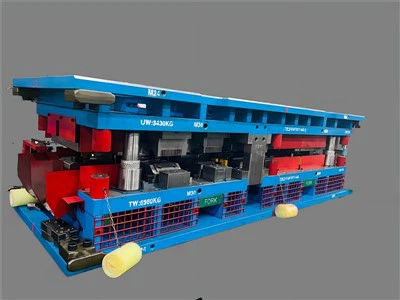
As a supplier of prototype dies, I understand the critical importance of corrosion resistance in these precision tools. Prototype dies are the initial step in the manufacturing process, serving as the blueprint for mass - production. Ensuring their corrosion resistance not only extends their lifespan but also guarantees the quality of the products they help create.
Understanding the Corrosion Process in Prototype Dies
Corrosion is a natural process that occurs when metals react with their environment. In the context of prototype dies, several factors can trigger this reaction. Moisture is one of the primary culprits. When a die is exposed to high humidity or comes into contact with water, a chemical reaction begins. Oxygen in the air reacts with the metal surface, forming metal oxides. For example, in the case of iron - based dies, rust (iron oxide) starts to form.
Another factor is the presence of contaminants. In a manufacturing environment, dies can be exposed to various chemicals, such as lubricants, coolants, and cleaning agents. Some of these substances may contain corrosive elements. If not properly cleaned and maintained, these contaminants can accelerate the corrosion process.
Corrosion - Resistance Requirements for Prototype Dies
Material Selection
The choice of material is the first line of defense against corrosion. Stainless steel is a popular choice for prototype dies due to its excellent corrosion - resistance properties. It contains chromium, which forms a thin, passive oxide layer on the surface. This layer acts as a barrier, preventing oxygen and moisture from reaching the underlying metal. For instance, 304 and 316 stainless steels are commonly used. 316 stainless steel, in particular, has a higher molybdenum content, which enhances its resistance to pitting corrosion, making it suitable for dies that will be exposed to harsh chemical environments.
Tool steels can also be used, but they require additional surface treatments to improve corrosion resistance. For example, high - speed steel (HSS) is known for its high hardness and wear resistance. However, it is more prone to corrosion compared to stainless steel. By applying coatings such as titanium nitride (TiN) or chromium nitride (CrN), the corrosion resistance of HSS dies can be significantly improved.
Surface Finish
A smooth surface finish can reduce the likelihood of corrosion. Rough surfaces provide more areas for moisture and contaminants to accumulate, creating pockets where corrosion can start. Therefore, after machining, prototype dies should be polished to a high surface finish. This not only enhances corrosion resistance but also improves the quality of the stamped parts. A smooth die surface allows for better material flow during the stamping process, reducing the risk of part defects.
Coating and Plating
Coatings and platings are effective ways to enhance the corrosion resistance of prototype dies. As mentioned earlier, nitride coatings like TiN and CrN are widely used. These coatings not only provide a hard, wear - resistant surface but also act as a barrier against corrosion.
Electroplating is another option. For example, nickel plating can be applied to the die surface. Nickel is corrosion - resistant and can provide a smooth, uniform finish. It also has good adhesion to the base metal, ensuring long - term protection.
Design Considerations
The design of the prototype die can also influence its corrosion resistance. Avoiding sharp corners and crevices is important because these areas are more likely to trap moisture and contaminants. A well - designed die should have proper drainage channels to allow water and other fluids to drain away quickly. Additionally, the die should be designed in such a way that it can be easily cleaned and maintained.
Industry - Specific Corrosion - Resistance Requirements
Automotive Industry
In the automotive industry, prototype dies are used to produce a wide range of parts, from body panels to engine components. These dies are often exposed to harsh environments during the stamping process, including high - pressure coolants and lubricants. Therefore, the corrosion - resistance requirements are relatively high. Dies used in the automotive industry typically require materials with excellent pitting and crevice corrosion resistance, such as high - grade stainless steels or tool steels with advanced coatings.
Electronics Industry
For the electronics industry, prototype dies are used to manufacture small, precise components. These dies need to maintain a high level of dimensional accuracy. Corrosion can cause surface roughness and dimensional changes, which can affect the quality of the electronic parts. Therefore, corrosion - resistant materials and coatings are essential. Additionally, since electronic components are often sensitive to contaminants, the dies should be designed to minimize the risk of corrosion - related particle generation.
Aerospace Industry
The aerospace industry has the most stringent requirements for prototype dies. The parts produced by these dies are used in critical applications, where reliability and safety are of utmost importance. Dies in the aerospace industry are often exposed to extreme conditions, including high temperatures, high pressures, and corrosive chemicals. Therefore, they require the use of high - performance materials, such as superalloys, and advanced surface treatments to ensure long - term corrosion resistance.


Meeting the Corrosion - Resistance Requirements
As a prototype die supplier, we take several steps to ensure that our dies meet the corrosion - resistance requirements. First, we carefully select the materials based on the specific application and the customer's requirements. We work closely with our material suppliers to source high - quality materials that have been tested for corrosion resistance.
Second, we have a state - of - the - art manufacturing process that includes precision machining and surface finishing. Our machining operations are carried out with high - precision equipment to ensure a smooth surface finish. After machining, the dies undergo a series of surface treatments, such as coating and plating, to enhance their corrosion resistance.
We also have a rigorous quality control system in place. Each die is inspected for corrosion resistance before it is shipped to the customer. We use advanced testing methods, such as salt spray testing, to evaluate the corrosion resistance of the dies. This ensures that our customers receive dies that meet or exceed their expectations.
Related Products
If you are interested in different types of dies, we offer a variety of options. You can explore our Progressive Sheet Metal Dies, which are designed for high - volume production with excellent precision. Our Punch Riveting Die is ideal for joining metal parts efficiently. And our Metal Stamping Tool And Die provides a comprehensive solution for metal stamping applications.
Contact for Procurement
If you are in need of high - quality prototype dies with excellent corrosion resistance, we are here to serve you. Our team of experts can work with you to understand your specific requirements and provide customized solutions. Whether you are in the automotive, electronics, or aerospace industry, we have the experience and expertise to meet your needs. Please reach out to us for procurement and let's start a productive conversation.
References
- Metals Handbook: Corrosion, ASM International
- Corrosion Engineering, by Fontana, M. G.
- Handbook of Corrosion Data, Second Edition, edited by Baboian, R.