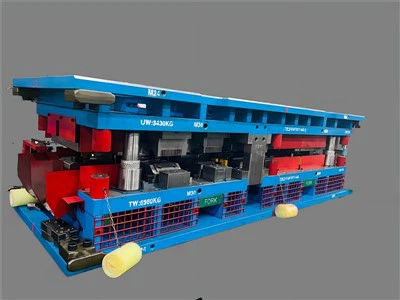
Hey there! As a supplier of stamping parts, I've been knee - deep in the world of die design for stamping parts for quite some time. Today, I'm gonna share with you the key die design principles for stamping parts.
First off, let's talk about functionality. The main goal of a stamping die is to produce parts that meet the required functional specifications. This means that the die needs to be designed in such a way that it can accurately shape the metal into the desired form. For example, if you're making Medical and Fiber Optic Parts, the die has to ensure extremely high precision. These parts often have very tight tolerances because they are used in delicate medical and optical applications. A small deviation in the stamping process can lead to the part being useless. So, when designing the die, we need to take into account the exact dimensions, angles, and surface finishes required for the part.
Another crucial aspect is material selection. The type of material used for the stamping part greatly influences the die design. Different metals have different properties such as hardness, ductility, and strength. For instance, if we're stamping a soft metal like aluminum, the die doesn't need to be as robust as when stamping a hard metal like stainless steel. Harder metals require dies made from high - strength tool steels or even carbide. These materials can withstand the high pressures and forces involved in stamping hard metals without wearing out quickly.
Cost - effectiveness is also a major consideration. We don't want to over - engineer the die, which would drive up the cost. On the other hand, we can't cut corners so much that the die fails prematurely. A well - designed die should have a good balance between cost and performance. This might involve using standard components wherever possible. There are a lot of off - the - shelf die components available in the market, and using them can significantly reduce the manufacturing cost of the die. For Precision Stamped Parts, where high precision is required, we might need to invest a bit more in the die, but still, we look for ways to optimize the design to keep the overall cost down.
Ease of maintenance is an often - overlooked principle. A stamping die is a complex piece of equipment, and it will inevitably need maintenance over time. The die should be designed in a way that makes it easy to disassemble, clean, and repair. For example, using modular designs can be very helpful. If a particular part of the die wears out, we can simply replace that module instead of having to replace the entire die. This not only saves time but also reduces the cost of maintenance.


Now, let's touch on safety. Safety should always be a top priority when designing stamping dies. The die should be designed to minimize the risk of accidents during the stamping process. This includes features like proper guarding to prevent operators from coming into contact with moving parts. Also, the die should be designed to handle any potential jams or misfeeds safely. If a part gets stuck in the die, the design should allow for easy removal without putting the operator at risk.
The production volume is another factor that affects die design. If you're producing a large volume of stamping parts, you need a die that can withstand continuous use. High - volume production requires dies with a long service life and high - speed stamping capabilities. In contrast, for low - volume production, a simpler and less expensive die design might be sufficient.
Quality control is also embedded in the die design. The die should be designed in a way that allows for easy inspection of the stamped parts. This might involve creating access points in the die so that quality control personnel can check the part dimensions and surface quality during the stamping process. By integrating quality control features into the die design, we can catch any issues early on and prevent the production of defective parts.
In addition, we need to consider the stamping process itself. There are different types of stamping processes, such as blanking, punching, bending, and deep drawing. Each process has its own requirements for die design. For example, in a bending operation, the die needs to be designed to apply the right amount of force at the right location to achieve the desired bend angle without causing any cracks or deformations in the part.
Another important principle is flexibility. The die design should allow for some degree of flexibility. This means that it should be possible to make minor adjustments to the die to produce slightly different versions of the same part. For example, if there are changes in the customer's requirements for the part dimensions, the die should be able to accommodate these changes without a complete redesign.
Now, as a stamping parts supplier, I understand that these principles can be a bit overwhelming. But don't worry! We have a team of experienced engineers who are experts in die design. We can work with you to understand your specific requirements and design a die that meets all these principles. Whether you need Medical and Fiber Optic Parts or Precision Stamped Parts, we've got you covered.
If you're in the market for stamping parts and want to discuss your project, I encourage you to reach out to us. We're always happy to have a chat about your needs and see how we can help you get the best stamping parts at a competitive price.
References:
- "Stamping Die Design Handbook" by John Doe
- "Advanced Manufacturing Technologies for Stamping Parts" by Jane Smith
- Industry whitepapers on stamping die design and production