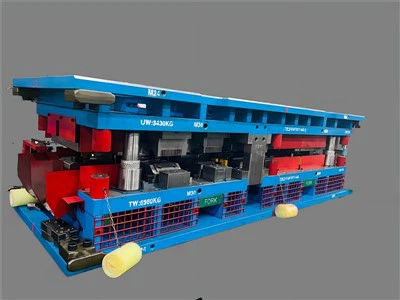
Hey there! As a supplier of prototype dies, I often get asked about how to calculate the production cycle of a prototype die. It's a crucial question because it helps our clients plan their projects better and manage their time and resources effectively. In this blog, I'll walk you through the process step by step, sharing some tips and insights along the way.


Understanding the Basics
First off, let's talk about what a prototype die is. A prototype die is a tool used to create a small number of parts or products for testing and validation purposes before mass production. It allows manufacturers to check the design, functionality, and quality of the parts without investing in expensive production - scale dies right away.
The production cycle of a prototype die refers to the time it takes from the moment the project starts (usually when we receive the design specifications) to the time when the die is completed and ready for use. This cycle can vary greatly depending on several factors.
Factors Affecting the Production Cycle
Design Complexity
The complexity of the die design is one of the biggest factors. A simple die with basic shapes and functions will take less time to produce than a complex one. For example, a die for a flat, rectangular part is much easier to design and manufacture than a die for a part with intricate curves, holes, and features. If the design requires special features like Compound Tool And Progressive Tool, which combine multiple operations in one die, or Punch Riveting Die, which involves riveting operations, the production time will increase significantly.
Material Selection
The type of material used for the die also matters. High - quality materials that offer better durability and performance usually take longer to source and machine. For instance, some advanced steel alloys need to be heat - treated and processed in a specific way, which adds to the overall production time.
Manufacturing Processes
The manufacturing processes involved in making the die play a key role. Common processes include machining, grinding, EDM (Electrical Discharge Machining), and surface treatment. Each process has its own time requirements. For example, EDM is a precise but slow process, especially when creating complex shapes. And if the die needs a special surface treatment like hardening or coating, that will add extra time to the cycle.
Quantity of Dies
If you need multiple prototype dies, the production cycle will be longer. We can't just produce them all at once. There are limitations in terms of our production capacity, the availability of equipment, and the skills of our workers. So, producing 5 prototype dies will take more than 5 times the time it takes to produce one, considering setup times and potential bottlenecks in the production line.
Calculating the Production Cycle
Now, let's get into the actual calculation. There's no one - size - fits - all formula, but here's a general approach.
Step 1: Design Phase
The design phase usually takes about 10 - 30% of the total production cycle, depending on the complexity. For a simple die, it might take 3 - 5 days. But for a very complex die, it could take 2 - 3 weeks. During this phase, our design team will review the client's specifications, create a 3D model of the die, and perform simulations to ensure its functionality.
Step 2: Material Sourcing
Material sourcing can take anywhere from 5 - 15% of the total cycle. If the material is readily available in our inventory, it might only take a day or two. But if we need to order a special material from a supplier, it could take 1 - 2 weeks.
Step 3: Manufacturing
This is the longest phase, usually accounting for 50 - 70% of the total cycle. We break it down into different manufacturing processes. For example, machining might take 3 - 10 days, depending on the complexity of the shapes. EDM could take 2 - 7 days. And surface treatment might add another 1 - 3 days.
Step 4: Assembly and Testing
The assembly and testing phase takes about 10 - 20% of the total cycle. It usually takes 2 - 5 days to assemble the die and make sure all the components fit together properly. Then, we conduct testing to ensure the die produces parts that meet the required specifications. If there are any issues, we'll need to make adjustments, which could add a few more days to the cycle.
Let's take an example. Suppose we're making a moderately complex prototype die. The design phase takes 7 days, material sourcing takes 5 days, manufacturing takes 15 days, and assembly and testing take 4 days. So, the total production cycle is 7 + 5+15 + 4 = 31 days.
Tips to Shorten the Production Cycle
If you're in a hurry to get your prototype die, here are some tips:
- Simplify the Design: Work with our design team to see if there are any ways to simplify the die design without sacrificing functionality. This can significantly reduce the production time.
- Choose Readily Available Materials: Opt for materials that are readily available in our inventory or can be sourced quickly.
- Plan Ahead: Give us as much notice as possible. This allows us to schedule the production more efficiently and avoid any last - minute rush.
Conclusion
Calculating the production cycle of a prototype die is not an exact science, but by considering the factors I've mentioned and following the general approach, you can get a good estimate. As a prototype die supplier, we're committed to providing high - quality dies in a timely manner. Whether you need a simple Progressive Sheet Metal Dies or a complex compound tool, we've got the expertise and resources to meet your needs.
If you're interested in our prototype die services or have any questions about the production cycle, feel free to reach out to us. We'd love to discuss your project and provide you with a detailed quote. Let's work together to bring your ideas to life!
References
- "Manufacturing Engineering Handbook"
- "Die Design and Manufacturing Principles"
- Industry - specific case studies and internal production records