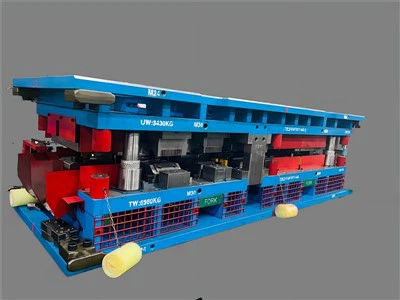
Simulation techniques have become game - changers in the stamping parts production industry, and as a stamping parts supplier, I've witnessed firsthand how these tools revolutionize the way we work. In this blog, I'll share some insights on how simulation techniques help us in stamping parts production.
Design Optimization
One of the most significant advantages of simulation is its ability to optimize the design of stamping parts. When we receive a new order, the initial design might look good on paper, but in reality, it could lead to various issues during the stamping process. Traditional methods would involve creating physical prototypes, which are time - consuming and expensive.
With simulation software, we can test different design variations virtually. For example, we can analyze how the material will flow during the stamping operation. If there are areas where the material is likely to wrinkle or crack, we can modify the design right away. This saves a ton of time and money that would otherwise be spent on multiple rounds of prototyping.
Let's say we're working on a Precision Stamped Parts [/stamping - parts/precision - stamped - part.html] order. These parts require high accuracy and precision. Through simulation, we can ensure that the final design meets the tight tolerances specified by the customer. We can adjust the shape, thickness, and other parameters of the part to achieve the best possible outcome.
Predicting Formability
Formability is a crucial factor in stamping parts production. Not all materials can be stamped into the desired shape without problems. Simulation techniques allow us to predict the formability of different materials accurately.
We input the material properties, such as strength, ductility, and hardness, into the simulation software. The software then analyzes how the material will behave under the stamping forces. It can tell us if the material will break, tear, or deform in an undesirable way.
For instance, when dealing with complex shapes in Medical and Fiber Optic Parts [/stamping - parts/medical - and - fiber - optic - part.html], the formability of the material is of utmost importance. The parts need to be made with high - quality materials that can be formed precisely. Simulation helps us select the right material and determine the optimal stamping process to ensure the parts meet the strict quality requirements of the medical and fiber optic industries.
Process Parameter Optimization
The stamping process involves several parameters, such as punch speed, die clearance, and lubrication. These parameters can have a significant impact on the quality of the stamped parts. Simulation techniques enable us to optimize these process parameters.
We can run multiple simulations with different parameter settings to find the combination that produces the best results. For example, by adjusting the punch speed, we can reduce the risk of material cracking. A slower punch speed might be more suitable for brittle materials, while a faster speed could work better for more ductile ones.
Die clearance is another critical parameter. If the die clearance is too large, the part may have a rough edge or be out of shape. If it's too small, the die and punch may wear out quickly. Simulation helps us find the ideal die clearance for each specific part design.
Lubrication also plays a vital role in the stamping process. It reduces friction between the material and the die, which can improve the surface finish of the part and extend the life of the die. Through simulation, we can determine the right type and amount of lubricant to use.
Cost Reduction
Cost is always a major concern in any manufacturing process, and stamping parts production is no exception. Simulation techniques contribute significantly to cost reduction in several ways.


As mentioned earlier, by optimizing the design and process parameters, we can reduce the number of defective parts. Fewer defective parts mean less waste of materials and less rework, which directly translates into cost savings.
Moreover, simulation reduces the need for physical prototypes. Creating physical prototypes involves the cost of materials, labor, and equipment. By using simulation to test different designs and processes, we can avoid these expenses.
We can also save on tooling costs. Simulation allows us to predict the wear and tear of the dies and punches. By optimizing the stamping process, we can extend the life of the tooling, reducing the frequency of tool replacement.
Quality Assurance
Quality is the cornerstone of our business as a stamping parts supplier. Simulation techniques are invaluable for ensuring the quality of our products.
During the simulation process, we can detect potential quality issues early on. Whether it's a problem with the part's dimensions, surface finish, or internal structure, simulation can identify it. We can then take corrective actions before the actual production begins.
For example, if the simulation shows that a part will have a high residual stress, which could lead to part failure in the long run, we can modify the design or process to reduce the stress. This proactive approach to quality control helps us deliver high - quality stamping parts to our customers consistently.
Reducing Lead Time
In today's fast - paced business environment, lead time is a critical factor. Customers expect their orders to be delivered quickly. Simulation techniques help us reduce the lead time in stamping parts production.
By optimizing the design and process parameters through simulation, we can streamline the production process. We can eliminate unnecessary steps and reduce the time it takes to produce each part.
Since we don't have to rely on multiple rounds of physical prototyping, the overall development time of a new part is significantly reduced. This means we can get the parts to our customers faster, giving us a competitive edge in the market.
Training and Skill Development
Simulation techniques also offer benefits in terms of training and skill development for our employees. New employees can use simulation software to learn about the stamping process without the risk of damaging expensive equipment or producing defective parts.
They can experiment with different design and process parameters in a virtual environment and see the immediate results. This hands - on learning experience helps them understand the complex relationships between different factors in the stamping process more quickly.
For experienced employees, simulation provides a platform to explore new ideas and improve their skills. They can use the software to test innovative designs and processes, which can lead to continuous improvement in our production methods.
Conclusion
As a stamping parts supplier, I'm convinced that simulation techniques are essential for the success of our business. They help us optimize the design, predict formability, optimize process parameters, reduce costs, ensure quality, reduce lead time, and develop our employees' skills.
If you're in the market for high - quality stamping parts, whether it's Precision Stamped Parts or Medical and Fiber Optic Parts, we'd love to have a chat with you. Our team of experts is ready to use the latest simulation techniques to meet your specific requirements. Contact us for a detailed discussion about your stamping parts needs, and let's work together to bring your projects to life.
References
- Smith, J. (2020). "Advances in Simulation Techniques for Stamping Parts Production." Journal of Manufacturing Science.
- Johnson, M. (2019). "The Impact of Simulation on Cost Reduction in Stamping." Manufacturing Today Magazine.
- Brown, A. (2021). "Quality Assurance in Stamping Parts Production Using Simulation." International Journal of Precision Manufacturing.