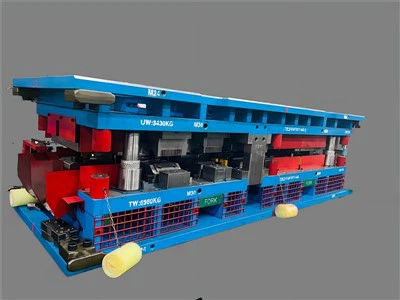
As a supplier in the automotive tooling industry, I've witnessed firsthand the pivotal role that research and development (R&D) plays in shaping the future of our field. In this blog, I'll delve into the various ways R&D impacts automotive tooling and why it's so crucial for suppliers like us.
Innovation in Design
One of the primary roles of R&D in automotive tooling is driving innovation in design. With the constant evolution of automotive technology and consumer demands, there's a continuous need for more efficient, precise, and cost - effective tooling solutions. Through R&D, we can explore new materials, geometries, and manufacturing processes.
For instance, we're always on the lookout for materials that can withstand higher pressures and temperatures during the stamping process. New alloys and composites are being tested regularly to improve the durability and performance of our Automotive Progressive Die. These dies are used to produce complex automotive parts in a single pass, and any improvement in their design can lead to significant cost savings and higher - quality products.
In addition to materials, R&D helps us optimize the geometry of our tools. By using advanced computer - aided design (CAD) and simulation software, we can model different tool shapes and predict how they'll perform under various conditions. This allows us to create tools that are not only more efficient but also produce parts with better dimensional accuracy.
Keeping Up with Industry Trends
The automotive industry is constantly changing, with new trends emerging all the time. From the rise of electric vehicles (EVs) to the increasing demand for lightweight materials, R&D is essential for automotive tooling suppliers to stay relevant.
As more automakers shift towards EV production, the requirements for tooling are changing. EV components often have different shapes and specifications compared to traditional internal combustion engine parts. For example, battery trays need to be designed to hold large, heavy batteries securely, and R&D helps us develop the right tooling to manufacture these components efficiently.
Lightweighting is another major trend in the automotive industry. Automakers are looking for ways to reduce the weight of their vehicles to improve fuel efficiency and range. This has led to an increased use of materials like aluminum and high - strength steel. R&D allows us to develop tooling that can handle these new materials effectively. For example, Progressive Metal Stamping techniques can be optimized for aluminum stamping, taking into account its different properties compared to steel.
Quality Improvement
R&D also plays a crucial role in improving the quality of automotive tooling. By investing in research, we can develop new inspection and testing methods to ensure that our tools meet the highest standards.
We use advanced non - destructive testing (NDT) techniques, such as ultrasonic testing and X - ray inspection, to detect any internal defects in our tools. This helps us catch potential problems early and prevent them from affecting the quality of the parts produced. In addition, R&D allows us to develop new surface treatment processes that can improve the wear resistance and corrosion resistance of our tools.
Another aspect of quality improvement is reducing the variability in tool performance. Through R&D, we can identify the factors that contribute to variability and develop strategies to minimize them. This ensures that our tools produce consistent, high - quality parts over a long period of time.
Cost Reduction
In the highly competitive automotive tooling market, cost reduction is a key objective. R&D can help us achieve this in several ways.
First, by developing more efficient manufacturing processes, we can reduce the production time and cost of our tools. For example, new machining techniques and automation technologies can speed up the manufacturing process and reduce labor costs. Second, R&D allows us to optimize the use of materials. By using the right amount of material and minimizing waste, we can lower our material costs.


We can also reduce costs by improving the durability of our tools. Longer - lasting tools mean fewer replacements, which saves money in the long run. Through R&D, we can develop new coatings and heat - treatment processes that extend the life of our tools.
Customization and Flexibility
Automotive manufacturers often have specific requirements for their tooling, and R&D enables us to provide customized solutions. Custom Stamping Dies are a great example of how we can meet these unique needs.
By investing in R&D, we can develop the expertise and capabilities to design and manufacture dies that are tailored to the specific requirements of each customer. Whether it's a special part shape, a unique material, or a specific production volume, we can use our research to create the right tooling solution.
In addition to customization, R&D also helps us build flexibility into our tooling. With the ability to quickly adapt our tools to different production requirements, we can better serve our customers. For example, we can develop modular tooling systems that can be easily reconfigured for different part designs, reducing the time and cost of tool changeovers.
Conclusion
In conclusion, research and development is the lifeblood of the automotive tooling industry. It drives innovation, helps us keep up with industry trends, improves quality, reduces costs, and enables customization and flexibility. As a supplier, we're committed to investing in R&D to provide the best possible tooling solutions for our customers.
If you're in the automotive industry and are looking for high - quality, innovative tooling solutions, we'd love to talk to you. Whether you have a specific project in mind or just want to learn more about our capabilities, don't hesitate to reach out. Let's work together to take your automotive manufacturing to the next level.
References
- Automotive Industry Reports from Industry Associations
- Technical Journals on Materials Science and Manufacturing Engineering
- Internal Research and Development Records from Our Company