Hey there! As a supplier of deep draw parts, I've had my fair share of experiences understanding what quality standards these parts need to meet. So, let's dive right in and explore this topic together.
First off, what are deep draw parts? Well, they're basically components made through a deep drawing process. This involves taking a flat sheet of metal and transforming it into a three - dimensional shape by stretching it over a die. It's a pretty cool process, and it's used in a whole bunch of industries, from automotive to electronics.
Dimensional Accuracy
One of the most crucial quality standards for deep draw parts is dimensional accuracy. You see, these parts are often used in assemblies where every millimeter counts. If a part is even slightly off in terms of its dimensions, it might not fit properly into the larger system.
For example, in the automotive industry, deep draw parts are used in engine components, body panels, and more. A part that's too big or too small can cause all sorts of problems, like leaks, vibrations, or even mechanical failures. That's why we use high - precision manufacturing techniques and advanced measuring tools to ensure that our parts meet the exact specifications provided by our customers.
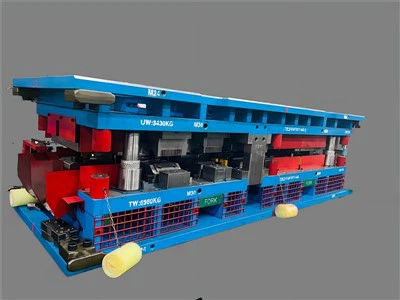
We rely on technologies like Progressive Die Manufacturing to create dies that can produce parts with extremely tight tolerances. Progressive dies are designed to perform multiple operations in a single pass, which helps in maintaining consistent dimensions across all the parts we produce.
Surface Finish
Another important quality standard is the surface finish of the deep draw parts. A smooth and uniform surface finish is not just for looks; it has practical implications too.
In applications where the part comes into contact with other components, a rough surface can cause increased friction, which can lead to wear and tear over time. In the electronics industry, for instance, deep draw parts are used in enclosures for sensitive electronic devices. A poor surface finish can cause scratches or damage to the internal components, affecting their performance.
We use various finishing processes to achieve the desired surface quality. This can include polishing, plating, or coating. For example, plating can not only improve the appearance of the part but also provide protection against corrosion. And when it comes to designing the tools for the deep drawing process, Sheet Metal Progressive Tool Design plays a key role in ensuring that the surface finish is consistent across all parts.
Material Integrity
The material used in deep draw parts is also a critical factor. The right material needs to have the appropriate strength, ductility, and formability to withstand the deep drawing process without cracking or tearing.
We carefully select the materials based on the specific requirements of the application. For example, in the aerospace industry, where parts need to be lightweight yet strong, we might use aluminum alloys. In other applications, like heavy machinery, we could opt for steel due to its high strength and durability.


It's also important to ensure that the material is free from defects such as inclusions, porosity, or surface cracks. We conduct thorough material testing before starting the manufacturing process to guarantee the integrity of the material. This helps us avoid any issues during the deep drawing process and ensures that the final parts meet the required quality standards.
Structural Integrity
Deep draw parts need to have good structural integrity. This means that they should be able to withstand the loads and stresses they'll be subjected to in their intended applications.
During the deep drawing process, the metal undergoes significant deformation. If the process is not properly controlled, it can lead to weak spots or areas of stress concentration in the part. This can compromise the structural integrity of the part and make it more prone to failure.
To address this, we use advanced simulation techniques to analyze the stress distribution in the part during the deep drawing process. This allows us to optimize the process parameters and ensure that the part has a uniform and strong structure. Our Sheet Metal Progressive Tool is also designed to minimize the formation of stress concentrations and ensure that the part maintains its structural integrity.
Tolerance for Defects
Even with the best manufacturing processes, there's always a small chance of defects occurring. However, the acceptable level of defects is another quality standard that deep draw parts need to meet.
We have strict quality control measures in place to detect and reject parts with defects. This includes visual inspections, dimensional checks, and non - destructive testing methods. For example, we might use ultrasonic testing to detect internal defects in the parts.
The tolerance for defects varies depending on the application. In some industries, like medical devices, the tolerance for defects is extremely low, as even a small defect can have serious consequences. In other industries, a slightly higher tolerance might be acceptable, but we still strive to keep the defect rate as low as possible.
Compliance with Industry Standards
Deep draw parts also need to comply with various industry standards. These standards are set by regulatory bodies and industry associations to ensure the safety, performance, and quality of the parts.
For example, in the automotive industry, parts need to comply with standards related to crashworthiness, emissions, and safety. In the food and beverage industry, parts need to be made from materials that are safe for contact with food.
We stay up - to - date with the latest industry standards and ensure that all our parts are manufactured in accordance with them. This not only helps us meet the requirements of our customers but also gives them peace of mind knowing that the parts they're purchasing are of high quality and meet all the necessary regulations.
Conclusion
So, there you have it! These are some of the key quality standards that deep draw parts need to meet. As a supplier, we're committed to producing parts that not only meet but exceed these standards. We use the latest technologies, advanced manufacturing processes, and strict quality control measures to ensure that our customers get the best possible deep draw parts.
If you're in the market for high - quality deep draw parts, I'd love to have a chat with you. Whether you have a specific project in mind or just want to learn more about our products and services, don't hesitate to reach out. Let's work together to find the perfect solution for your needs.
References
- Various industry publications on deep drawing processes and quality control
- Technical documentation from tooling manufacturers
- Standards and regulations from relevant industry bodies