What is the formability of deep draw parts?
As a supplier of deep draw parts, I often encounter inquiries about the formability of these components. Formability is a crucial aspect in the manufacturing of deep draw parts, as it directly impacts the quality, efficiency, and cost - effectiveness of the production process.
Formability can be defined as the ability of a material to undergo plastic deformation without failure during the deep - drawing process. In deep drawing, a flat sheet of metal is transformed into a three - dimensional shape, typically with a depth greater than its radius. This process involves complex stress and strain distributions within the material.
Factors Affecting Formability
Material Properties
The inherent properties of the material play a significant role in its formability. For instance, the yield strength and ultimate tensile strength of the metal are important. A material with a low yield strength and high ultimate tensile strength generally has better formability. Metals such as aluminum and copper are known for their relatively good formability compared to some high - strength steels.
The grain size of the metal also affects formability. Finer grain sizes often lead to better formability because they allow for more uniform deformation. In addition, the anisotropy of the material, which refers to the variation in mechanical properties with direction, can have a substantial impact. Anisotropic materials may exhibit different formability characteristics in different directions, which must be carefully considered during the deep - drawing process.


Tooling Design
The design of the deep - drawing tools is another critical factor. The punch and die geometry must be carefully engineered to ensure smooth and uniform deformation of the material. A well - designed punch with appropriate radii can help prevent excessive stress concentrations, which can lead to cracking or wrinkling of the part.
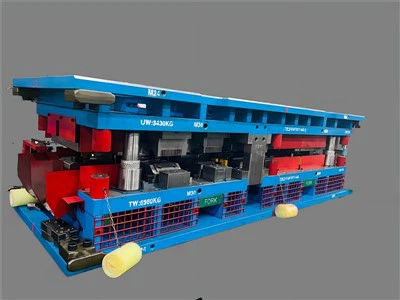
The clearance between the punch and the die is also crucial. If the clearance is too small, the material may experience excessive friction, leading to tearing. On the other hand, if the clearance is too large, the part may wrinkle. For example, in the production of automotive deep - draw parts, precision tooling design is essential to meet the strict quality requirements. Our company offers a variety of tooling solutions, including Automotive Progressive Die, which are designed to optimize the formability of deep - draw parts.
Lubrication
Lubrication is vital in the deep - drawing process. A proper lubricant can reduce friction between the material and the tooling, allowing the material to flow more smoothly. This not only improves the formability but also extends the life of the tooling. There are different types of lubricants available, such as oil - based and water - based lubricants. The choice of lubricant depends on the material being drawn, the tooling material, and the specific requirements of the deep - drawing operation.
Measuring Formability
There are several methods to measure the formability of materials for deep - draw parts. One of the most common methods is the Erichsen test. In this test, a spherical punch is used to press a sheet of metal until a crack appears. The depth of the punch penetration at the point of cracking is used as an indicator of the material's formability.
Another method is the limiting drawing ratio (LDR). The LDR is defined as the maximum ratio of the blank diameter to the punch diameter that can be successfully drawn without failure. A higher LDR indicates better formability. By measuring the LDR, manufacturers can determine the suitability of a material for a particular deep - drawing application.
Importance of Formability in Deep - Draw Parts Manufacturing
Good formability is essential for several reasons. Firstly, it allows for the production of high - quality parts with fewer defects. Parts with good formability are less likely to have cracks, wrinkles, or other surface imperfections, which is crucial in applications where aesthetics and functionality are important, such as in the automotive and consumer electronics industries.
Secondly, formability affects the production efficiency. Materials with better formability can be drawn at higher speeds and with fewer processing steps. This reduces the manufacturing time and cost. For example, using a material with excellent formability in the production of Progressive casting die can lead to faster production cycles and lower overall costs.
Finally, formability is related to the design flexibility. With materials that have good formability, designers have more freedom to create complex shapes and geometries. This enables the development of innovative products that meet the evolving needs of the market.
Our Capabilities as a Deep - Draw Parts Supplier
As a leading supplier of deep - draw parts, we have extensive experience in dealing with different materials and formability challenges. Our team of engineers and technicians is well - versed in the latest techniques and technologies for improving formability.
We use state - of - the - art tooling design and manufacturing processes to ensure the optimal formability of our deep - draw parts. Our Sheet Metal Progressive Tool is designed to provide precise and efficient forming operations. We also conduct rigorous quality control measures to ensure that all our parts meet the highest standards of formability and quality.
Contact Us for Your Deep - Draw Parts Needs
If you are in the market for high - quality deep - draw parts, we invite you to contact us for a detailed discussion. Our team is ready to assist you in choosing the right materials, tooling, and manufacturing processes to meet your specific requirements. Whether you need parts for automotive, aerospace, or consumer products, we have the expertise and resources to deliver the best solutions.
References
- Dieter, G. E. (1986). Mechanical Metallurgy. McGraw - Hill.
- Kalpakjian, S., & Schmid, S. R. (2008). Manufacturing Engineering and Technology. Pearson Prentice Hall.