Achieving a good surface finish on deep draw parts is crucial for both aesthetic and functional reasons. As a deep draw parts supplier, I understand the challenges and requirements that come with producing high - quality parts with an excellent surface finish. In this blog post, I will share some insights and strategies on how to achieve this goal.
Understanding the Basics of Deep Drawing
Deep drawing is a metal forming process in which a sheet metal blank is radially drawn into a forming die by the mechanical action of a punch. This process is widely used to create cylindrical, rectangular, or other complex - shaped parts. The quality of the surface finish in deep draw parts can be affected by various factors, including the material properties, tooling design, lubrication, and the forming process itself.
Material Selection
The choice of material plays a significant role in achieving a good surface finish. Different metals have different formability and surface characteristics. For example, aluminum alloys are known for their good formability and can achieve a smooth surface finish. Stainless steel, on the other hand, is more resistant to corrosion but may require more precise forming conditions to avoid surface defects.
When selecting a material, consider its grain size, hardness, and ductility. A fine - grained material generally results in a smoother surface finish. Also, ensure that the material is free from surface contaminants such as oil, dirt, or rust, as these can transfer onto the part during the forming process and affect the surface quality.
Tooling Design
The design of the tooling, including the punch and die, is critical for achieving a good surface finish. The surface of the punch and die should be highly polished to minimize friction between the tool and the sheet metal. A smooth tool surface reduces the likelihood of scratches, galling, and other surface defects on the deep draw parts.
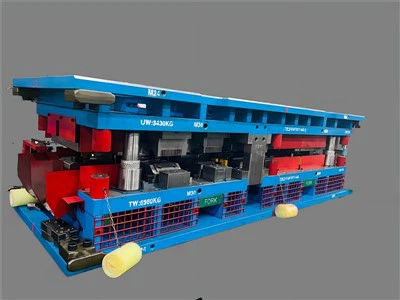
Proper tool clearance is also essential. If the clearance between the punch and die is too small, it can cause excessive friction and result in surface damage. Conversely, if the clearance is too large, the part may experience wrinkling or uneven deformation, which can also affect the surface finish. Additionally, using Sheet Metal Stamping Dies or Casting Progressive Die can improve the precision and consistency of the deep drawing process, leading to better surface quality.
Lubrication
Lubrication is a key factor in achieving a good surface finish on deep draw parts. A suitable lubricant reduces friction between the sheet metal and the tooling, preventing scratches and galling. It also helps to dissipate heat generated during the forming process, which can further improve the surface quality.
There are different types of lubricants available, including oil - based, water - based, and dry film lubricants. The choice of lubricant depends on the material being formed, the complexity of the part, and the forming conditions. For example, oil - based lubricants are often used for forming metals such as steel and aluminum because they provide excellent lubrication and corrosion protection. Water - based lubricants are more environmentally friendly and are suitable for applications where cleanliness is a concern. Dry film lubricants can be used in high - speed or high - temperature forming operations.
When applying lubricant, ensure that it is evenly distributed on the surface of the sheet metal. Uneven lubrication can lead to inconsistent surface finish and may cause defects such as wrinkles or tears in the part.
Forming Process Optimization
Optimizing the forming process is essential for achieving a good surface finish. This includes controlling the speed of the punch, the pressure applied, and the number of drawing stages.
Punch Speed
The speed of the punch during the deep drawing process can affect the surface finish. A too - high punch speed can cause the sheet metal to deform too quickly, leading to surface cracking or wrinkling. On the other hand, a too - low punch speed can result in excessive friction and heat generation, which can also damage the surface of the part. Therefore, it is important to find the optimal punch speed for each specific application.
Pressure Control
Proper pressure control is crucial for ensuring uniform deformation of the sheet metal. The pressure applied by the punch should be sufficient to draw the metal into the die without causing excessive thinning or tearing. Using a pressure - controlled press can help to maintain a consistent pressure throughout the forming process, resulting in a more uniform surface finish.
Multiple Drawing Stages
For complex - shaped deep draw parts, using multiple drawing stages can improve the surface finish. Instead of trying to form the part in a single operation, the part is formed gradually in several steps. This reduces the stress on the sheet metal and allows for more precise control of the deformation, resulting in a smoother surface. Additionally, intermediate annealing steps can be introduced between the drawing stages to relieve internal stresses and improve the formability of the metal.
Post - Processing
Even after the deep drawing process, there are still steps that can be taken to improve the surface finish of the parts. Post - processing operations such as grinding, polishing, and plating can be used to remove any surface defects and enhance the appearance of the parts.
Grinding and Polishing
Grinding is a process that uses abrasive wheels to remove a thin layer of material from the surface of the part. This can be used to remove scratches, burrs, or other surface irregularities. Polishing, on the other hand, uses finer abrasives to create a smooth and shiny surface. The choice of grinding and polishing techniques depends on the material and the desired surface finish.


Plating
Plating is a process in which a thin layer of metal is deposited onto the surface of the part. This can improve the corrosion resistance, wear resistance, and appearance of the deep draw parts. Common plating materials include nickel, chrome, and zinc. The plating process should be carefully controlled to ensure a uniform and defect - free coating.
Quality Control
Implementing a strict quality control system is essential for ensuring that the deep draw parts meet the required surface finish standards. This includes visual inspection, surface roughness measurement, and dimensional inspection.
Visual inspection can be used to detect obvious surface defects such as scratches, cracks, or wrinkles. Surface roughness measurement, using instruments such as profilometers, can provide quantitative data on the smoothness of the surface. Dimensional inspection ensures that the parts are within the specified tolerances, which is also important for the overall surface quality.
Conclusion
Achieving a good surface finish on deep draw parts requires a comprehensive approach that considers material selection, tooling design, lubrication, forming process optimization, post - processing, and quality control. As a deep draw parts supplier, we are committed to using the latest technologies and best practices to produce high - quality parts with excellent surface finishes.
If you are in need of deep draw parts with a superior surface finish, we invite you to contact us for a consultation. We have the expertise and experience to meet your specific requirements and provide you with the best solutions for your projects.
References
- "Metal Forming Handbook: Processes and Applications" by G. E. Dieter
- "Advanced Manufacturing Technology" by S. Kalpakjian and S. R. Schmid