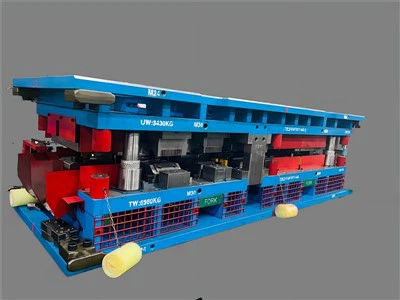
Hey there! As a supplier of Punch Riveting Dies, I've been getting a lot of questions about the heat treatment processes for these dies. So, I thought I'd write this blog to share some insights on what they are and why they matter.
Why Heat Treatment?
First off, let's talk about why heat treatment is so important for punch riveting dies. These dies go through a lot of stress during the riveting process. They need to be tough enough to withstand high pressures, wear-resistant to last a long time, and have the right hardness to form the rivets properly. Heat treatment helps achieve these properties by altering the microstructure of the die material.
Annealing
One of the first heat treatment processes we often use is annealing. Annealing is like giving the die material a nice, relaxing spa day. It involves heating the die to a specific temperature and then slowly cooling it down. This process relieves internal stresses that might have built up during manufacturing, like forging or machining.
When we anneal a punch riveting die, it becomes more ductile. That means it can bend a bit without breaking. It's also easier to machine after annealing, which is great for getting the die to the right shape. We usually anneal the die at a temperature between 700°C and 900°C, depending on the material. After that, we let it cool down slowly in the furnace. This slow cooling is crucial because it allows the atoms in the material to rearrange themselves in a more stable way.
Normalizing
Normalizing is another important process. It's similar to annealing, but there are some key differences. When we normalize a punch riveting die, we heat it to a slightly higher temperature than for annealing and then cool it in air. This faster cooling rate makes the material harder and stronger than after annealing.
Normalizing helps refine the grain structure of the die material. A finer grain structure means better mechanical properties, like improved strength and toughness. We often use normalizing as a pre-treatment before other heat treatment processes. It sets the stage for getting the best out of the die material.
Hardening
Now, let's talk about hardening. This is the process that really gives the punch riveting die its strength and wear resistance. Hardening involves heating the die to a high temperature, usually above 800°C, and then quenching it rapidly in a liquid, like oil or water.
The rapid cooling during quenching causes the material to transform into a hard and brittle phase called martensite. Martensite is super strong, but it's also very brittle, which can be a problem. That's why we need to follow up hardening with another process called tempering.
Tempering
Tempering is all about finding the right balance. After hardening, the punch riveting die is too brittle to use in its raw form. Tempering involves heating the hardened die to a lower temperature, typically between 150°C and 650°C, and then cooling it slowly.
This process reduces the brittleness of the martensite while still maintaining a good level of hardness. It makes the die more tough and resistant to cracking. The exact tempering temperature and time depend on the specific requirements of the die. For example, if the die needs to be very hard for a high-volume riveting job, we might use a lower tempering temperature.
Surface Hardening
In some cases, we also use surface hardening techniques for punch riveting dies. Surface hardening is great because it can give the die a hard outer layer while keeping a tough core. One common surface hardening method is carburizing.
Carburizing involves heating the die in a carbon-rich environment. The carbon atoms diffuse into the surface of the die, making it harder. After carburizing, the die is quenched and tempered to get the right combination of hardness and toughness. Another surface hardening method is nitriding. Nitriding introduces nitrogen atoms into the surface of the die, which also improves its hardness and wear resistance.
The Impact on Die Performance
So, how do these heat treatment processes actually affect the performance of punch riveting dies? Well, a properly heat-treated die will last much longer. It can withstand more riveting cycles without wearing out or breaking. This means less downtime for die replacement and lower costs in the long run.
The right heat treatment also ensures that the rivets are formed correctly. A die with the right hardness and toughness will create a clean and secure rivet joint. This is crucial for the quality of the final product. Whether it's in automotive manufacturing or aerospace applications, a well-made rivet joint can make all the difference.
Our Experience as a Supplier
As a Punch Riveting Die supplier, we've seen firsthand the importance of heat treatment. We work closely with our customers to understand their specific needs and then choose the right heat treatment processes for their dies. We use state-of-the-art equipment to ensure that each die is heat-treated to perfection.
We also offer a range of other die products, such as High Precision Stamping Die, Metal Stamping Tool And Die, and Progressive Sheet Metal Dies. These products are also carefully heat-treated to meet the highest standards of quality and performance.
Conclusion
In conclusion, heat treatment is a critical part of manufacturing punch riveting dies. Annealing, normalizing, hardening, tempering, and surface hardening all play important roles in giving the dies the right properties. By choosing the right heat treatment processes, we can ensure that our dies last longer, perform better, and produce high-quality rivet joints.


If you're in the market for punch riveting dies or any of our other die products, I encourage you to reach out to us. We'd love to have a chat about your needs and see how we can help you. Whether you're a small business or a large corporation, we're committed to providing you with the best products and services.
References
- ASM Handbook Volume 4: Heat Treating
- Tool and Die Making Technology by Richard R. Kibbe