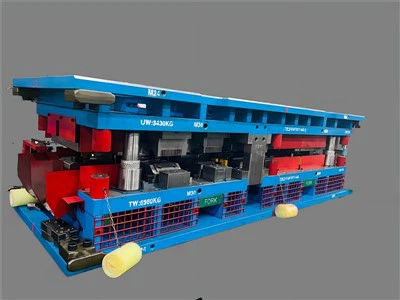
As a supplier of Transfer Dies, I've had the privilege of working closely with various industries, witnessing firsthand the remarkable capabilities and widespread applications of these tools. Transfer Dies are sophisticated pieces of equipment used in the metal stamping industry, designed to transfer a workpiece through multiple stations in a single press stroke, enabling the creation of complex parts with high precision and efficiency. However, like any technology, Transfer Dies come with their own set of disadvantages that are important to consider when evaluating their suitability for a particular manufacturing process.
High Initial Investment
One of the most significant disadvantages of Transfer Dies is the high initial investment required. Designing and manufacturing a Transfer Die is a complex and time - consuming process that involves advanced engineering, precision machining, and extensive testing. The cost of materials, labor, and equipment for creating a custom - made Transfer Die can be substantial, often running into hundreds of thousands or even millions of dollars, depending on the complexity of the part and the die design.
For small and medium - sized enterprises (SMEs) with limited budgets, this upfront cost can be a major barrier to entry. The financial burden of purchasing a Transfer Die may be too high to justify, especially when considering the relatively short production runs that these companies typically handle. In contrast, other stamping methods such as Progressive Metal Stamping may offer a more cost - effective solution for low - volume production, as the tooling costs for progressive dies are generally lower.
Long Lead Times
The design and manufacturing of Transfer Dies are not only expensive but also time - consuming. From the initial concept design to the final production - ready die, the process can take several months to over a year, depending on the complexity of the project. This long lead time can be a significant drawback for companies that need to bring products to market quickly.
In today's fast - paced business environment, speed to market is often a critical factor in determining a product's success. Delays in obtaining a Transfer Die can result in missed deadlines, lost sales opportunities, and increased competition. For example, in the automotive industry, where new models are introduced regularly, a delay in the production of a key component due to a late - arriving Transfer Die can have a cascading effect on the entire production schedule.
Limited Flexibility
Transfer Dies are highly specialized tools designed for a specific part or a narrow range of parts. Once a Transfer Die is manufactured, it is difficult and costly to modify it to produce different parts. This lack of flexibility can be a problem for companies that need to adapt to changing market demands or produce a variety of products.
In comparison, Sheet Metal Progressive Tool Design offers more flexibility. Progressive dies can be designed to accommodate multiple operations and can often be modified relatively easily to produce different parts by changing the punches, dies, or other tooling components. This makes progressive dies a more attractive option for companies that require a high degree of flexibility in their manufacturing processes.
Maintenance and Repair Challenges
Maintaining and repairing Transfer Dies is a complex and specialized task. These dies are subject to high stresses and wear during the stamping process, which can lead to damage and reduced performance over time. The intricate design of Transfer Dies means that they often have many moving parts, and any malfunction or wear in these parts can affect the quality of the stamped parts.
Finding skilled technicians who are capable of maintaining and repairing Transfer Dies can be a challenge. The specialized knowledge and experience required to work on these dies are not widely available, and companies may need to invest in training their own staff or rely on external experts. Additionally, the cost of spare parts for Transfer Dies can be high, and downtime for maintenance and repair can result in lost production and increased costs.


Quality Control Issues
Ensuring consistent quality in parts produced using Transfer Dies can be a challenge. The multiple stations and complex movements involved in the transfer process introduce additional variables that can affect the quality of the stamped parts. Even small variations in the transfer mechanism, such as misalignment or inconsistent movement, can lead to defects in the parts.
Quality control in Transfer Die stamping requires strict monitoring and precise calibration of the equipment. This can be a time - consuming and costly process, especially when dealing with high - volume production. In contrast, some other stamping methods may offer more straightforward quality control processes, making it easier to maintain consistent part quality.
Energy Consumption
Transfer Dies often require large and powerful presses to operate. These presses consume a significant amount of energy, which can contribute to high operating costs. The energy consumption is not only a financial concern but also an environmental one, as it adds to the carbon footprint of the manufacturing process.
In an era where sustainability is becoming increasingly important, companies are looking for ways to reduce their energy consumption and environmental impact. The high energy requirements of Transfer Dies may make them less attractive compared to other stamping technologies that are more energy - efficient.
Conclusion
While Transfer Dies offer many advantages in terms of high - volume production of complex parts, they also come with a number of disadvantages. The high initial investment, long lead times, limited flexibility, maintenance and repair challenges, quality control issues, and high energy consumption are all factors that need to be carefully considered when deciding whether to use Transfer Dies in a manufacturing process.
However, it's important to note that these disadvantages may not be significant for all applications. For large - scale production of standardized parts where high precision and efficiency are crucial, Transfer Dies can still be the best choice. As a Transfer Die supplier, we understand the importance of helping our customers make informed decisions. We work closely with our clients to evaluate their specific needs and determine whether Transfer Dies are the most suitable solution for their manufacturing requirements.
If you are considering using Transfer Dies for your production process or have any questions about the advantages and disadvantages of these tools, we invite you to contact us for a detailed discussion. Our team of experts is ready to assist you in making the right choice for your business.
References
- Metal Stamping Handbook, Industrial Press Inc.
- Manufacturing Engineering and Technology, S. Kalpakjian and S. Schmid