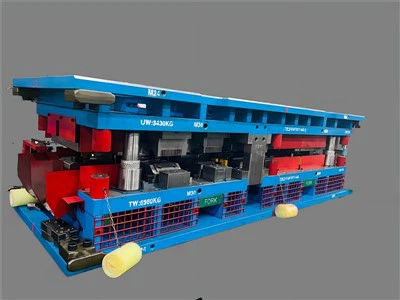
Hey there! As a stamping die supplier, I often get asked, "How much does a stamping die cost?" Well, let me tell you, it's not a simple question with a straightforward answer. There are a bunch of factors that can affect the price of a stamping die, and in this blog, I'm going to break them down for you.
First off, the type of stamping die plays a huge role in determining its cost. There are different kinds of stamping dies, like progressive dies, transfer dies, and single - hit dies. Progressive dies are designed to perform multiple operations in one pass as the strip of material moves through the die. They're usually more complex and can handle high - volume production. Transfer dies, on the other hand, are used for larger parts and can transfer the workpiece from one station to another. You can learn more about transfer die stamping. Single - hit dies are the simplest type, performing just one operation per stroke.
Progressive dies are generally more expensive than single - hit dies because of their complexity. They require more precise machining and often use advanced technologies to ensure smooth operation. The cost of a progressive die can range from a few thousand dollars for a relatively simple one to hundreds of thousands of dollars for a large, high - precision die used in the automotive industry.
Transfer dies are also on the pricier side. They need to be carefully engineered to transfer the parts accurately between stations. The size of the parts they handle and the number of operations they perform contribute to the cost. A basic transfer die might start at around $20,000, but for more complex applications in heavy industries, the cost can easily exceed $100,000.
Single - hit dies are the most affordable option. They're great for small - scale production or for making prototypes. You can get a simple single - hit die for as little as a few hundred dollars, depending on the size and the material it's made from.
The material used to make the stamping die is another important factor. The most common materials are tool steels, such as D2, A2, and H13. Tool steels are known for their hardness, wear resistance, and ability to withstand high - pressure stamping operations.
D2 steel is a high - carbon, high - chromium tool steel. It offers excellent wear resistance, which is crucial for dies that are used in high - volume production. However, it's also relatively expensive. A die made from D2 steel can cost significantly more than one made from a lower - grade steel.
A2 steel is a medium - alloy air - hardening tool steel. It has good toughness and wear resistance, and it's easier to machine compared to D2. So, dies made from A2 steel are often a more cost - effective option, especially for medium - volume production.
H13 steel is a hot - work tool steel. It's designed to withstand high temperatures, making it suitable for applications where the die gets hot during the stamping process, like in forging or extrusion. The cost of an H13 die will depend on its size and complexity, but it generally falls somewhere in the middle of the price range between D2 and A2.
Apart from tool steels, some dies are made from carbide. Carbide is extremely hard and wear - resistant, but it's also very brittle and expensive to machine. Dies made from carbide are typically used for applications where extremely high precision and long tool life are required, such as in the electronics industry. A carbide stamping die can cost several times more than a steel die.
The complexity of the design is yet another factor that impacts the cost. If the part being stamped has a simple shape, like a flat washer, the die design will be relatively straightforward. The machining process will be quicker and less complicated, resulting in a lower cost.
But if the part has a complex shape, with multiple bends, holes, and contours, the die design will be much more challenging. The die will need to be precisely engineered to ensure that the part is stamped accurately. This requires more time and skill from the design and manufacturing team, which drives up the cost.
For example, a die for stamping a simple rectangular bracket might cost a few thousand dollars. But a die for stamping a complex automotive body panel, with its intricate curves and features, could cost tens of thousands of dollars or more.
The size of the die also matters. Larger dies require more material and more machining time. They also need more powerful presses to operate. So, a big stamping die for making large automotive parts will be more expensive than a small die for making small electronic components.
The production volume is related to the cost as well. If you're only planning to produce a small number of parts, say a few hundred, you might be able to get away with a less expensive die. A simple single - hit die or a prototype die can do the job.
However, if you're looking at high - volume production, say hundreds of thousands or millions of parts, you'll need a high - quality, durable die. Progressive dies and transfer dies are better suited for high - volume production. Although they have a higher upfront cost, they can save you money in the long run because they have a longer tool life and can produce parts more efficiently.


Let's talk about the location of the supplier. Different regions have different labor costs and material prices. For example, suppliers in developed countries often have higher labor costs, which can be reflected in the price of the stamping dies. On the other hand, suppliers in developing countries might offer more competitive prices, but you need to consider factors like quality control and shipping costs.
Now, you might be wondering about additional costs. There are often some hidden costs associated with stamping dies. For instance, there are maintenance costs. Over time, the die will wear out and need to be sharpened, repaired, or replaced. The frequency of maintenance depends on the material being stamped, the production volume, and the quality of the die.
There are also setup costs. When you first start using a new die, there's a setup process involved. This includes installing the die on the press, adjusting the settings, and making sure it's working properly. Setup costs can add up, especially if you need to change dies frequently.
So, to sum it up, the cost of a stamping die can vary widely. A simple single - hit die made from a basic steel for low - volume production might cost a few hundred dollars. But a complex, large - scale progressive or transfer die made from high - end materials for high - volume production can cost hundreds of thousands of dollars.
If you're in the market for a stamping die, it's important to have a clear idea of your requirements. Think about the type of part you want to stamp, the production volume, the material you'll be using, and your budget.
I hope this blog has given you a better understanding of what goes into the cost of a stamping die. If you have any questions or if you're interested in getting a quote for a stamping die, feel free to reach out. We're here to help you find the best solution for your stamping needs.
References
- "Tool and Die Making Handbook"
- Industry reports on stamping die manufacturing costs