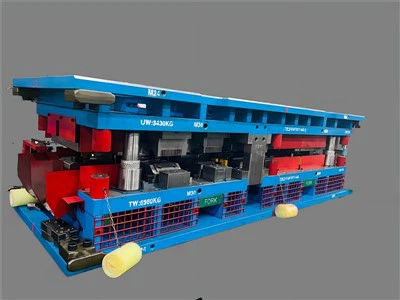
As a supplier of Tandem Dies, I've had my fair share of experiences in the manufacturing world, especially when it comes to crafting complex - shaped products. Tandem Dies, as you can learn more about on Tandem Die, are a great tool in the stamping industry, but they come with their own set of difficulties when used for making those tricky, oddly - shaped items.
First off, let's talk about the design phase. Designing a tandem die for complex - shaped products is no walk in the park. Each part of the die has to be carefully thought out to ensure that it can handle the specific shape requirements. Complex shapes often have irregular curves, sharp angles, and varying thicknesses. When designing the die, we need to consider how the metal will flow during the stamping process. If the design isn't right, the metal might not form properly, leading to defects like cracks, wrinkles, or uneven surfaces.
For example, if a product has a deep, narrow cavity, the die needs to be designed in such a way that the metal can be pushed into that cavity without getting stuck or thinning out too much. This requires a deep understanding of metal forming principles and advanced CAD/CAM software to create an accurate model. But even with the best software, predicting how the metal will behave under pressure is still a challenge. Sometimes, we have to make multiple design iterations, which can be time - consuming and costly.
Another major difficulty is the tooling and manufacturing of the tandem die itself. Complex - shaped products demand high - precision tooling. The dies need to be made with extreme accuracy to ensure that the final product meets the required specifications. The materials used for the die also play a crucial role. High - strength steels are often used, but machining these materials to create the intricate shapes needed for complex products is extremely difficult.
The manufacturing process involves a series of operations like milling, grinding, and electrical discharge machining (EDM). Each of these operations has its own set of challenges. For instance, when milling a die with a complex shape, the cutting tools need to be carefully selected to avoid excessive wear and tear. And with EDM, controlling the spark erosion process to achieve the right shape and surface finish can be a real headache. Any small error in the tooling can lead to significant problems in the final product, such as dimensional inaccuracies or surface imperfections.
When it comes to the actual stamping process, running a tandem die for complex - shaped products is fraught with difficulties. One of the main issues is the material flow. As I mentioned earlier, complex shapes can disrupt the normal flow of the metal during stamping. This can cause uneven stress distribution in the die, leading to premature wear and tear. The die might need to be replaced more frequently, which adds to the production costs.
Moreover, the stamping process for complex - shaped products often requires higher tonnage presses. These presses need to be carefully calibrated to apply the right amount of force at the right time. If the force is too high, it can cause the metal to crack or the die to break. On the other hand, if the force is too low, the product might not be fully formed. Finding the optimal stamping parameters is a trial - and - error process, and it can take a long time to get it right.
Quality control is also a major challenge. Inspecting complex - shaped products made with tandem dies is not as straightforward as checking simple parts. Traditional inspection methods might not be sufficient to detect all the potential defects. For example, using a simple caliper to measure the dimensions of a product with irregular curves won't give an accurate result. We often have to rely on more advanced inspection techniques like 3D scanning and coordinate measuring machines (CMMs). These techniques are expensive and time - consuming, but they are necessary to ensure that the products meet the quality standards.
In addition, the setup time for a tandem die used in complex - shaped product manufacturing is quite long. Each time a different product is to be stamped, the die needs to be adjusted and aligned properly. This involves a lot of manual labor and careful calibration. Any misalignment can lead to serious problems in the stamping process, such as uneven parts or die damage. And since complex - shaped products often require multiple stamping operations, the setup time can be even more extended.
Another aspect to consider is the maintenance of the tandem die. Due to the high stress and wear during the stamping of complex - shaped products, the die needs regular maintenance. This includes cleaning, lubrication, and inspection for any signs of damage. However, accessing all the parts of a die designed for complex shapes can be difficult. Some areas might be hard to reach, making it challenging to perform thorough maintenance. If the maintenance is not done properly, the die's performance will degrade over time, leading to more frequent breakdowns and increased production downtime.
When compared to Progressive Die Metal Stamping and Progressive Die Tooling, tandem dies for complex - shaped products face unique challenges. Progressive dies are often more suitable for high - volume production of simpler parts. They can perform multiple operations in a single pass, which is more efficient for regular - shaped products. But for complex - shaped items, the sequential nature of tandem dies is sometimes necessary, even though it comes with all these difficulties.

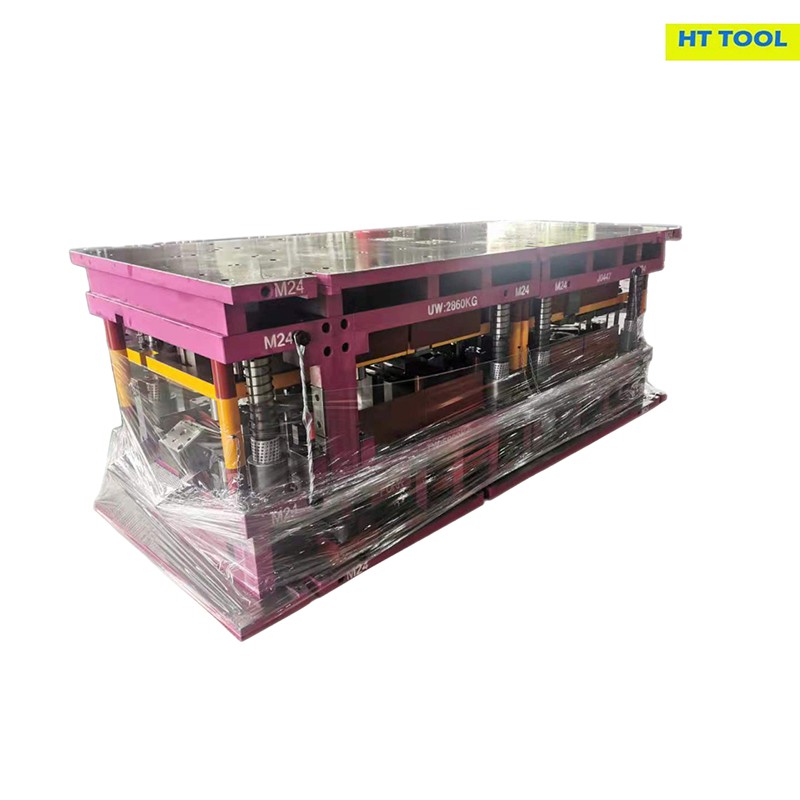
Despite these challenges, tandem dies are still a valuable tool in the manufacturing of complex - shaped products. With the right expertise and technology, many of these difficulties can be overcome. At our company, we've been working hard to develop solutions to these problems. We're constantly investing in research and development to improve our die design and manufacturing processes.
If you're in the market for tandem dies for complex - shaped product manufacturing, don't let these difficulties scare you off. We have a team of experienced engineers and technicians who are well - versed in dealing with these challenges. We can work closely with you to understand your product requirements and develop a customized solution. Whether it's a new product design or an existing one that needs improvement, we're here to help. Contact us to start a discussion about your tandem die needs and let's work together to overcome these difficulties and create high - quality products.
References
- Dieter, G. E. (1986). Mechanical Metallurgy. McGraw - Hill.
- Kalpakjian, S., & Schmid, S. R. (2008). Manufacturing Engineering and Technology. Pearson.
- Groover, M. P. (2010). Fundamentals of Modern Manufacturing: Materials, Processes, and Systems. Wiley.