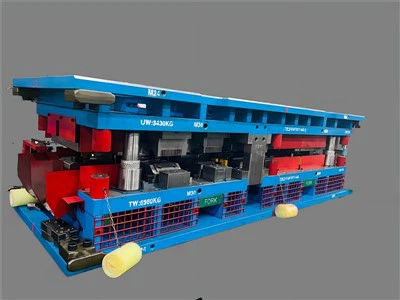
In the manufacturing industry, precision and quality control are of utmost importance. One tool that has proven to be invaluable in achieving these goals is the checking fixture. As a leading checking fixture supplier, I've witnessed firsthand the numerous advantages that these fixtures offer to businesses across various sectors. In this blog post, I'll delve into the key benefits of using a checking fixture and explain why it's a must-have for any manufacturing operation.
Enhanced Precision and Accuracy
One of the primary advantages of using a checking fixture is the ability to ensure high levels of precision and accuracy in the manufacturing process. Checking fixtures are designed to replicate the exact specifications of a part or component, allowing for precise measurements and inspections. By using a fixture, manufacturers can verify that each part meets the required tolerances and dimensions, reducing the risk of errors and defects.
For example, in the automotive industry, Automotive Checking Fixture are used to ensure that engine components, body panels, and other parts fit together perfectly. These fixtures can detect even the slightest deviations from the design specifications, allowing for timely adjustments and corrections. This not only improves the overall quality of the finished product but also reduces the likelihood of costly recalls and warranty claims.


Improved Quality Control
Quality control is a critical aspect of manufacturing, and checking fixtures play a vital role in ensuring that products meet the highest standards. By using a fixture to inspect parts at various stages of the production process, manufacturers can identify and address any quality issues early on, preventing defective products from reaching the market.
Checking fixtures can be used to perform a wide range of inspections, including dimensional checks, surface finish inspections, and functional tests. For instance, a Jig Checking Fixture can be used to verify the alignment and positioning of holes in a metal part, while an Auto Checking Fixture can be used to test the functionality of an electronic component. By conducting these inspections regularly, manufacturers can maintain consistent quality levels and build a reputation for reliability and excellence.
Increased Efficiency and Productivity
Another significant advantage of using a checking fixture is the potential for increased efficiency and productivity. By automating the inspection process, fixtures can significantly reduce the time and labor required to perform manual inspections. This allows manufacturers to increase their production output without sacrificing quality.
Checking fixtures can also help to streamline the manufacturing process by providing real-time feedback on part quality. For example, if a fixture detects a defect in a part, it can immediately alert the operator, who can then take corrective action. This reduces the amount of time wasted on producing defective parts and ensures that the production line runs smoothly and efficiently.
Cost Savings
In addition to improving quality and productivity, using a checking fixture can also result in significant cost savings for manufacturers. By reducing the number of defective parts and scrap, fixtures can help to lower production costs and improve profitability. Additionally, by ensuring that products meet the required quality standards, fixtures can help to avoid costly recalls and warranty claims, which can have a significant impact on a company's bottom line.
Furthermore, checking fixtures can be reused multiple times, making them a cost-effective investment in the long run. While the initial cost of purchasing a fixture may be relatively high, the savings in terms of improved quality, increased productivity, and reduced scrap can quickly offset this expense.
Versatility and Customization
Checking fixtures are highly versatile and can be customized to meet the specific needs of different manufacturing applications. Whether you're producing small, intricate parts or large, complex components, there's a checking fixture available to suit your requirements.
Fixtures can be designed to accommodate a wide range of materials, including metals, plastics, and composites. They can also be customized to perform specific inspections, such as measuring the thickness of a sheet metal part or checking the hardness of a plastic component. This versatility makes checking fixtures a valuable tool for manufacturers in a variety of industries, from automotive and aerospace to electronics and medical devices.
Regulatory Compliance
In many industries, regulatory compliance is a critical requirement. Checking fixtures can help manufacturers to ensure that their products meet the relevant industry standards and regulations. For example, in the medical device industry, fixtures are used to verify that products meet the strict quality and safety requirements set by regulatory agencies such as the Food and Drug Administration (FDA).
By using a checking fixture to perform regular inspections, manufacturers can demonstrate compliance with these regulations and avoid costly fines and penalties. Additionally, fixtures can help to ensure that products are safe and reliable for use by consumers, which is essential for maintaining a positive reputation in the market.
Conclusion
In conclusion, using a checking fixture offers numerous advantages for manufacturers, including enhanced precision and accuracy, improved quality control, increased efficiency and productivity, cost savings, versatility and customization, and regulatory compliance. As a checking fixture supplier, I understand the importance of these benefits and am committed to providing our customers with high-quality, reliable fixtures that meet their specific needs.
If you're looking to improve the quality and efficiency of your manufacturing process, I encourage you to consider investing in a checking fixture. Our team of experts can work with you to design and develop a customized fixture that meets your requirements and helps you to achieve your business goals. Contact us today to learn more about our products and services and to discuss how we can help you take your manufacturing operation to the next level.
References
- "Manufacturing Engineering Handbook," by Oleg D. Lavrov
- "Quality Control Handbook," by J. M. Juran and A. B. Godfrey
- "Automotive Manufacturing Technology," by G. Boothroyd, P. Dewhurst, and W. Knight