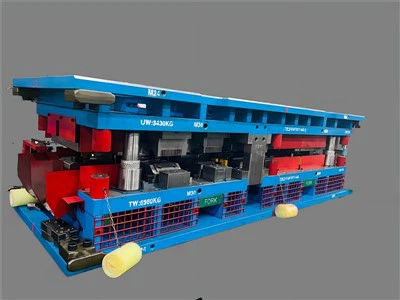
As a seasoned washer stamping die supplier, I've witnessed firsthand the challenges that come with producing high - quality washers using stamping dies. Stamping is a widely used manufacturing process in the production of washers, offering efficiency and precision. However, like any manufacturing method, it is not without its flaws. In this blog, I'll discuss the common defects in washers produced by stamping dies and share some effective solutions.


Common Defects in Washer Stamping
1. Burrs
Burrs are one of the most prevalent defects in stamped washers. They are small, sharp edges or protrusions that form along the cut edges of the washer during the stamping process. Burrs can occur due to several reasons, such as dull cutting edges on the stamping die, improper clearance between the punch and the die, or excessive stamping force.
When burrs are present on washers, they can cause a variety of problems. In assembly operations, burrs may interfere with the proper fit of the washer, leading to misalignment or reduced performance. They can also pose a safety hazard, as sharp burrs can cut or puncture the skin during handling.
2. Cracks
Cracks in stamped washers are another serious defect. These can be surface cracks or internal cracks, and they often result from excessive stress during the stamping process. Factors contributing to crack formation include inappropriate material selection, high - speed stamping without proper lubrication, and over - deformation of the material.
Cracked washers are not only structurally weak but can also fail prematurely under load. In applications where washers are used to distribute loads or provide a seal, cracked washers can lead to system failures and costly repairs.
3. Dimensional Inaccuracies
Dimensional inaccuracies are common in stamped washers and can manifest in various forms, such as incorrect outer diameter, inner diameter, or thickness. These inaccuracies can be caused by die wear, improper die adjustment, or variations in the material thickness.
When washers do not meet the specified dimensions, they may not fit properly in the intended application. This can lead to assembly issues, reduced performance, and even product rejection.
4. Surface Imperfections
Surface imperfections on stamped washers can include scratches, dents, and pits. Scratches can occur during the stamping process if there is friction between the material and the die surface, or if the material is mishandled during transfer. Dents and pits may be caused by debris in the die or improper die cleaning.
Surface imperfections not only affect the aesthetic appearance of the washers but can also reduce their corrosion resistance. In some applications, such as those in the food or medical industries, surface imperfections can be unacceptable due to hygiene requirements.
Solutions to the Defects
1. Addressing Burrs
- Regular Die Maintenance: One of the most effective ways to reduce burrs is to keep the stamping die in good condition. This includes sharpening the cutting edges regularly. By maintaining sharp cutting edges, the material can be cut cleanly, minimizing the formation of burrs.
- Optimal Clearance Adjustment: Ensuring the correct clearance between the punch and the die is crucial. If the clearance is too large, the material may be deformed unevenly, leading to burrs. On the other hand, if the clearance is too small, the cutting edges may wear out quickly. Manufacturers should carefully measure and adjust the clearance according to the material thickness and type.
- Appropriate Stamping Force: Using the right amount of stamping force is essential. Excessive force can cause the material to deform in an uncontrolled manner, resulting in burrs. By adjusting the stamping force based on the material properties and the die design, burr formation can be significantly reduced.
2. Preventing Cracks
- Proper Material Selection: Choosing the right material for the stamping process is key to preventing cracks. The material should have sufficient ductility to withstand the deformation without cracking. Conducting material tests before production can help ensure that the selected material meets the requirements.
- Lubrication: Adequate lubrication during the stamping process can reduce friction and heat, which in turn can prevent cracks. Lubricants also help to distribute the stress evenly across the material, reducing the likelihood of crack formation.
- Controlled Stamping Speed: High - speed stamping can increase the risk of crack formation. By controlling the stamping speed and allowing the material to deform gradually, the stress on the material can be reduced, minimizing the chances of cracking.
3. Correcting Dimensional Inaccuracies
- Regular Die Inspection and Calibration: Regularly inspecting the stamping die for wear and tear and calibrating it as needed can help maintain dimensional accuracy. This includes checking the dimensions of the die cavities and punches and making any necessary adjustments.
- Material Thickness Control: Since variations in material thickness can lead to dimensional inaccuracies, it is important to control the material thickness within a narrow tolerance range. This can be achieved through proper incoming material inspection and process control.
- Advanced Measuring Tools: Using advanced measuring tools such as coordinate measuring machines (CMMs) can help ensure that the stamped washers meet the specified dimensions. By measuring the washers at regular intervals during production, any dimensional deviations can be detected early and corrected.
4. Eliminating Surface Imperfections
- Die Cleaning and Maintenance: Keeping the stamping die clean is essential for preventing surface imperfections. Regularly removing debris and contaminants from the die surface can reduce the risk of scratches, dents, and pits. Additionally, applying a protective coating to the die surface can further reduce friction and prevent surface damage.
- Proper Material Handling: Ensuring proper handling of the material during the stamping process can also help prevent surface imperfections. This includes using appropriate handling equipment and avoiding rough handling that could cause scratches or dents.
Our Expertise as a Washer Stamping Die Supplier
At our company, we understand the importance of producing high - quality stamping dies that minimize defects in washers. We have a team of experienced engineers who are well - versed in the design and manufacturing of stamping dies. Our dies are made from high - quality materials and are precision - engineered to ensure optimal performance.
We also offer a range of related products and services. For those interested in more complex stamping solutions, we provide Progressive Die Metal Stamping which is highly efficient for mass production. In addition, we have expertise in manufacturing dies for other home appliances, such as Microwave Oven Die and Gas Stove Die.
If you are looking for a reliable washer stamping die supplier, we invite you to contact us for procurement and further discussion. We are committed to providing you with the best - in - class stamping dies that will help you produce high - quality washers with minimal defects.
References
- Kalpakjian, S., & Schmid, S. R. (2008). Manufacturing Engineering and Technology. Pearson Prentice Hall.
- Dieter, G. E. (1988). Mechanical Metallurgy. McGraw - Hill.