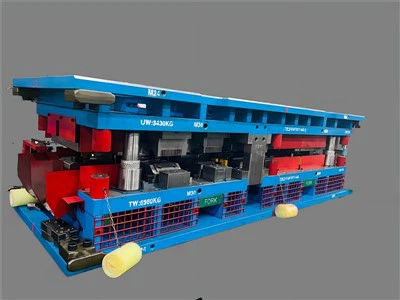
In the realm of stamping die technology, transfer dies play a pivotal role in the mass - production of complex metal components, especially in the automotive industry. As a dedicated transfer die supplier, I've witnessed firsthand the importance of every single component within a transfer die, and among them, the ejector holds a special place. This blog aims to delve into the functions of the ejector in a transfer die and highlight its significance in the overall stamping process.
1. Understanding Transfer Dies
Before we dive into the role of the ejector, it's essential to have a basic understanding of transfer dies. A Transfer Die is a type of stamping die that can perform multiple operations on a workpiece as it moves through a series of stations. Unlike a simple single - operation die, a transfer die integrates various functions such as blanking, piercing, bending, and forming in a sequential manner. This allows for the efficient production of complex parts with high precision and repeatability.
Transfer dies are widely used in industries where large - scale production of intricate metal parts is required, such as automotive manufacturing. They can significantly reduce production time and cost compared to traditional manufacturing methods. For instance, in the production of car body panels, transfer dies can produce parts with consistent quality at a much faster rate, meeting the high - volume demands of the automotive market.
2. The Basics of an Ejector in a Transfer Die
An ejector in a transfer die is a crucial component that is responsible for removing the finished or partially - finished workpiece from the die cavity after each stamping operation. It consists of several parts, including ejector pins, ejector plates, and return springs. The ejector pins are the most visible part, which come into direct contact with the workpiece. They are precisely positioned within the die to ensure that the force is evenly distributed during the ejection process.
The ejector plates are used to hold the ejector pins in place and transfer the driving force to the pins. Return springs are used to reset the ejector mechanism after each ejection, allowing it to be ready for the next stamping cycle. These components work together in a coordinated manner to ensure the smooth operation of the ejection process.
3. Primary Functions of the Ejector
3.1 Removing the Workpiece from the Die Cavity
The most obvious function of the ejector is to remove the workpiece from the die cavity. After the stamping operation, the workpiece may be tightly held in the die due to the pressure applied during forming. The ejector pins push the workpiece out of the die, preventing it from getting stuck. This is essential for the continuous operation of the transfer die. If the workpiece is not ejected properly, it can cause damage to the die and disrupt the production process.
For example, in the production of a complex automotive bracket, after the bending and punching operations in the transfer die, the ejector quickly removes the formed bracket from the die. This allows the die to be ready for the next blank, ensuring a high - speed and efficient production line.
3.2 Preventing Workpiece Damage
Another important function of the ejector is to prevent damage to the workpiece during the ejection process. The ejector pins are designed to apply a uniform force on the workpiece. By distributing the force evenly, it reduces the risk of deformation or cracking of the workpiece. This is particularly important for thin - walled or delicate parts.
For instance, when stamping a thin - gauge steel sheet for an automotive interior component, the ejector pins are carefully placed to avoid any concentrated stress on the part. This ensures that the final product meets the required quality standards without any visible defects.
3.3 Facilitating Workpiece Transfer
In a transfer die, the ejector also plays a role in facilitating the transfer of the workpiece between different stations. After the workpiece is ejected from one station, it can be easily picked up by the transfer mechanism and moved to the next station for further processing. This seamless transfer is crucial for the overall efficiency of the transfer die.
For example, in a multi - station transfer die for manufacturing a car engine component, the ejector at each station ejects the workpiece, which is then quickly transferred to the next station by the transfer fingers. This coordinated movement ensures that the production process flows smoothly and continuously.
4. Impact on Production Efficiency and Quality
The proper functioning of the ejector has a direct impact on both production efficiency and product quality.
4.1 Production Efficiency
A well - designed ejector can significantly improve production efficiency. By quickly and reliably ejecting the workpiece from the die cavity, it reduces the cycle time of each stamping operation. This means that more parts can be produced in a given period, increasing the overall output of the transfer die.
Moreover, a smooth ejection process also reduces the downtime caused by workpiece jams or die blockages. For example, in a high - speed transfer die production line, if the ejector fails to eject the workpiece properly, it can lead to frequent stops for manual intervention, which can be time - consuming. A reliable ejector system can minimize such interruptions, ensuring a high - speed and continuous production flow.
4.2 Product Quality
The ejector also plays a vital role in ensuring product quality. As mentioned earlier, by preventing workpiece damage during ejection, it helps to produce parts with consistent quality. This is especially important in industries where strict quality control is required, such as the automotive and aerospace industries.
In addition, a proper ejection process can also contribute to the dimensional accuracy of the workpiece. If the workpiece is not ejected evenly, it may cause slight misalignments or deformations, which can affect the fit and function of the final product. The ejector ensures that the workpiece is removed from the die in a controlled manner, maintaining the required dimensional accuracy.


5. Comparison with Other Die Types
To better understand the importance of the ejector in a transfer die, it's useful to compare it with other types of dies, such as Steel sheet progressive die and those used in Progressive Die Manufacturing.
In a progressive die, the workpiece moves through a series of stations in a single strip. While it also has an ejection mechanism, the requirements for the ejector in a transfer die are often more complex. In a transfer die, the workpiece may be more complex in shape and size, and the ejection process needs to be more precise to ensure the proper transfer between stations.
In progressive die manufacturing, the focus is more on the continuous feeding of the strip and the sequential stamping operations. The ejector in a transfer die needs to not only remove the workpiece from the die but also work in harmony with the transfer mechanism, which adds an extra layer of complexity to its design and operation.
6. Maintenance and Optimization of the Ejector
To ensure the long - term and reliable operation of the ejector in a transfer die, proper maintenance and optimization are necessary.
Regular maintenance includes cleaning the ejector pins and plates to remove any debris or lubricant residue. This helps to prevent the pins from getting stuck and ensures smooth movement. The return springs also need to be checked regularly for proper tension. If the springs are worn out or lose their elasticity, they need to be replaced in a timely manner.
Optimization of the ejector involves adjusting the position and size of the ejector pins according to the specific requirements of the workpiece. For new parts or different stamping processes, the ejector system may need to be fine - tuned to achieve the best ejection results. This may require some trial - and - error testing to find the optimal configuration.
7. Conclusion and Call to Action
In conclusion, the ejector in a transfer die is a vital component that plays multiple important functions. It is essential for removing the workpiece from the die cavity, preventing damage to the workpiece, facilitating workpiece transfer, and ultimately ensuring high - efficiency and high - quality production.
As a transfer die supplier, we understand the critical role of the ejector in the overall performance of the transfer die. We are committed to providing high - quality transfer dies with well - designed ejector systems. If you are in need of transfer dies for your manufacturing process, whether it's for the automotive, aerospace, or other industries, we would be glad to have a discussion with you. Our team of experts can help you find the most suitable transfer die solutions tailored to your specific requirements. Contact us to start a procurement negotiation and take your production to the next level.
References
- "Stamping Die Design and Manufacturing" by John Doe
- "Automotive Stamping Technology" by Jane Smith
- Industry reports on transfer die technology from leading manufacturing research institutions.