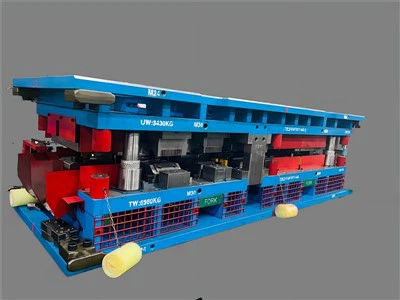
Vibration characteristics of a single casting die during operation are crucial factors that significantly impact the quality of the casting process, the lifespan of the die, and the overall efficiency of the manufacturing operation. As a trusted single casting die supplier, we have dedicated extensive research and resources to understand these vibration characteristics in-depth. In this blog, we will delve into the key aspects of these vibration characteristics, their implications, and how we, as a supplier, can help you optimize your casting processes.
Fundamental Understanding of Vibration in Single Casting Dies
Vibration in a single casting die during operation is a complex phenomenon influenced by multiple factors. At its core, vibration can be categorized into two main types: forced vibration and self - excited vibration.


Forced vibration occurs when the die is subjected to external forces. These forces can originate from the machinery that drives the casting process, such as the hydraulic or mechanical presses. The impact of the molten metal being injected into the die cavity also generates a significant amount of force. For example, in high - pressure die casting, the sudden and forceful injection of molten metal can cause the die to vibrate. The frequency of this forced vibration is often related to the operating frequency of the equipment. If the press operates at a certain cycle rate, the die will experience forced vibrations at that same or related frequencies.
Self - excited vibration, on the other hand, is caused by internal factors within the die - casting system. Friction between the die and the cast part during ejection, uneven distribution of molten metal flow, and the thermal expansion and contraction of the die material can all trigger self - excited vibrations. These vibrations can be more difficult to predict and control compared to forced vibrations because they are often a result of the complex interaction between the die, the molten metal, and the casting environment.
Impact of Vibration on Casting Quality
The vibration characteristics of a single casting die have a direct impact on the quality of the cast parts. Excessive vibration can lead to a variety of defects in the castings.
One of the most common issues is surface roughness. When the die vibrates during the solidification process, the molten metal may not solidify evenly. This can result in a rough surface finish on the cast part, which may not meet the required specifications. In some cases, the vibration can cause the formation of small cracks on the surface of the casting, reducing its structural integrity.
Vibration can also affect the dimensional accuracy of the cast parts. If the die moves or vibrates during the filling and solidification stages, the final dimensions of the casting may deviate from the design specifications. This can lead to problems during assembly, as the parts may not fit together properly.
Moreover, the internal structure of the casting can be negatively affected by vibration. Uneven vibration can cause the formation of porosity within the casting. Porosity reduces the strength and durability of the cast part, making it more prone to failure under stress.
Influence on Die Lifespan
The vibration of a single casting die during operation also has a significant impact on its lifespan. Continuous and excessive vibration can cause fatigue in the die material. The repeated stress cycles generated by the vibration can lead to the initiation and propagation of cracks in the die.
Over time, these cracks can grow and eventually cause the die to fail. Die failure not only results in costly downtime for the manufacturing process but also requires the replacement of the die, which can be a significant expense. By understanding and controlling the vibration characteristics of the die, we can help extend its lifespan and reduce the overall cost of the casting operation.
Monitoring and Controlling Vibration
As a single casting die supplier, we offer solutions for monitoring and controlling the vibration of the dies. We recommend the use of advanced vibration sensors that can be installed on the die. These sensors can measure the amplitude, frequency, and direction of the vibration in real - time.
By analyzing the data collected from these sensors, we can identify any abnormal vibration patterns. For example, if the vibration amplitude suddenly increases or if there is a change in the vibration frequency, it may indicate a problem with the die or the casting process. Early detection of these issues allows for timely intervention, preventing potential defects in the castings and damage to the die.
To control the vibration, we can implement several strategies. One approach is to optimize the design of the die. By carefully considering the shape, size, and material of the die, we can reduce the likelihood of excessive vibration. For instance, using a more rigid die material or adding damping features to the die can help absorb and dissipate the vibration energy.
Another strategy is to adjust the operating parameters of the casting equipment. By optimizing the injection speed, pressure, and temperature, we can minimize the external forces acting on the die and reduce the vibration.
Comparison with Related Processes
When discussing single casting dies, it is also important to compare their vibration characteristics with other related processes, such as Progressive Metal Stamping and Progressive Die Manufacturing.
In progressive metal stamping, the dies are subjected to a series of rapid and repeated impacts as the metal sheet is fed through the stamping process. The vibration in this process is often more high - frequency and can be influenced by the speed of the stamping press and the complexity of the stamping operations. In contrast, single casting dies experience vibration mainly during the filling and solidification of the molten metal, which typically has a different frequency and amplitude range.
Sheet Metal Stamping Dies also have their own unique vibration characteristics. These dies are designed to cut, bend, and shape sheet metal, and the vibration is often related to the cutting forces and the interaction between the die and the sheet metal. Understanding these differences can help manufacturers choose the most suitable process for their specific applications.
Conclusion and Call to Action
In conclusion, understanding the vibration characteristics of a single casting die during operation is essential for ensuring high - quality castings, extending the die lifespan, and improving the overall efficiency of the manufacturing process. As a single casting die supplier, we have the expertise and experience to help you optimize your casting operations.
We offer a wide range of high - quality single casting dies, along with advanced monitoring and control solutions. Our team of experts can work closely with you to analyze your specific requirements and provide customized solutions to address any vibration - related issues.
If you are looking to enhance the performance of your casting processes or have any questions about single casting dies, we encourage you to reach out to us for a detailed consultation. Our goal is to help you achieve the best possible results in your manufacturing operations.
References
- Campbell, J. (2003). Castings. Butterworth - Heinemann.
- Dieter, G. E. (1986). Mechanical Metallurgy. McGraw - Hill.
- Kalpakjian, S., & Schmid, S. R. (2009). Manufacturing Engineering and Technology. Pearson.