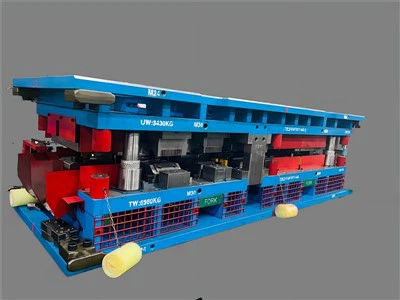
Hey there! As a supplier in the high-speed stamping game, I'm stoked to dive into the topic of typical speeds in high-speed stamping. It's a fascinating area that can make or break a project, so let's get right into it.
First off, what exactly is high-speed stamping? Well, it's a manufacturing process where metal sheets are punched, formed, or blanked at incredibly fast rates. This is done using high-speed stamping presses, which are designed to deliver a large number of strokes per minute. The speeds we're talking about here can vary quite a bit depending on several factors.
One of the main factors influencing stamping speed is the type of material being used. Different metals have different properties, such as hardness, ductility, and thickness. For example, softer metals like aluminum can generally be stamped at higher speeds compared to harder metals like stainless steel. Aluminum is more malleable, so it can withstand the rapid deformation without cracking or breaking. On average, when stamping aluminum, we can see speeds ranging from 200 to 1000 strokes per minute (SPM). That's pretty fast!
On the other hand, stainless steel is a tougher nut to crack. Its hardness and strength mean that the stamping process has to be a bit more gentle to avoid damage to the material and the high speed stamping die. Speeds for stainless steel stamping usually fall in the range of 100 to 500 SPM. It might seem slower compared to aluminum, but it's still a high rate of production when you think about it.
Another crucial factor is the complexity of the part being stamped. Simple shapes, like flat washers or small brackets, can be produced at much higher speeds than parts with intricate designs or multiple features. A basic washer can be stamped out in a single stroke, allowing the press to cycle quickly. We can often achieve speeds of 500 to 1500 SPM for these straightforward parts.
However, if you're looking to stamp a part with detailed contours, embossments, or multiple bends, the process becomes more involved. The press has to move the material precisely and perform multiple operations in sequence. This slows down the overall speed, and we're typically looking at speeds between 50 and 300 SPM for complex parts.
The size of the part also plays a role. Larger parts require more force and more time to form. The press has to cover a greater distance and ensure that the material is evenly deformed across the entire surface. As a result, larger parts are usually stamped at lower speeds. For example, a large automotive panel might have a stamping speed of 20 to 100 SPM, while a small electronic component could be stamped at 500 to 1000 SPM.
Now, let's talk about the equipment. The quality and capabilities of the high-speed stamping press are vital. A well-maintained, high-performance press can handle higher speeds more efficiently. Modern presses are equipped with advanced control systems that can adjust the speed, force, and timing of each stroke. They also have better lubrication and cooling systems to prevent overheating and wear.
When it comes to the prototype die, it's an important part of the process. A prototype die is used to test the design and functionality of a part before mass production. The speed at which a prototype die can operate is usually lower than that of a production die. This is because the prototype die is often a one-off or low-volume tool, and it's being used to fine-tune the process. Speeds for prototype stamping can range from 50 to 200 SPM. Once the design is finalized and the production die is made, we can increase the speed to the appropriate level for mass production.
So, why does all this matter? Well, the speed of high-speed stamping directly impacts the cost and efficiency of production. Higher speeds mean more parts can be produced in a shorter amount of time, which reduces the cost per part. However, it's important to find the right balance. Pushing the press too hard can lead to increased wear and tear on the high speed stamping die and the press itself, as well as a higher rate of defective parts.
In addition to the factors I've mentioned, there are also external factors that can affect stamping speed. For example, the environment in which the stamping is taking place can play a role. Temperature and humidity can impact the properties of the material and the performance of the press. A hot and humid environment can cause the metal to expand and become more difficult to stamp, while a cold environment can make the metal more brittle.
Another external factor is the operator. A skilled and experienced operator can optimize the stamping process and get the most out of the equipment. They know how to adjust the settings, monitor the quality of the parts, and troubleshoot any issues that arise. On the other hand, an inexperienced operator might not be able to achieve the same level of efficiency and speed.
As a high-speed stamping supplier, we understand the importance of finding the right speed for each project. We work closely with our customers to understand their requirements and design a stamping process that meets their needs. Whether it's a simple part that needs to be produced at high volume or a complex part that requires precision and quality, we have the expertise and equipment to get the job done.
If you're in the market for high-speed stamping services, we'd love to hear from you. We can provide you with a quote based on your specific requirements and help you optimize your production process. Whether you need a prototype die to test your design or a full-scale production run, we're here to support you.
In conclusion, the typical speeds in high-speed stamping can vary widely depending on the material, part complexity, size, equipment, and other factors. By understanding these factors and working with an experienced supplier, you can ensure that your stamping project is a success. So, don't hesitate to reach out and start a conversation about your high-speed stamping needs.


References
- Metal Stamping Handbook, Industrial Press Inc.
- High-Speed Manufacturing Processes, CRC Press