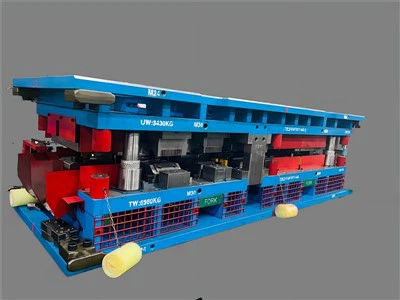
In the realm of manufacturing, single casting dies play a pivotal role in the production of high - quality components. As a single casting die supplier, I have witnessed firsthand the significance of understanding the factors that affect the performance of these dies. A well - performing single casting die not only ensures the precision and quality of the cast parts but also contributes to cost - efficiency and productivity. In this blog, I will delve into the various factors that can impact the performance of a single casting die.
Material Selection
The choice of material for a single casting die is of utmost importance. The material must possess high strength, good thermal conductivity, and excellent wear resistance. Common materials used for casting dies include tool steels, such as H13, which is a hot - work tool steel known for its high toughness and resistance to thermal fatigue.
The chemical composition of the material affects its properties. For example, elements like chromium (Cr) enhance the hardenability and corrosion resistance of the steel. Molybdenum (Mo) improves the high - temperature strength and toughness. The material's grain structure also plays a role. A fine - grained structure generally provides better mechanical properties, such as higher strength and improved wear resistance.
When the wrong material is selected, it can lead to premature die failure. For instance, if a die is made from a material with poor thermal conductivity, it may experience excessive heat buildup during the casting process. This can cause thermal cracking, which not only affects the die's performance but also the quality of the cast parts.
Design and Geometry
The design and geometry of a single casting die have a profound impact on its performance. The die cavity must be designed to ensure proper filling of the molten metal. This involves considerations such as the gate location, runner system, and venting.
The gate is the entrance through which the molten metal enters the die cavity. Its size, shape, and location can significantly affect the flow of the metal. A well - designed gate allows for smooth and uniform filling of the cavity, minimizing the formation of defects such as air pockets and cold shuts. The runner system, which transports the molten metal from the pouring basin to the gate, should be designed to minimize pressure losses and turbulence.
Venting is crucial to allow the escape of air and gases from the die cavity during the filling process. Without proper venting, the trapped air can cause porosity in the cast parts. The geometry of the die also affects the stress distribution within the die. Sharp corners and sudden changes in cross - section can create stress concentrations, which may lead to cracking and premature failure of the die.
Heat Treatment
Heat treatment is a critical step in the manufacturing of single casting dies. It is used to enhance the mechanical properties of the die material, such as hardness, strength, and toughness. The most common heat treatment processes for casting dies include quenching and tempering.
Quenching involves rapidly cooling the heated die material to harden it. The cooling rate must be carefully controlled to avoid cracking. After quenching, the die is tempered to relieve the internal stresses and improve its toughness. The tempering temperature and time are selected based on the desired properties of the die.
Improper heat treatment can have a detrimental effect on the die's performance. If the quenching rate is too fast, it can cause excessive internal stresses, leading to cracking. On the other hand, if the tempering is not done correctly, the die may be too brittle or too soft, resulting in poor wear resistance and reduced service life.
Surface Finish
The surface finish of a single casting die affects both the quality of the cast parts and the die's performance. A smooth surface finish reduces friction between the die and the molten metal, allowing for easier filling of the cavity and better release of the cast part. It also helps to prevent the adhesion of the metal to the die surface, which can cause defects in the cast part and damage to the die.
Surface treatments such as nitriding or coating can be applied to improve the surface hardness and wear resistance of the die. Nitriding forms a hard nitride layer on the surface of the die, which enhances its resistance to abrasion and corrosion. Coatings, such as titanium nitride (TiN) or chromium nitride (CrN), can also provide a protective barrier against wear and oxidation.

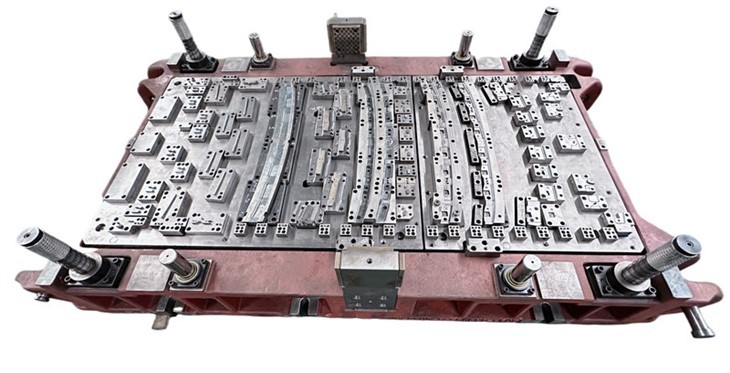
Operating Conditions
The operating conditions under which a single casting die is used have a significant impact on its performance. The temperature of the molten metal, the casting speed, and the number of casting cycles all play a role.
High - temperature molten metal can cause thermal expansion and thermal fatigue in the die. The die must be able to withstand these thermal stresses without cracking or deforming. The casting speed affects the filling time and the pressure within the die cavity. A too - high casting speed can cause turbulence and air entrapment, while a too - low casting speed can result in incomplete filling of the cavity.
The number of casting cycles also affects the die's performance. Over time, the repeated thermal and mechanical stresses can cause wear and fatigue in the die. Regular maintenance and inspection are necessary to ensure the die's continued performance.
Maintenance and Repair
Proper maintenance and repair are essential for ensuring the long - term performance of a single casting die. Regular cleaning of the die to remove any debris or metal residues can prevent the formation of corrosion and improve the surface finish. Lubrication of the moving parts, if any, can reduce friction and wear.
Inspection of the die for cracks, wear, and other defects should be carried out regularly. Minor defects can be repaired through processes such as welding or machining. However, if the damage is severe, the die may need to be replaced.
Comparison with Other Types of Dies
It's worth briefly comparing single casting dies with other types of dies, such as Progressive casting die and Automotive Progressive Die. Progressive dies are designed to perform multiple operations in a single pass, which can increase productivity. However, they are more complex and expensive to manufacture. Single casting dies, on the other hand, are more suitable for producing simple and large - scale castings. Each type of die has its own advantages and disadvantages, and the choice depends on the specific requirements of the production process.
Conclusion
As a single casting die supplier, I understand that the performance of a single casting die is influenced by a multitude of factors. From material selection and design to heat treatment, surface finish, operating conditions, and maintenance, each aspect plays a crucial role in determining the die's quality and service life. By carefully considering these factors, manufacturers can optimize the performance of their single casting dies, resulting in high - quality cast parts, increased productivity, and reduced costs.
If you are in the market for high - quality single casting dies or need advice on improving the performance of your existing dies, I invite you to explore our Custom Stamping Dies options. Our team of experts is ready to assist you in finding the perfect solution for your manufacturing needs. Let's engage in a fruitful discussion to meet your specific requirements and take your production to the next level.
References
- Kalpakjian, S., & Schmid, S. R. (2008). Manufacturing Engineering and Technology. Pearson Prentice Hall.
- Dieter, G. E. (1986). Mechanical Metallurgy. McGraw - Hill.
- Tool and Manufacturing Engineers Handbook (TMEH), Volume 4: Forming. Society of Manufacturing Engineers.