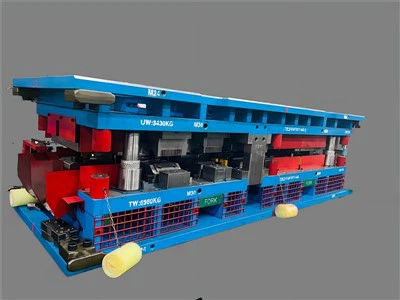
As a supplier of Microwave Oven Die, I've had extensive experience related to microwave ovens, from the manufacturing process right down to understanding how they interact with consumers. Microwave ovens have become an indispensable part of modern kitchens, offering convenience and efficiency for heating and cooking various foods. However, like all appliances, they have a limited lifespan. Recognizing the signs of a dying microwave oven can save you from sudden malfunctions and food spoilage. In this blog, I'll share some common indicators that your microwave may be on its last legs.
1. Strange Noises
One of the most noticeable signs that something's wrong with your microwave is the presence of unusual noises. When a microwave is operating correctly, it usually produces a consistent humming sound, which is the normal operation of its components. However, if you start hearing grinding, rattling, or screeching noises, it's a clear indication that there's an issue.
Grinding noises often suggest that the motor that turns the turntable or the magnetron (the component that generates microwaves) is malfunctioning. The motor might be wearing out, or there could be debris interfering with its operation. Rattling sounds could be due to loose parts inside the microwave, such as screws or other components that have come loose over time. Screeching noises are particularly concerning as they may indicate a problem with the high - voltage transformer or another critical electrical component.
If you hear strange noises, it's best to stop using the microwave immediately. Continuing to operate a microwave with a noisy issue can lead to further damage and potentially pose a safety risk, such as electrical fires or short circuits.
2. Inconsistent Heating
The primary function of a microwave oven is to heat food evenly and efficiently. If you're experiencing inconsistent heating, where some parts of your food are hot while others remain cold, it's a sign that the microwave is facing problems.
There could be several reasons for inconsistent heating. The turntable may not be rotating properly, causing uneven distribution of microwaves. This can be due to a faulty turntable motor or a damaged roller guide. Additionally, the stirrer fan, which helps to distribute the microwaves throughout the oven cavity, might be malfunctioning. Over time, these components can wear out or become damaged, leading to uneven heating.
Another possible cause is a failing magnetron. The magnetron is responsible for producing the microwaves that heat the food. As it ages or develops issues, it may not produce a consistent amount of microwaves, resulting in uneven heating. If you notice that your food is not heating evenly, it's important to have the microwave inspected by a professional.
3. Burning Smells
A burning smell coming from your microwave is a serious warning sign. It could indicate a variety of problems, all of which are potentially dangerous.

One common cause of a burning smell is overheating. The microwave's internal components, such as the magnetron, high - voltage transformer, or capacitor, can overheat due to a malfunction. For example, if the ventilation system of the microwave is blocked, the heat generated during normal operation cannot be properly dissipated, leading to overheating.
Another possible cause is a short circuit. If there is a problem with the electrical wiring inside the microwave, it can cause a short circuit, which produces a burning smell. In some cases, food debris or grease that has accumulated inside the oven can also catch fire, resulting in a burning smell.
If you smell burning coming from your microwave, stop using it immediately and unplug it from the power source. Do not attempt to open the microwave yourself, as there is a risk of electrical shock. Contact a professional technician to diagnose and repair the problem.
4. Door Seal Issues
The door seal of a microwave is an important safety feature. It prevents microwaves from leaking out of the oven while it's in operation. If you notice any damage to the door seal, such as cracks, tears, or gaps, it's a sign that the microwave may be in trouble.
A damaged door seal can allow microwaves to escape, which is not only a safety hazard but can also affect the performance of the microwave. When microwaves leak, the oven may not be able to heat the food effectively, as the energy is being lost. Additionally, prolonged exposure to microwave radiation can be harmful to human health.
To check the door seal, visually inspect it for any signs of damage. You can also try the paper test. Place a thin piece of paper between the door and the oven when it's closed, and try to pull it out. If the paper slides out easily, it could indicate that the door is not sealing properly. If you find any issues with the door seal, it's necessary to replace it as soon as possible.
5. Display and Control Panel Problems
The display and control panel of a microwave are used to set the cooking time, power level, and other functions. If you're experiencing problems with the display, such as flickering lights, a blank screen, or malfunctioning buttons, it's a sign that there may be an issue with the microwave's electronics.
Flickering lights on the display could be due to a loose connection or a problem with the power supply. A blank screen might indicate a more serious issue, such as a malfunctioning control board. Malfunctioning buttons can make it difficult or impossible to operate the microwave correctly.
In some cases, these problems can be resolved by resetting the microwave or replacing a blown fuse. However, if the issues persist, it's likely that a more in - depth repair is needed. Don't attempt to repair the electronics yourself unless you have the necessary skills and knowledge, as there is a risk of electrical shock.
6. Frequent Tripping of the Circuit Breaker
If your microwave frequently trips the circuit breaker in your home, it's a clear indication that there's a problem. The circuit breaker is designed to protect your electrical system from overloading. When a microwave draws too much current, it can cause the circuit breaker to trip.
There are several reasons why a microwave might draw excessive current. A short circuit in the microwave's electrical system is one possibility. Another reason could be a malfunctioning component, such as a faulty motor or a damaged capacitor, that is causing the microwave to consume more power than normal.
If your microwave is tripping the circuit breaker, stop using it immediately. Continuing to use it can cause further damage to the electrical system and increase the risk of electrical fires. Contact a professional electrician or a microwave repair technician to diagnose and fix the problem.
Conclusion
Recognizing the signs of a dying microwave oven is crucial for maintaining a safe and efficient kitchen. By being aware of these common indicators, you can take appropriate action when issues arise, whether it's having the microwave repaired or replacing it with a new one.
As a supplier of Microwave Oven Die, we also offer a wide range of related products such as Progressive Die Metal Stamping and Tandem Die for various home appliance manufacturing needs. If you're in the market for high - quality microwave oven dies or other stamping dies for home appliances, we invite you to contact us for procurement discussions. We are committed to providing excellent products and services to meet your specific requirements.
References
- "Microwave Oven Troubleshooting Guide." Home Appliance Repair Association.
- "Safety Standards for Microwave Ovens." National Electrical Manufacturers Association.
- "How Microwave Ovens Work." Science and Technology Encyclopedia.