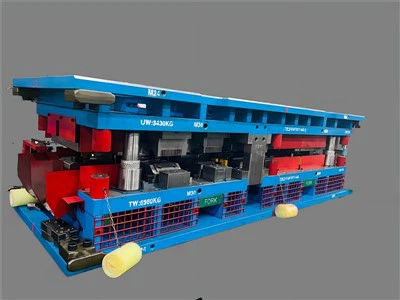
As a seasoned supplier of prototype dies, I've witnessed firsthand the transformative power of heat treatment in enhancing the performance and longevity of these essential tools. Heat treatment is a critical process that can significantly improve the mechanical properties of prototype dies, making them more resistant to wear, deformation, and failure. In this blog post, I'll explore the various heat treatment methods commonly used for prototype dies, shedding light on their benefits and applications.
Annealing
Annealing is a heat treatment process that involves heating the prototype die to a specific temperature and then slowly cooling it. This process helps to relieve internal stresses, reduce hardness, and improve the machinability of the die. There are several types of annealing, including full annealing, spheroidizing annealing, and stress relief annealing.
Full annealing is typically used for prototype dies made from high-carbon steels. The die is heated to a temperature above the critical range and held there for a sufficient time to allow the formation of a uniform austenite structure. It is then slowly cooled to room temperature, resulting in a soft and ductile material with improved machinability.
Spheroidizing annealing is used to improve the formability and machinability of high-carbon steels. The die is heated to a temperature just below the critical range and held there for an extended period, allowing the carbide particles to transform into a spherical shape. This results in a softer and more malleable material that is easier to machine.
Stress relief annealing is used to reduce internal stresses in the prototype die caused by machining, welding, or other manufacturing processes. The die is heated to a temperature below the critical range and held there for a specific time to allow the stresses to relax. It is then slowly cooled to room temperature, minimizing the risk of distortion and cracking.
Normalizing
Normalizing is a heat treatment process similar to annealing, but with a faster cooling rate. The prototype die is heated to a temperature above the critical range and held there for a short time to allow the formation of a uniform austenite structure. It is then cooled in air, resulting in a finer grain structure and improved mechanical properties compared to annealing.
Normalizing is often used for prototype dies made from low- and medium-carbon steels. It helps to improve the strength, hardness, and toughness of the die, making it more suitable for applications that require high wear resistance and durability.

Quenching
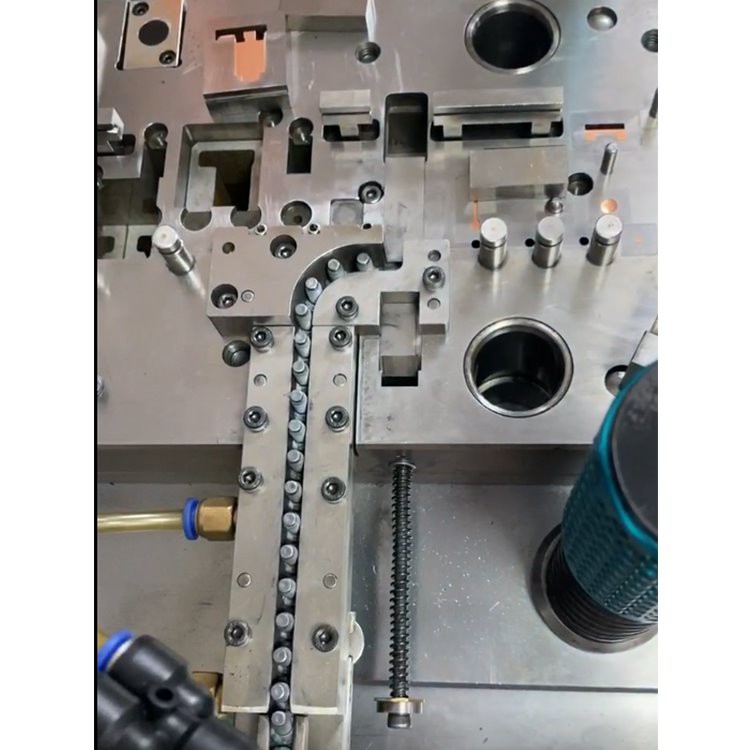
Quenching is a heat treatment process that involves heating the prototype die to a temperature above the critical range and then rapidly cooling it in a quenching medium, such as oil, water, or a polymer solution. This rapid cooling rate causes the formation of a hard and brittle martensite structure, which significantly increases the hardness and strength of the die.
However, quenching also introduces internal stresses and can cause distortion and cracking in the die. To minimize these risks, it is essential to control the quenching process carefully and use appropriate quenching media and techniques.
There are several types of quenching, including direct quenching, interrupted quenching, and martempering. Direct quenching involves immersing the hot die directly into the quenching medium, resulting in the fastest cooling rate and the highest hardness. Interrupted quenching involves cooling the die in a quenching medium to a specific temperature and then transferring it to a less severe cooling medium to complete the cooling process. This helps to reduce the internal stresses and minimize the risk of distortion and cracking. Martempering involves quenching the die in a molten salt bath at a temperature just above the martensite start temperature and holding it there until the temperature is uniform throughout the die. It is then cooled in air, resulting in a more uniform and less stressed martensite structure.
Tempering
Tempering is a heat treatment process that follows quenching to reduce the brittleness and internal stresses in the prototype die and improve its toughness and ductility. The quenched die is heated to a temperature below the critical range and held there for a specific time, allowing the martensite to transform into a more stable and ductile structure called tempered martensite.
The tempering temperature and time depend on the desired properties of the prototype die. Higher tempering temperatures result in lower hardness and higher toughness, while lower tempering temperatures result in higher hardness and lower toughness.
There are several types of tempering, including single tempering, double tempering, and triple tempering. Single tempering is the most common method, where the quenched die is tempered once at a specific temperature. Double tempering involves tempering the die twice at different temperatures to further improve its properties. Triple tempering is used for high-alloy steels and involves tempering the die three times at different temperatures to achieve the desired combination of hardness, toughness, and wear resistance.
Case Hardening
Case hardening is a heat treatment process that involves adding carbon or nitrogen to the surface of the prototype die to create a hard and wear-resistant outer layer while maintaining a tough and ductile core. This process is particularly useful for prototype dies that require high surface hardness and wear resistance, such as Furniture Hardware Stamping Die, Progressive Sheet Metal Dies, and Punch Riveting Die.
There are several types of case hardening, including carburizing, nitriding, and carbonitriding. Carburizing involves heating the prototype die in a carbon-rich environment, such as a gas or liquid carburizing medium, to allow carbon to diffuse into the surface of the die. The die is then quenched and tempered to harden the carburized layer. Nitriding involves heating the prototype die in a nitrogen-rich environment, such as ammonia gas, to allow nitrogen to diffuse into the surface of the die. The die is then cooled in air, resulting in a hard and wear-resistant nitride layer. Carbonitriding is a combination of carburizing and nitriding, where the prototype die is heated in a carbon- and nitrogen-rich environment to create a hard and wear-resistant layer with improved fatigue resistance.
Selection of Heat Treatment Method
The selection of the appropriate heat treatment method for a prototype die depends on several factors, including the type of material, the desired properties of the die, the size and shape of the die, and the manufacturing process.
For prototype dies made from low- and medium-carbon steels, normalizing and tempering are often sufficient to achieve the desired properties. For high-carbon steels and alloy steels, quenching and tempering are typically required to obtain high hardness and wear resistance. Case hardening is often used for prototype dies that require high surface hardness and wear resistance, such as those used in the automotive, aerospace, and furniture industries.
It is also important to consider the cost and time required for each heat treatment method. Some heat treatment processes, such as quenching and tempering, can be more expensive and time-consuming than others, such as annealing and normalizing. Therefore, it is essential to balance the desired properties of the prototype die with the cost and time constraints of the manufacturing process.
Conclusion
Heat treatment is a critical process in the manufacturing of prototype dies that can significantly improve their performance and longevity. By carefully selecting the appropriate heat treatment method and controlling the process parameters, it is possible to achieve the desired combination of hardness, toughness, wear resistance, and other mechanical properties.
As a prototype die supplier, I understand the importance of heat treatment in ensuring the quality and performance of our products. We work closely with our customers to select the most suitable heat treatment method for their specific application and ensure that the prototype dies are heat-treated to the highest standards.
If you are in the market for high-quality prototype dies, I encourage you to contact us to discuss your requirements. Our team of experts will be happy to provide you with more information about our products and services and help you select the best heat treatment method for your prototype dies.
References
- ASM Handbook, Volume 4: Heat Treating, ASM International, 1991.
- Metals Handbook: Heat Treating, Volume 4A, ASM International, 2017.
- Heat Treating: Principles and Processes, third edition, by George E. Totten and M. A. Howes, ASM International, 2016.