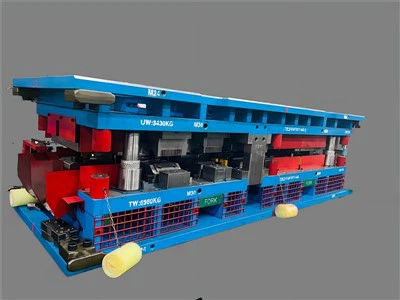
As a punch riveting die supplier, I often get asked whether a punch riveting die can be used for riveting thin - walled parts. It's a great question, and one that I'm more than happy to dive into.
First off, let's talk about what punch riveting dies are. These are tools used in the manufacturing process to join two or more pieces of material together using rivets. They work by applying force to a rivet, deforming it in such a way that it holds the materials in place. Punch riveting dies come in various shapes and sizes, and they can be customized to suit different manufacturing needs.
Now, when it comes to thin - walled parts, things get a bit more tricky. Thin - walled parts are typically made of materials that are, well, thin. This means they're more delicate and can be easily damaged during the riveting process. But the good news is that, yes, a punch riveting die can be used for riveting thin - walled parts, but there are some important considerations.
One of the key factors is the design of the punch riveting die. The die needs to be designed in a way that it applies the right amount of force to the rivet without causing excessive stress on the thin - walled part. If the force is too strong, it can lead to deformation, cracking, or even tearing of the part. On the other hand, if the force is too weak, the rivet may not hold the parts together properly.
To achieve the right balance, we often use precision machining techniques when manufacturing punch riveting dies for thin - walled parts. This ensures that the die has the exact dimensions and tolerances required to apply the optimal amount of force. For example, we might use Progressive Sheet Metal Dies, which are known for their high level of precision and repeatability. These dies can be designed to gradually form the rivet, reducing the risk of damage to the thin - walled part.
Another important aspect is the choice of rivet. Not all rivets are suitable for thin - walled parts. We need to select rivets that are specifically designed for this application. These rivets are usually made of materials that are strong yet flexible enough to deform without causing damage to the thin - walled part. They also come in different sizes and shapes to fit the specific requirements of the thin - walled part.
In addition to the die design and rivet selection, the riveting process itself also plays a crucial role. The speed at which the punch riveting die operates can have a significant impact on the outcome. A high - speed stamping die, like the ones found in high speed stamping die, can be used to quickly and efficiently rivet thin - walled parts. However, it's important to ensure that the speed is controlled to prevent any damage to the parts.
The quality of the thin - walled parts themselves also matters. If the parts have any defects or inconsistencies, it can affect the riveting process. That's why it's essential to work with high - quality materials and ensure that the parts are properly prepared before riveting. This might involve cleaning, deburring, or pre - treating the parts to improve their surface finish and make them more suitable for riveting.
We also need to consider the environment in which the riveting process takes place. Factors such as temperature, humidity, and vibration can all have an impact on the performance of the punch riveting die and the quality of the riveted joint. For example, extreme temperatures can cause the materials to expand or contract, which can affect the fit of the rivet and the integrity of the joint.
Now, let's talk about the benefits of using a punch riveting die for thin - walled parts. One of the main advantages is the strength of the joint. When done correctly, a riveted joint can provide a strong and reliable connection between the thin - walled parts. This is important in applications where the parts need to withstand a certain amount of stress or load.
Another benefit is the speed and efficiency of the riveting process. Compared to other joining methods, such as welding or adhesive bonding, riveting with a punch riveting die can be much faster. This can help to increase productivity and reduce manufacturing costs.
In addition, punch riveting is a relatively clean and environmentally friendly joining method. It doesn't produce any harmful fumes or waste products, making it a more sustainable option for manufacturing.
However, it's important to note that using a punch riveting die for thin - walled parts does require some expertise and experience. That's where we come in. As a punch riveting die supplier, we have the knowledge and skills to design and manufacture high - quality dies that are specifically tailored to the needs of thin - walled parts.
We also offer High Precision Stamping Die services, which can be used in conjunction with our punch riveting dies to ensure the highest level of quality and precision in the manufacturing process. Our team of experts can work closely with you to understand your specific requirements and provide you with the best solution for your thin - walled part riveting needs.
If you're in the market for a punch riveting die for your thin - walled parts, we'd love to hear from you. Whether you're a small - scale manufacturer or a large - scale production facility, we have the capabilities to meet your needs. Contact us today to start a conversation about your project and how we can help you achieve the best results.
In conclusion, a punch riveting die can definitely be used for riveting thin - walled parts, but it requires careful consideration of various factors such as die design, rivet selection, process parameters, and environmental conditions. With the right approach and the expertise of a reliable supplier, you can achieve strong, high - quality riveted joints for your thin - walled parts.


References
- "Metal Joining Technologies: Principles and Applications"
- "Precision Machining Handbook"
- "Manufacturing Processes for Engineering Materials"