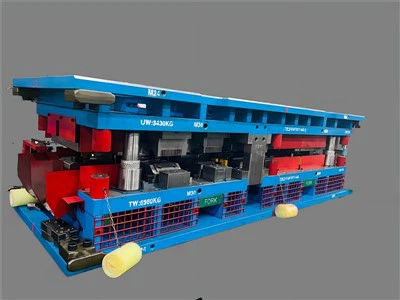
The stripper plate is an essential component in a punch riveting die, playing multiple crucial functions that significantly impact the performance, efficiency, and quality of the punching and riveting process. As a leading supplier of Punch Riveting Die, we understand the importance of each part in the die, and the stripper plate is no exception. In this blog, we will delve into the various functions of the stripper plate in a punch riveting die.
1. Stripping the Material from the Punch
One of the primary functions of the stripper plate is to strip the workpiece or the punched material from the punch after the punching operation. During the punching process, the punch penetrates the material, creating a hole or a rivet - setting feature. Once the punch has completed its downward stroke and begins to retract, the material has a tendency to stick to the punch due to friction, burrs, or the deformation of the material around the punch.
The stripper plate, which is typically located between the punch and the die, applies a force to the material in the opposite direction of the punch's movement. This force effectively separates the material from the punch, allowing the punch to return to its original position without carrying the material along. Without proper stripping, the material could remain attached to the punch, causing misalignment in subsequent punching operations, damaging the punch, or even jamming the die.
For example, in high - volume production environments where high speed stamping die are used, efficient stripping is crucial. If the stripper plate fails to strip the material properly, it can lead to frequent machine stoppages for cleaning and maintenance, reducing the overall productivity of the stamping process.
2. Guiding the Punch
The stripper plate also serves as a guide for the punch. It helps to keep the punch in the correct alignment during its vertical movement. The punch needs to move precisely through the material to create accurate holes or to set rivets correctly. Any misalignment of the punch can result in irregular hole sizes, uneven rivet setting, or damage to the die components.
The stripper plate has holes or openings that are precisely machined to match the shape and size of the punch. These holes act as a guide, ensuring that the punch moves in a straight line and remains centered within the die cavity. This guiding function is especially important when dealing with small - diameter punches or complex die designs.
In Progressive Sheet Metal Dies, where multiple punching and forming operations are carried out in a single pass, the stripper plate's guiding function becomes even more critical. Each punch in the progressive die must be accurately guided to ensure that the final part is produced with the required precision.
3. Controlling the Material during Punching
Another important function of the stripper plate is to control the material during the punching process. It applies a certain amount of pressure on the material, holding it firmly in place. This pressure helps to prevent the material from wrinkling, buckling, or shifting during the punching operation.


When the punch strikes the material, it exerts a large force that can cause the material to deform in an undesirable way. The stripper plate's pressure counteracts this force, keeping the material flat and stable. This is particularly important when working with thin or soft materials, which are more prone to deformation.
For instance, in the production of electronic components using thin metal sheets, the stripper plate's ability to control the material ensures that the punched holes are clean and free from any distortion. This, in turn, improves the quality of the final product and reduces the likelihood of defects.
4. Protecting the Die Components
The stripper plate also plays a role in protecting the other components of the punch riveting die. It acts as a buffer between the punch and the die, absorbing some of the impact forces generated during the punching process. This helps to reduce the wear and tear on the punch and the die, extending their service life.
During the punching operation, the punch and the die are subjected to high - stress loads. Without the stripper plate, these loads could cause premature damage to the punch and the die, leading to frequent replacements and increased production costs. The stripper plate's ability to absorb and distribute the impact forces helps to maintain the integrity of the die components and ensures consistent performance over time.
5. Improving the Quality of the Punched and Riveted Parts
By performing the functions mentioned above, the stripper plate ultimately contributes to improving the quality of the punched and riveted parts. Proper stripping ensures that the holes are clean and free from burrs, and the rivets are set accurately. Guiding the punch and controlling the material prevent misalignment and deformation, resulting in parts that meet the required dimensional tolerances.
In addition, the stripper plate can also influence the surface finish of the parts. By holding the material firmly during punching, it reduces the chances of scratches or marks on the surface of the parts. This is particularly important in applications where the appearance of the parts is critical, such as in the automotive or consumer electronics industries.
Contact Us for Your Punch Riveting Die Needs
If you are in the market for high - quality punch riveting dies, we are here to help. Our team of experts has extensive experience in designing and manufacturing punch riveting dies that incorporate efficient stripper plate designs. We understand the importance of each function of the stripper plate and ensure that our dies are optimized for maximum performance and reliability.
Whether you need a custom - designed punch riveting die for a specific application or a standard die for general use, we can provide you with the right solution. Contact us today to discuss your requirements and start a procurement discussion. Our dedicated sales team will be happy to assist you in finding the best die for your production needs.
References
- Dieter, G. E. (1988). "Mechanical Metallurgy". McGraw - Hill.
- Kalpakjian, S., & Schmid, S. R. (2008). "Manufacturing Engineering and Technology". Pearson Prentice Hall.
- Tool and Manufacturing Engineers Handbook (TMEH), Vol. 4: Stamping. Society of Manufacturing Engineers.