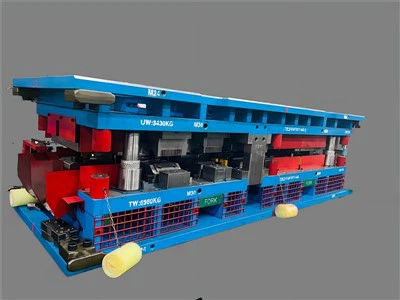
As a supplier of Transfer Dies, I've witnessed firsthand the crucial role these tools play in the manufacturing industry. Transfer Dies are specialized stamping dies that transfer a workpiece from one station to another during the stamping process, enabling complex and efficient production of parts. The quality of a Transfer Die is of utmost importance as it directly impacts the precision, efficiency, and cost - effectiveness of the manufacturing process. In this blog, I will delve into the various factors that affect the quality of a Transfer Die.
Material Selection
The choice of materials for a Transfer Die is fundamental to its quality. High - quality tool steels are commonly used due to their excellent hardness, wear resistance, and toughness. For instance, D2 tool steel is a popular choice for Transfer Dies. It has high carbon and chromium content, which gives it good wear resistance and the ability to hold a sharp cutting edge. However, the selection process is not just about picking a well - known steel grade.
The purity of the steel is also a critical factor. Impurities in the steel can lead to premature failure of the die. For example, sulfur in the steel can cause hot shortness, which makes the steel brittle at high temperatures and can result in cracks during the manufacturing or operation of the die. Additionally, the heat - treatment process of the steel must be carefully controlled. Improper heat treatment can lead to inconsistent hardness throughout the die, which may cause uneven wear and affect the dimensional accuracy of the stamped parts.
Design Complexity
The design of a Transfer Die is another key factor influencing its quality. A well - designed Transfer Die should be able to handle the specific requirements of the stamping process, such as the shape and size of the workpiece, the number of operations, and the production volume.
Complex designs often involve multiple stations and intricate transfer mechanisms. For example, in the production of automotive parts, a Transfer Die may have to perform operations like punching, bending, and forming in a sequential manner. The design must ensure that the workpiece is accurately transferred from one station to another without any misalignment. Any misalignment can lead to defective parts and increased downtime for die adjustments.
Moreover, the design should also consider the ease of maintenance. Accessible components and clear markings can make it easier for maintenance personnel to perform routine checks and repairs. A poorly designed die with hard - to - reach areas may lead to neglected maintenance, which can ultimately reduce the lifespan of the die.
Manufacturing Precision
The manufacturing process of a Transfer Die requires a high level of precision. Machining operations such as milling, grinding, and electrical discharge machining (EDM) must be carried out with tight tolerances. Even a small deviation in the dimensions of the die can have a significant impact on the quality of the stamped parts.
For example, if the cutting edges of the die are not machined to the correct angle, it can result in burrs on the stamped parts. Burrs not only affect the appearance of the parts but can also cause problems in subsequent assembly processes. In addition, the surface finish of the die is crucial. A smooth surface finish can reduce friction between the die and the workpiece, which in turn reduces wear and improves the quality of the stamped parts.
The use of advanced manufacturing technologies and equipment can greatly enhance the precision of Transfer Die manufacturing. Computer - numerical - control (CNC) machines, for example, can achieve high levels of accuracy and repeatability. However, the skill and experience of the machinists are also essential. They need to be able to interpret the design specifications accurately and make adjustments as needed during the manufacturing process.
Assembly and Alignment
Proper assembly and alignment of the Transfer Die components are vital for its quality. The die is composed of multiple parts, including punches, dies, strippers, and transfer mechanisms. Each part must be assembled correctly to ensure smooth operation.
During the assembly process, the alignment of the punches and dies is critical. Misaligned punches and dies can cause uneven forces during the stamping process, leading to premature wear of the components and defective parts. For example, if the punch is not centered within the die cavity, it can cause excessive stress on one side of the die, resulting in cracks or deformation.
The transfer mechanism also needs to be carefully assembled and adjusted. The transfer fingers or bars must be able to grip the workpiece securely and transfer it accurately from one station to another. Any looseness or misalignment in the transfer mechanism can lead to parts being dropped or misaligned during the transfer process.
Operating Conditions
The operating conditions under which the Transfer Die is used can have a significant impact on its quality. Factors such as the stamping speed, the force applied, and the lubrication used all play a role.
A high stamping speed can increase the production rate, but it also puts more stress on the die. If the die is not designed to withstand high - speed operation, it can lead to increased wear and fatigue. For example, at high speeds, the impact forces between the punch and the workpiece can be much greater, which may cause the cutting edges of the die to chip or break.
The force applied during the stamping process must also be carefully controlled. Overloading the die can cause permanent deformation or damage to the components. On the other hand, insufficient force may result in incomplete stamping operations, such as under - formed bends or incomplete punches.
Lubrication is another important aspect of operating conditions. Proper lubrication can reduce friction between the die and the workpiece, which helps to extend the life of the die and improve the quality of the stamped parts. However, the type and amount of lubricant used must be appropriate for the specific application. Using the wrong lubricant or applying too much or too little lubricant can lead to problems such as poor surface finish, increased wear, and even corrosion of the die.


Maintenance and Inspection
Regular maintenance and inspection are essential for maintaining the quality of a Transfer Die. Routine maintenance tasks include cleaning, lubrication, and replacement of worn components. Cleaning the die can remove debris and contaminants that may accumulate during the stamping process, which can otherwise cause damage to the die and affect the quality of the parts.
Inspection is also crucial for detecting any potential problems early. Visual inspections can identify signs of wear, cracks, or misalignment. Non - destructive testing methods, such as ultrasonic testing or magnetic particle testing, can be used to detect internal defects that may not be visible to the naked eye.
By performing regular maintenance and inspections, any issues can be addressed promptly, which can prevent more serious problems from developing and extend the lifespan of the die.
Conclusion
In conclusion, the quality of a Transfer Die is influenced by a multitude of factors, including material selection, design complexity, manufacturing precision, assembly and alignment, operating conditions, and maintenance and inspection. As a Transfer Die supplier, we understand the importance of these factors and strive to ensure that our dies meet the highest quality standards.
If you are in the market for high - quality Transfer Dies, or if you are interested in Progressive casting die, Automotive Progressive Die, or Custom Stamping Dies, we would be delighted to discuss your specific requirements. Our team of experts can provide you with customized solutions and professional advice to meet your manufacturing needs. Contact us today to start a conversation about your Transfer Die requirements.
References
- "Tool and Die Making Technology" by Peter W. Briggs
- "Stamping Die Design and Manufacturing" by John A. Schey
- Industry reports on Transfer Die manufacturing and quality control