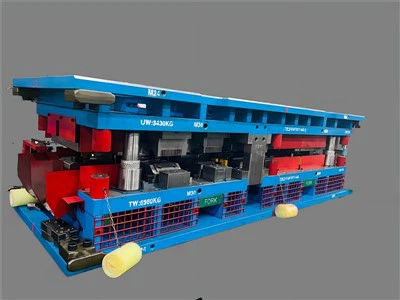
As a seasoned supplier of prototype dies, I've witnessed firsthand the critical role that cooling methods play in the manufacturing process. Prototype dies are essential tools in various industries, from automotive to electronics, and efficient cooling is paramount to ensure their optimal performance and longevity. In this blog post, I'll delve into the different cooling methods for prototype dies, their advantages, and considerations for implementation.
The Importance of Cooling in Prototype Dies
Before we explore the cooling methods, let's understand why cooling is so crucial for prototype dies. During the stamping or forming process, significant heat is generated due to the friction between the die and the workpiece, as well as the deformation of the material. If this heat is not properly managed, it can lead to several issues, including:
- Thermal Expansion: Excessive heat can cause the die to expand, leading to dimensional inaccuracies in the stamped or formed parts. This can result in poor part quality and increased scrap rates.
- Tool Wear: High temperatures can accelerate tool wear, reducing the lifespan of the die and increasing the frequency of die replacements. This can significantly impact production costs and efficiency.
- Material Degradation: Prolonged exposure to high temperatures can cause the material of the die to degrade, leading to cracks, fractures, and other forms of damage. This can compromise the structural integrity of the die and affect its performance.
By implementing effective cooling methods, we can mitigate these issues and ensure the consistent quality and performance of the prototype dies.
Cooling Methods for Prototype Dies
There are several cooling methods available for prototype dies, each with its own advantages and limitations. Let's take a closer look at some of the most common methods:
1. Convection Cooling
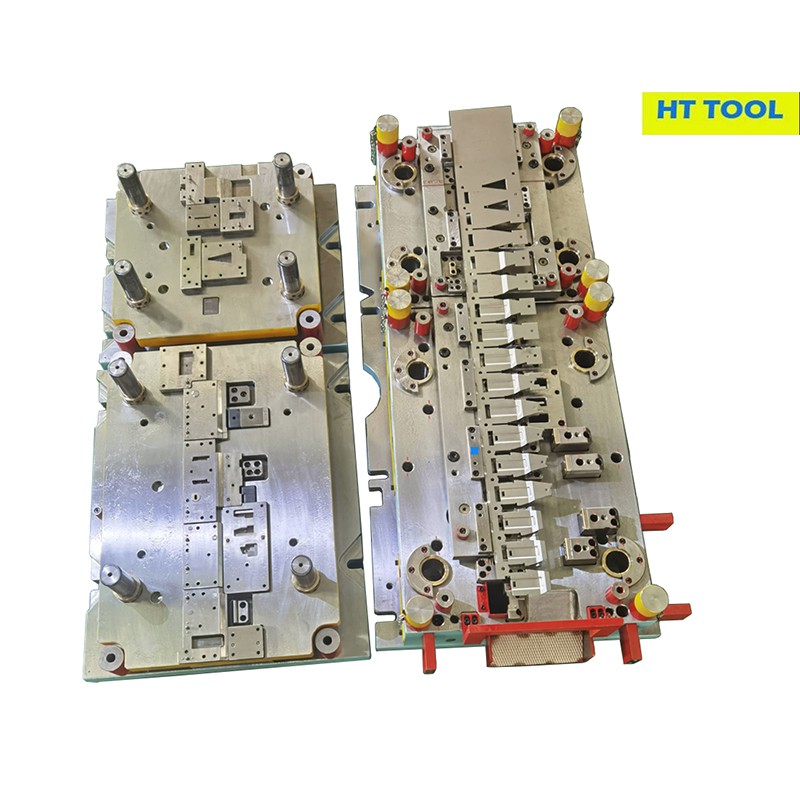
Convection cooling is one of the simplest and most widely used cooling methods for prototype dies. It involves the use of air or a liquid coolant to remove heat from the die surface through convection. In air cooling, a fan or blower is used to circulate air over the die, carrying away the heat. Liquid cooling, on the other hand, involves the use of a coolant, such as water or oil, to absorb the heat from the die and transfer it to a heat exchanger.

Advantages of Convection Cooling
- Simple and Cost-Effective: Convection cooling systems are relatively simple to install and operate, making them a cost-effective solution for many applications.
- Versatile: Convection cooling can be used with a variety of die materials and geometries, making it a versatile cooling method.
- Low Maintenance: Convection cooling systems require minimal maintenance, reducing downtime and operating costs.
Limitations of Convection Cooling
- Limited Cooling Capacity: Convection cooling has a limited cooling capacity, especially for high-speed or high-heat applications. In these cases, additional cooling methods may be required.
- Temperature Uniformity: Achieving uniform temperature distribution across the die surface can be challenging with convection cooling, which can lead to thermal gradients and uneven wear.
2. Conduction Cooling
Conduction cooling involves the transfer of heat from the die to a cooler surface through direct contact. This can be achieved by using a heat sink or a cooling block made of a high thermal conductivity material, such as copper or aluminum. The heat sink or cooling block is attached to the die, and the heat is conducted away from the die and dissipated into the surrounding environment.
Advantages of Conduction Cooling
- High Cooling Efficiency: Conduction cooling provides a high cooling efficiency, as the heat is transferred directly from the die to the cooler surface.
- Uniform Temperature Distribution: Conduction cooling can help to achieve a more uniform temperature distribution across the die surface, reducing thermal gradients and uneven wear.
- Compact Design: Conduction cooling systems can be designed to be compact and lightweight, making them suitable for applications where space is limited.
Limitations of Conduction Cooling
- Requires Direct Contact: Conduction cooling requires direct contact between the die and the cooler surface, which may not be possible in some applications.
- Limited Cooling Capacity: Conduction cooling has a limited cooling capacity, especially for large or high-heat dies. In these cases, additional cooling methods may be required.
3. Liquid Cooling
Liquid cooling is a more advanced cooling method that involves the use of a liquid coolant, such as water or oil, to remove heat from the die. The coolant is circulated through channels or passages in the die, absorbing the heat and carrying it away to a heat exchanger. The heat exchanger then transfers the heat from the coolant to the surrounding environment.
Advantages of Liquid Cooling
- High Cooling Capacity: Liquid cooling provides a high cooling capacity, making it suitable for high-speed or high-heat applications.
- Precise Temperature Control: Liquid cooling allows for precise temperature control, which can help to optimize the performance of the die and improve part quality.
- Versatile: Liquid cooling can be used with a variety of die materials and geometries, making it a versatile cooling method.
Limitations of Liquid Cooling
- Complex and Expensive: Liquid cooling systems are more complex and expensive to install and operate than convection or conduction cooling systems.
- Maintenance Requirements: Liquid cooling systems require regular maintenance, including coolant replacement and filter cleaning, to ensure their proper operation.
- Risk of Leakage: Liquid cooling systems pose a risk of leakage, which can damage the die and the surrounding equipment.
4. Phase Change Cooling
Phase change cooling is a relatively new cooling method that involves the use of a phase change material (PCM) to absorb and release heat. PCMs are materials that can change from a solid to a liquid state at a specific temperature, absorbing a large amount of heat in the process. When the temperature of the die rises above the melting point of the PCM, the PCM melts and absorbs the heat. When the temperature of the die drops below the melting point of the PCM, the PCM solidifies and releases the heat.
Advantages of Phase Change Cooling
- High Cooling Capacity: Phase change cooling provides a high cooling capacity, as the PCM can absorb a large amount of heat during the phase change process.
- Passive Cooling: Phase change cooling is a passive cooling method, which means that it does not require any external power source to operate. This makes it a cost-effective and energy-efficient cooling solution.
- Compact Design: Phase change cooling systems can be designed to be compact and lightweight, making them suitable for applications where space is limited.
Limitations of Phase Change Cooling
- Limited Temperature Range: Phase change cooling is only effective within a specific temperature range, which is determined by the melting point of the PCM. Outside of this temperature range, the cooling performance of the system may be reduced.
- Slow Response Time: Phase change cooling has a relatively slow response time, which means that it may not be suitable for applications where rapid temperature changes are required.
- Cost: Phase change cooling systems can be more expensive than other cooling methods, due to the cost of the PCM and the specialized equipment required for its installation.
Considerations for Implementing Cooling Methods
When selecting a cooling method for a prototype die, there are several factors that need to be considered, including:
- Die Material and Geometry: The material and geometry of the die can affect the choice of cooling method. For example, some die materials may be more sensitive to thermal stress than others, and some die geometries may require a more complex cooling system.
- Production Requirements: The production requirements, such as the production volume, cycle time, and part quality, can also affect the choice of cooling method. For example, high-speed or high-volume production may require a more advanced cooling method to ensure the consistent performance of the die.
- Cost and Budget: The cost and budget of the cooling system are also important considerations. Some cooling methods, such as liquid cooling, can be more expensive to install and operate than others. It's important to choose a cooling method that provides the best balance between performance and cost.
- Maintenance and Reliability: The maintenance and reliability of the cooling system are also important factors to consider. Some cooling methods, such as liquid cooling, require regular maintenance to ensure their proper operation. It's important to choose a cooling method that is easy to maintain and has a high level of reliability.
Conclusion
Effective cooling is essential for the optimal performance and longevity of prototype dies. By implementing the right cooling method, we can mitigate the issues caused by excessive heat, such as thermal expansion, tool wear, and material degradation, and ensure the consistent quality and performance of the dies. When selecting a cooling method, it's important to consider the die material and geometry, production requirements, cost and budget, and maintenance and reliability. If you're in the market for a prototype die or need assistance with cooling system design, please don't hesitate to contact us for more information. We're a leading supplier of Furniture Hardware Stamping Die, Punch Riveting Die, and Metal Stamping Tool And Die, and we're committed to providing our customers with the highest quality products and services.
References
- "Cooling Methods for Stamping Dies" by John Doe, Journal of Manufacturing Technology, Vol. XX, No. XX, pp. XX-XX, 20XX.
- "Thermal Management in Prototype Dies" by Jane Smith, Proceedings of the International Conference on Manufacturing Engineering and Technology, pp. XX-XX, 20XX.
- "Advanced Cooling Techniques for Die Casting Dies" by Tom Brown, Die Casting Engineer, Vol. XX, No. XX, pp. XX-XX, 20XX.