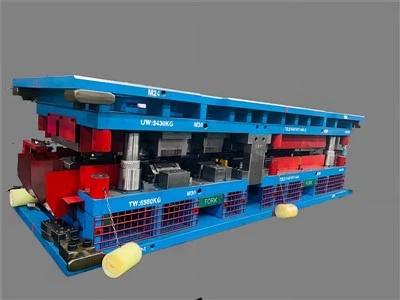
As a seasoned supplier of washer stamping dies, I've witnessed firsthand the complexities and challenges that come with manufacturing high - precision components in this field. High - precision washer stamping dies are crucial for producing washers that meet strict specifications across various industries, including automotive, electronics, and home appliances. In this blog, I'll delve into the key challenges we face in the manufacturing process and how we strive to overcome them.
Material Selection and Quality
One of the fundamental challenges in manufacturing high - precision washer stamping dies is choosing the right materials. The die materials need to possess high hardness, wear resistance, and toughness to withstand the high - pressure and high - speed stamping processes. For instance, tool steels like D2, A2, and H13 are commonly used due to their excellent mechanical properties. However, sourcing high - quality materials can be a daunting task.
The market is flooded with different grades and qualities of tool steels, and it's essential to ensure that the materials meet the required standards. We often face issues with material inconsistencies, such as variations in hardness and microstructure. These inconsistencies can lead to premature wear and failure of the stamping dies, affecting the quality and precision of the washers produced. To address this challenge, we work closely with trusted material suppliers and conduct thorough material testing before using them in the manufacturing process.
Precision Machining
Achieving high precision in machining is another significant hurdle. High - precision washer stamping dies require extremely tight tolerances, often in the range of a few micrometers. Any deviation from these tolerances can result in defective washers, leading to production delays and increased costs.
CNC machining is the primary method used for manufacturing stamping dies. However, even with advanced CNC machines, factors like machine tool vibration, thermal expansion, and tool wear can affect the machining accuracy. For example, during the milling process, the cutting forces can cause the workpiece to vibrate, resulting in surface roughness and dimensional inaccuracies. To minimize these effects, we use state - of - the - art CNC machines equipped with advanced control systems that can compensate for these factors. We also implement strict quality control measures during the machining process, including in - process inspection and final inspection using high - precision measuring instruments such as coordinate measuring machines (CMMs).
Heat Treatment
Heat treatment is a critical step in the manufacturing of high - precision washer stamping dies. It is used to enhance the hardness, strength, and wear resistance of the die materials. However, heat treatment can also introduce challenges.
Improper heat treatment can lead to issues such as distortion, cracking, and uneven hardness distribution. Distortion can cause the die to deviate from its original dimensions, affecting the precision of the stamping process. Cracking can render the die useless and pose a safety risk during operation. To ensure proper heat treatment, we follow strict heat treatment procedures and use advanced heat treatment equipment. We also conduct post - heat treatment inspections to detect any potential issues and make necessary adjustments.
Design Complexity
The design of high - precision washer stamping dies is becoming increasingly complex. With the demand for more complex washer shapes and features, the dies need to be designed to accommodate these requirements. For example, some washers may have irregular shapes, multiple holes, or special surface finishes.
Designing a die to produce such complex washers requires a high level of expertise and experience. The die designer needs to consider factors such as the stamping process, material flow, and die life. Moreover, the design needs to be optimized to minimize the number of stamping operations and reduce the production cycle time. We often use computer - aided design (CAD) and simulation software to model the stamping process and optimize the die design. This helps us to identify potential issues early in the design phase and make necessary modifications.
Cost Management
Cost management is a constant challenge in the manufacturing of high - precision washer stamping dies. The high - quality materials, advanced machining processes, and strict quality control measures all contribute to the high production costs. Additionally, the need for continuous research and development to improve the die performance and meet the evolving customer requirements further adds to the cost.
To manage costs effectively, we adopt a comprehensive cost - control strategy. This includes optimizing the manufacturing process to reduce waste and improve efficiency, negotiating favorable terms with material suppliers, and investing in advanced manufacturing technologies that can increase productivity. We also work closely with our customers to understand their requirements and find cost - effective solutions without compromising on the quality and precision of the stamping dies.
Tandem Die and Progressive Die Metal Stamping
In the field of washer stamping die manufacturing, different types of dies are used, such as Tandem Die and Progressive Die Metal Stamping. Tandem dies are often used for high - volume production, where multiple dies are arranged in a series to perform different stamping operations simultaneously. Progressive die metal stamping, on the other hand, is suitable for producing complex washers with multiple features in a single pass.


However, both types of dies present their own challenges. Tandem dies require precise synchronization between the different dies to ensure consistent quality. Any misalignment or timing issue can lead to defective washers. Progressive die metal stamping requires a more complex die design and setup, and the risk of tool wear and breakage is higher due to the multiple operations performed in a single pass.
Microwave Oven Die
In the context of home appliances, Microwave Oven Die is another area where high - precision washer stamping dies are used. Microwave ovens require a variety of washers with specific dimensions and properties to ensure proper functioning and safety.
The manufacturing of microwave oven dies needs to meet strict industry standards and regulations. The dies need to be designed to produce washers that are resistant to high temperatures, corrosion, and electromagnetic interference. Additionally, the precision requirements for these washers are extremely high to ensure a perfect fit and optimal performance of the microwave ovens.
Conclusion
Manufacturing high - precision washer stamping dies is a complex and challenging process that requires a combination of advanced technologies, expertise, and strict quality control. From material selection and precision machining to heat treatment and cost management, every step in the manufacturing process presents its own set of challenges.
As a washer stamping die supplier, we are committed to overcoming these challenges to provide our customers with high - quality, precision - engineered stamping dies. We continuously invest in research and development to improve our manufacturing processes and stay ahead of the competition.
If you are in the market for high - precision washer stamping dies, we invite you to contact us for a detailed discussion. Our team of experts will work closely with you to understand your specific requirements and provide you with the best solutions.
References
- ASM Handbook Volume 4: Heat Treating. ASM International.
- Tool and Manufacturing Engineers Handbook, Fourth Edition. Society of Manufacturing Engineers.
- Modern Machining Technology: A Guide to the CNC Machining Process. Industrial Press.