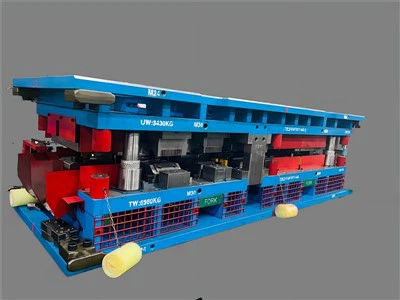
Hey there! As a supplier of washer stamping dies, I know how crucial it is to ensure the dimensional accuracy of these dies. In this blog post, I'll share some tips and tricks on how to achieve that.
First things first, let's understand why dimensional accuracy is so important. When it comes to washer stamping dies, even the slightest deviation from the specified dimensions can lead to a whole bunch of problems. For instance, if the holes in the washer are not the right size or position, it might not fit properly into the assembly, causing malfunctions or even safety hazards. So, getting those dimensions spot - on is a must.
1. High - Quality Materials
The choice of materials for the stamping die is the foundation for ensuring dimensional accuracy. We always opt for high - grade tool steels. These steels have excellent hardness, wear resistance, and thermal stability. Hardness is key because it helps the die maintain its shape during the stamping process. When the die is hard, it won't deform easily under the high pressure exerted during stamping.
Wear resistance is also super important. As the die is used over and over again to stamp washers, it's bound to experience some wear. If the material isn't wear - resistant, the dimensions of the die will gradually change, leading to inaccurate washers. Thermal stability ensures that the die doesn't expand or contract too much due to the heat generated during stamping. You can check out some of our other high - quality die products like Microwave Oven Die, which also rely on top - notch materials for precision.
2. Precision Machining
Once we've selected the right material, the next step is precision machining. This is where the magic happens to get those exact dimensions. We use state - of - the - art CNC (Computer Numerical Control) machines. These machines are programmed with extremely precise instructions. They can cut, drill, and shape the die with a high degree of accuracy, often within a few micrometers.
During the machining process, we constantly monitor the dimensions using advanced measuring tools like coordinate measuring machines (CMMs). These CMMs can measure the die's dimensions in three - dimensional space, allowing us to detect any deviations from the design specifications right away. If we find any issues, we can make adjustments to the machining process immediately. This is similar to how we approach the production of Progressive Die Tooling, where precision machining is also a critical step.
3. Heat Treatment
Heat treatment is another vital step in ensuring the dimensional accuracy of the washer stamping die. After machining, the die goes through a carefully controlled heat treatment process. This process helps to relieve internal stresses that might have been introduced during machining. If these stresses are not relieved, they can cause the die to warp or distort over time, affecting its dimensions.
There are different types of heat treatment processes, such as quenching and tempering. Quenching involves rapidly cooling the die from a high temperature, which increases its hardness. Tempering, on the other hand, is done after quenching to reduce the brittleness and improve the toughness of the die. By carefully controlling the heat treatment parameters like temperature and time, we can ensure that the die has the right combination of hardness, toughness, and dimensional stability.
4. Assembly and Alignment
Once the individual parts of the die are machined and heat - treated, it's time to assemble them. Proper assembly is crucial for maintaining dimensional accuracy. We make sure that all the components fit together perfectly. Any misalignment during assembly can lead to problems during stamping.
We use alignment pins and fixtures to ensure that the parts are in the correct position. These alignment tools help to keep the die components in place and prevent any shifting or movement. Just like in the production of Tandem Die, where proper assembly and alignment are essential for the die to function accurately.
5. Regular Maintenance
Even after the die is assembled and put into use, the work doesn't stop there. Regular maintenance is necessary to keep the die in good condition and maintain its dimensional accuracy. We recommend cleaning the die regularly to remove any debris or metal shavings that might have accumulated during stamping.
Lubrication is also important. Applying the right lubricant to the die reduces friction during stamping, which not only extends the life of the die but also helps to maintain its dimensions. We also perform regular inspections using measuring tools to detect any signs of wear or damage. If we find any issues, we can make repairs or replacements in a timely manner.
6. Operator Training
The people operating the stamping machines also play a big role in ensuring dimensional accuracy. We provide comprehensive training to our operators. They learn how to set up the stamping machine correctly, adjust the pressure and speed according to the requirements of the die, and monitor the stamping process for any signs of problems.
A well - trained operator can detect issues like misaligned washers or abnormal noises during stamping and take appropriate action right away. This helps to prevent the production of inaccurate washers and ensures that the die is used properly, which in turn helps to maintain its dimensional accuracy.
7. Quality Control Checks
Throughout the entire process, from material selection to the final stamping of the washers, we have a strict quality control system in place. We perform multiple checks at different stages. For example, after machining, we check the dimensions of the individual parts. After assembly, we check the overall dimensions and functionality of the die.
During production, we take random samples of the stamped washers and measure their dimensions. If the dimensions of the washers are within the specified tolerance range, it means the die is working accurately. If not, we go back and analyze the process to find out where the problem lies and make the necessary adjustments.


In conclusion, ensuring the dimensional accuracy of a washer stamping die is a multi - step process that involves high - quality materials, precision machining, proper heat treatment, accurate assembly, regular maintenance, well - trained operators, and strict quality control. By following these steps, we can produce washer stamping dies that consistently produce washers with the right dimensions.
If you're in the market for high - quality washer stamping dies or have any questions about die manufacturing, feel free to reach out to us for a purchase negotiation. We're here to help you get the best dies for your needs.
References
- ASM Handbook, Volume 4: Heat Treating. ASM International.
- Tool and Manufacturing Engineers Handbook, Volume 1: Machining. Society of Manufacturing Engineers.