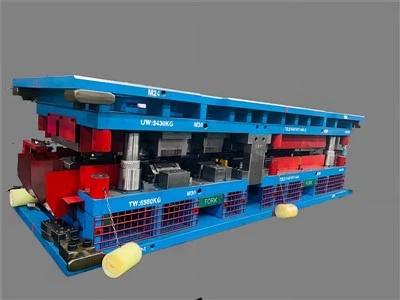
Managing automotive tooling inventory is a critical aspect of running an automotive tooling supply business. As an automotive tooling supplier, I've faced my fair share of challenges in keeping track of inventory, ensuring we have the right tools available when our customers need them, and minimizing costs associated with overstocking or understocking. In this blog post, I'll share some tips and strategies that have worked well for me in managing our automotive tooling inventory effectively.
Understanding Your Inventory
The first step in managing automotive tooling inventory is to have a clear understanding of what you have in stock. This means creating a detailed inventory list that includes information such as the tool name, part number, quantity on hand, location in the warehouse, and any other relevant details. You can use a spreadsheet or a specialized inventory management software to keep track of this information.
It's also important to categorize your inventory based on factors such as usage frequency, cost, and lead time. For example, you might have high-cost, low-usage tools that need to be carefully monitored to avoid overstocking, as well as low-cost, high-usage tools that you need to keep in ample supply to meet customer demand. By categorizing your inventory, you can prioritize your management efforts and focus on the items that are most critical to your business.
Forecasting Demand
One of the biggest challenges in inventory management is predicting how much of each tool you'll need to have in stock at any given time. This is where demand forecasting comes in. By analyzing historical sales data, market trends, and customer orders, you can make informed predictions about future demand for your automotive tooling products.
There are several methods you can use to forecast demand, including qualitative methods (such as expert opinions and market research) and quantitative methods (such as time series analysis and regression analysis). The key is to choose the method that works best for your business and to regularly review and update your forecasts based on new information.
For example, if you notice a trend of increasing demand for Casting Progressive Die in a particular region, you might want to increase your inventory levels of these tools to ensure you can meet customer needs. On the other hand, if you see a decline in demand for a certain type of Sheet Metal Progressive Tool, you might want to reduce your inventory levels to avoid overstocking.
Setting Reorder Points
Once you have a good understanding of your inventory and have forecasted demand, the next step is to set reorder points for each item in your inventory. A reorder point is the inventory level at which you need to place a new order for a particular tool to avoid running out of stock.
To calculate the reorder point, you need to consider factors such as lead time (the time it takes for your supplier to deliver the tool after you place an order), safety stock (the extra inventory you keep on hand to account for unexpected fluctuations in demand), and average daily usage. The formula for calculating the reorder point is:
Reorder Point = (Average Daily Usage x Lead Time) + Safety Stock
For example, if you sell an average of 10 Sheet Metal Progressive Tool Design per day, and it takes your supplier 5 days to deliver the tool after you place an order, and you want to keep a safety stock of 20 tools, your reorder point would be:
Reorder Point = (10 x 5) + 20 = 70
This means that when your inventory level of Sheet Metal Progressive Tool Design reaches 70 tools, you need to place a new order to replenish your stock.

Implementing an Inventory Management System
To effectively manage your automotive tooling inventory, it's important to implement an inventory management system that allows you to track inventory levels, monitor reorder points, and generate reports. There are many different types of inventory management systems available, ranging from simple spreadsheet-based systems to more complex enterprise resource planning (ERP) systems.
When choosing an inventory management system, you need to consider factors such as the size of your business, the complexity of your inventory, and your budget. You also need to ensure that the system is user-friendly and integrates well with your other business systems, such as your accounting and sales systems.
Once you have implemented an inventory management system, it's important to train your staff on how to use it effectively. This includes teaching them how to enter and update inventory data, how to generate reports, and how to use the system to make informed decisions about inventory management.
Managing Supplier Relationships
Another important aspect of automotive tooling inventory management is managing your relationships with your suppliers. This includes negotiating favorable terms and conditions, such as pricing, lead times, and payment terms, as well as ensuring that your suppliers are reliable and can deliver high-quality tools on time.
To build strong relationships with your suppliers, it's important to communicate regularly with them and to be transparent about your inventory needs and expectations. You should also consider working with multiple suppliers to reduce your risk of supply chain disruptions and to ensure that you have access to a wide range of tools and products.
In addition, you can use your inventory management system to track supplier performance and to identify any issues or areas for improvement. For example, if you notice that a particular supplier is consistently delivering tools late or with quality issues, you can take steps to address these issues or to find a new supplier.
Conducting Regular Inventory Audits
Finally, it's important to conduct regular inventory audits to ensure that your inventory records are accurate and that you have the right tools in stock. An inventory audit involves physically counting your inventory and comparing the results to your inventory records.
There are several different types of inventory audits you can conduct, including full physical inventory counts, cycle counts, and spot checks. The frequency of your audits will depend on factors such as the size of your business, the complexity of your inventory, and the level of risk associated with your inventory.
During an inventory audit, you should look for any discrepancies between your physical inventory and your inventory records. If you find any discrepancies, you need to investigate the cause and take steps to correct the issue. This might involve updating your inventory records, adjusting your reorder points, or investigating potential theft or shrinkage.
Conclusion
Managing automotive tooling inventory is a complex and challenging task, but it's also essential for the success of your automotive tooling supply business. By understanding your inventory, forecasting demand, setting reorder points, implementing an inventory management system, managing supplier relationships, and conducting regular inventory audits, you can ensure that you have the right tools in stock at the right time, minimize costs associated with overstocking or understocking, and provide excellent customer service.
If you're interested in learning more about how we can help you manage your automotive tooling inventory or if you're looking to purchase high-quality automotive tooling products, please don't hesitate to reach out to us. We'd be happy to discuss your needs and to provide you with a customized solution that meets your requirements.
References
- "Inventory Management: Principles and Practices" by David Pyke, Richard C. Smith, and Brian L. Weiss
- "Supply Chain Management: Strategy, Planning, and Operation" by Sunil Chopra and Peter Meindl
- "Demand Forecasting for Operations Management" by James H. Stock and Douglas M. Lambert