As a supplier of deep draw parts, I understand the critical role that thermal conductivity plays in many applications. Deep draw parts are used in a wide range of industries, from automotive to electronics, where efficient heat transfer is often essential for optimal performance. In this blog post, I will share some insights on how to improve the thermal conductivity of deep draw parts.
Understanding Thermal Conductivity
Before we delve into the ways to improve thermal conductivity, it's important to understand what it is. Thermal conductivity is the property of a material that determines its ability to conduct heat. It is measured in watts per meter-kelvin (W/m·K). A higher thermal conductivity means that the material can transfer heat more efficiently.
In the context of deep draw parts, improving thermal conductivity can lead to several benefits. For example, in automotive applications, better heat transfer can enhance the performance and lifespan of components such as engine parts and cooling systems. In electronics, it can prevent overheating and improve the reliability of devices.
Material Selection
One of the most fundamental ways to improve the thermal conductivity of deep draw parts is through proper material selection. Different materials have different thermal conductivities, and choosing the right one can make a significant difference.
Metals
Metals are generally good conductors of heat, and some are better than others. Copper, for instance, has an extremely high thermal conductivity of around 400 W/m·K. Aluminum is also a popular choice, with a thermal conductivity of about 200 - 240 W/m·K. These metals are often used in deep draw parts where high thermal conductivity is required, such as heat sinks and electronic enclosures.
When selecting a metal for deep draw parts, it's important to consider not only its thermal conductivity but also its formability. Some metals may be difficult to deep draw, which can limit their use. For example, while copper has excellent thermal conductivity, it can be challenging to form into complex shapes compared to aluminum.
Alloys
Alloys can also be used to improve thermal conductivity. By combining different metals, it's possible to create an alloy with specific properties, including enhanced thermal conductivity. For example, some aluminum alloys are designed to have improved heat transfer characteristics while maintaining good formability.


Non-metallic Materials
In some cases, non-metallic materials may be used to improve thermal conductivity. For example, certain ceramics have relatively high thermal conductivities and can be used in applications where electrical insulation is also required. However, non-metallic materials are often more brittle and less formable than metals, which can make them more challenging to use in deep draw parts.
Surface Treatment
Surface treatment can also have a significant impact on the thermal conductivity of deep draw parts. There are several surface treatment techniques that can be used to improve heat transfer.
Coating
Applying a coating to the surface of a deep draw part can enhance its thermal conductivity. For example, a thin layer of a highly conductive material such as silver or copper can be deposited on the surface. This can improve the contact between the part and the surrounding environment, allowing for more efficient heat transfer.
Another type of coating that can be used is a thermal interface material (TIM). TIMs are designed to fill the microscopic gaps between two surfaces, reducing the thermal resistance and improving heat transfer. They are commonly used in electronic applications to improve the connection between a heat-generating component and a heat sink.
Surface Roughness
The surface roughness of a deep draw part can also affect its thermal conductivity. A smooth surface generally has better heat transfer characteristics than a rough one. This is because a smooth surface allows for better contact between the part and the surrounding medium, reducing the thermal resistance at the interface.
To achieve a smooth surface, various finishing processes can be used, such as polishing and grinding. These processes can not only improve the thermal conductivity but also enhance the aesthetic appearance of the part.
Design Optimization
The design of a deep draw part can also play a crucial role in its thermal conductivity. By optimizing the design, it's possible to improve heat transfer and reduce thermal resistance.
Shape and Geometry
The shape and geometry of a deep draw part can have a significant impact on its thermal performance. For example, parts with a larger surface area can dissipate heat more efficiently. This can be achieved by incorporating fins or other heat-dissipating structures into the design.
In addition, the thickness of the part can also affect its thermal conductivity. A thinner part generally has a lower thermal resistance and can transfer heat more quickly. However, it's important to balance the thickness with the structural requirements of the part to ensure its mechanical integrity.
Internal Structure
The internal structure of a deep draw part can also be optimized for better thermal conductivity. For example, creating a hollow structure with internal channels can allow for the circulation of a cooling fluid, which can significantly improve heat transfer. This type of design is commonly used in heat exchangers and other cooling applications.
Manufacturing Processes
The manufacturing processes used to produce deep draw parts can also influence their thermal conductivity. Some processes can introduce defects or impurities that can reduce heat transfer, while others can enhance it.
Stamping Processes
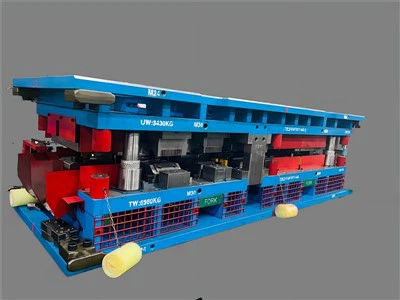
Stamping processes, such as Steel sheet progressive die and Progressive Metal Stamping, are commonly used to produce deep draw parts. These processes can have a significant impact on the material properties and, consequently, the thermal conductivity.
During stamping, the material is subjected to high pressures and strains, which can cause changes in its microstructure. If the stamping process is not properly controlled, it can lead to the formation of defects such as cracks and voids, which can reduce the thermal conductivity. Therefore, it's important to optimize the stamping parameters to ensure a high-quality product with good thermal properties.
Heat Treatment
Heat treatment can also be used to improve the thermal conductivity of deep draw parts. By heating and cooling the material in a controlled manner, it's possible to modify its microstructure and enhance its thermal properties. For example, annealing can relieve internal stresses and improve the crystallinity of the material, which can lead to better heat transfer.
Quality Control
Finally, quality control is essential to ensure that the deep draw parts have the desired thermal conductivity. This involves testing and inspection at various stages of the manufacturing process.
Thermal Conductivity Testing
Thermal conductivity testing can be used to measure the heat transfer properties of the deep draw parts. There are several methods available, including the guarded hot plate method and the transient plane source method. These tests can provide accurate data on the thermal conductivity of the parts, allowing for quality control and process optimization.
Inspection for Defects
Inspection for defects such as cracks, voids, and inclusions is also important. These defects can significantly reduce the thermal conductivity of the parts. Non-destructive testing methods, such as ultrasonic testing and X-ray inspection, can be used to detect these defects without damaging the parts.
Conclusion
Improving the thermal conductivity of deep draw parts is a complex but achievable goal. By carefully selecting the material, applying appropriate surface treatments, optimizing the design, using the right manufacturing processes, and implementing strict quality control measures, it's possible to produce deep draw parts with excellent thermal properties.
As a supplier of deep draw parts, I am committed to providing high-quality products that meet the specific thermal conductivity requirements of our customers. If you are in need of deep draw parts with enhanced thermal conductivity, please feel free to contact us for a consultation and to discuss your procurement needs.
References
- Incropera, F. P., DeWitt, D. P., Bergman, T. L., & Lavine, A. S. (2007). Fundamentals of Heat and Mass Transfer. Wiley.
- Callister, W. D., & Rethwisch, D. G. (2010). Materials Science and Engineering: An Introduction. Wiley.
- Ashby, M. F., & Jones, D. R. H. (2005). Engineering Materials 1: An Introduction to Properties, Applications, and Design. Butterworth-Heinemann.