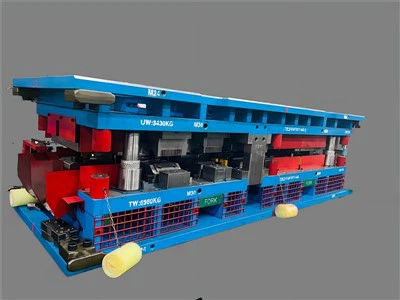
Hey there! As a supplier in the high-speed stamping industry, I've seen firsthand how crucial it is to boost the material utilization rate. It's not just about saving costs; it's also about being more sustainable and efficient. In this blog, I'll share some practical tips on how to achieve this goal.
Understanding the Basics of High-Speed Stamping
Before we dive into the strategies, let's quickly go over what high-speed stamping is. High-speed stamping is a manufacturing process that uses a stamping press to cut, shape, and form metal sheets at a very high speed. This process is widely used in various industries, including automotive, electronics, and furniture, to produce a large number of parts in a short amount of time.
The key to high-speed stamping is to ensure that the stamping press operates smoothly and efficiently. This requires careful planning, precise tooling, and proper maintenance. However, one of the biggest challenges in high-speed stamping is maximizing the material utilization rate. When we talk about material utilization rate, we're referring to the percentage of the metal sheet that is actually used to produce the parts, as opposed to the scrap that is left over.
Strategies to Improve Material Utilization Rate
Optimize the Nesting Design
One of the most effective ways to improve the material utilization rate is to optimize the nesting design. Nesting is the process of arranging the parts on the metal sheet in the most efficient way possible to minimize scrap. There are several software tools available that can help you create the best nesting design for your parts. These tools take into account the shape, size, and quantity of the parts, as well as the dimensions of the metal sheet.


For example, if you're producing small, irregularly shaped parts, you might be able to fit more of them on a single sheet by rotating them or arranging them in a pattern. By using nesting software, you can experiment with different arrangements and find the one that gives you the highest material utilization rate. This can significantly reduce the amount of scrap and save you a lot of money in the long run.
Use Progressive Dies
Another great way to improve material utilization is by using progressive dies. Progressive dies are a type of stamping die that performs multiple operations on the metal sheet as it moves through the die. Each station in the progressive die performs a different operation, such as cutting, bending, or forming.
The advantage of using progressive dies is that they allow you to produce multiple parts in a single pass through the stamping press. This means that you can use the entire length of the metal strip, which reduces scrap. Progressive dies are especially useful for high-volume production runs. You can check out our Progressive Tool Sheet Metal for more information on this type of die.
Select the Right Material Thickness
Choosing the right material thickness is also crucial for improving the material utilization rate. If the material is too thick, you may end up with more scrap because the parts may not fit as efficiently on the sheet. On the other hand, if the material is too thin, it may not be strong enough to withstand the stamping process.
To determine the optimal material thickness, you need to consider the requirements of your parts, such as their strength, durability, and functionality. You can also consult with your material supplier or a stamping expert to get their advice. By selecting the right material thickness, you can ensure that you're using the metal sheet as efficiently as possible.
Minimize Tool Clearance
Tool clearance refers to the space between the punch and the die in the stamping process. If the tool clearance is too large, it can cause the metal to deform and create more scrap. On the other hand, if the tool clearance is too small, it can lead to excessive wear on the tools and reduce their lifespan.
To minimize tool clearance, you need to use high-quality tools and maintain them properly. Regularly inspect the tools for wear and tear and replace them when necessary. You can also work with your tooling supplier to optimize the tool design and ensure that the tool clearance is set to the right value for your parts. This can help you reduce scrap and improve the overall quality of your stamped parts.
Implement Lean Manufacturing Principles
Lean manufacturing is a systematic approach to eliminating waste and improving efficiency in the manufacturing process. By implementing lean manufacturing principles in your high-speed stamping operation, you can reduce the amount of scrap and improve the material utilization rate.
Some of the key lean manufacturing principles include just-in-time production, continuous improvement, and waste reduction. For example, you can implement a just-in-time inventory system to ensure that you're only ordering the amount of metal sheet that you need for your production runs. This can prevent overstocking and reduce the risk of having excess material that ends up as scrap.
The Role of Quality Control
Quality control is an essential part of improving the material utilization rate. By ensuring that the stamped parts meet the required quality standards, you can reduce the number of defective parts that need to be scrapped.
Implement a comprehensive quality control system that includes inspection at every stage of the stamping process. This can help you identify and correct any issues early on, before they lead to more scrap. For example, you can use in-process inspection to check the parts as they are being stamped to ensure that they are being formed correctly. You can also perform final inspection on the finished parts to make sure that they meet all the specifications.
Conclusion
Improving the material utilization rate in high-speed stamping is a complex but achievable goal. By optimizing the nesting design, using progressive dies, selecting the right material thickness, minimizing tool clearance, and implementing lean manufacturing principles, you can significantly reduce scrap and save money. Quality control also plays a crucial role in ensuring that you're producing high-quality parts with minimal waste.
If you're in the market for high-quality stamping dies, we offer a wide range of options, including Furniture Hardware Stamping Die and High Precision Stamping Die. These dies are designed to help you improve your material utilization rate and increase your production efficiency.
If you're interested in learning more about how we can help you improve your high-speed stamping process, don't hesitate to reach out. We're always happy to have a chat and discuss how we can meet your specific needs. Let's work together to make your stamping operation more efficient and cost-effective!
References
- "Stamping Handbook" by Society of Manufacturing Engineers
- "Metal Forming: Processes and Applications" by J. A. Schey