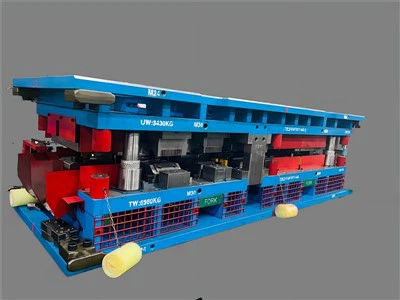
As a washer stamping die supplier, I've seen firsthand how crucial it is to ensure the alignment of the upper and lower dies in a washer stamping die. Misalignment can lead to a whole host of problems, like poor part quality, increased tool wear, and even production downtime. So, I'm gonna share some tips on how to make sure your upper and lower dies are perfectly aligned.
1. Precision Machining and Design
First off, it all starts with the design and machining of the dies. When we design the washer stamping dies, we use advanced CAD/CAM software to create precise 3D models. This helps us to visualize the die components and ensure that all the features are properly aligned right from the start.
For the machining process, we rely on high - precision CNC machines. These machines can cut the die components with extremely tight tolerances, usually within a few thousandths of an inch. For example, the guide pins and bushings, which play a key role in die alignment, are machined to very exact specifications. The guide pins are made to fit snugly into the bushings, providing a stable and accurate guiding mechanism for the upper and lower dies.
If you're interested in high - quality stamping dies, you can check out our Progressive Die Tooling page. It showcases some of our top - notch die designs that are built with precision in mind.
2. Proper Installation
Installing the die correctly is another critical step in ensuring alignment. Before installation, we always make sure the press bed is clean and free of any debris. Any dirt or small particles on the press bed can cause the die to sit unevenly, leading to misalignment.
We use alignment fixtures and jigs during the installation process. These tools help us position the upper and lower dies in the correct orientation relative to each other. For example, we might use a die - setting fixture that has pre - machined holes and slots to guide the placement of the die components.
Once the dies are initially placed on the press, we use shims to make any fine adjustments to the alignment. Shims are thin pieces of metal that can be inserted between the die and the press bed to raise or lower one side of the die slightly. This allows us to correct any minor misalignments and ensure that the upper and lower dies are parallel to each other.
3. Regular Inspection and Maintenance
Even after proper installation, the alignment of the upper and lower dies can change over time due to normal wear and tear, vibrations, and temperature variations. That's why regular inspection and maintenance are so important.
We conduct routine visual inspections of the dies to look for any signs of wear, damage, or misalignment. For example, we check the guide pins and bushings for excessive wear. If the guide pins are worn, they may not fit as tightly in the bushings, which can lead to misalignment during stamping.
In addition to visual inspections, we also use precision measuring tools like dial indicators. These tools can measure very small displacements and help us determine if the upper and lower dies are still aligned within the required tolerances. If we find any issues during the inspection, we take immediate action to correct them. This might involve replacing worn components, adjusting the alignment using shims, or performing more in - depth repairs.
4. Operator Training
The operators who work with the washer stamping dies also play a big role in maintaining die alignment. That's why we provide comprehensive training to our customers' operators.
During the training, we teach the operators about the importance of die alignment and how to recognize the signs of misalignment. For example, we show them how to look for uneven wear on the stamped parts, which can indicate that the dies are not properly aligned.
We also train the operators on how to perform basic maintenance tasks, like cleaning the dies and checking the alignment fixtures. By empowering the operators with this knowledge and skills, we can ensure that they can quickly identify and address any alignment issues that may arise during production.


5. Using Advanced Technology
In today's age, there are some really cool advanced technologies that can help us ensure die alignment. One such technology is die - monitoring systems. These systems use sensors to continuously monitor the position and movement of the upper and lower dies during stamping.
The sensors can detect even the slightest misalignments and send alerts to the operators or maintenance personnel. This allows for immediate action to be taken, preventing further damage to the dies and reducing the chances of producing defective parts. For instance, if the monitoring system detects a small shift in the alignment of the dies, an alert can be sent to the operator's mobile device, and they can stop the production line and make the necessary adjustments.
Another technology is laser alignment systems. These systems use lasers to create a precise reference line for aligning the upper and lower dies. They can provide highly accurate alignment measurements, making it easier to achieve and maintain the correct alignment.
6. Consider the Material and Process Variables
The type of material being stamped and the stamping process itself can also affect die alignment. Different materials have different properties, such as hardness, ductility, and thickness. These properties can cause variations in the forces acting on the dies during stamping.
For example, if you're stamping a very hard material, the forces involved can be much higher, which may put more stress on the die components and potentially lead to misalignment. We need to take these material properties into account when designing and setting up the dies.
Similarly, the stamping process parameters, like stamping speed and pressure, can also impact die alignment. We need to optimize these parameters to ensure that the forces are evenly distributed across the dies and that there is no excessive stress or vibration that could cause misalignment.
If you're in the home - appliance industry and need specialized stamping dies, you can take a look at our Gas Stove Die and Progressive Die Metal Stamping pages. These products are designed to meet the specific requirements of the home - appliance manufacturing process.
In conclusion, ensuring the alignment of the upper and lower dies in a washer stamping die is a multi - faceted process that involves precision machining, proper installation, regular inspection and maintenance, operator training, the use of advanced technology, and consideration of material and process variables. By following these steps, you can significantly improve the quality of your stamped parts, reduce tool wear, and increase production efficiency.
If you're in need of high - quality washer stamping dies or have any questions about die alignment, don't hesitate to reach out to us for procurement discussions. We're more than happy to help you find the best solutions for your stamping needs.
References
- Smith, J., & Johnson, A. (2018). Handbook of Stamping Die Design. Publisher: Industrial Press.
- Brown, C. (2020). Advanced Manufacturing Technologies for Stamping Dies. Journal of Manufacturing Science, 15(2), 123 - 145.