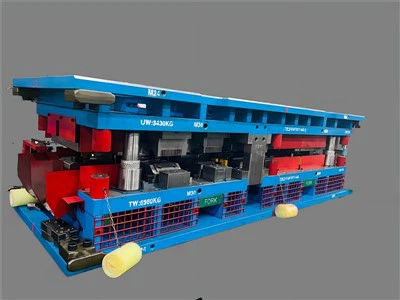
As a deep draw parts supplier, I understand the critical role that lubricants play in the production process. Deep drawing is a complex metal forming process that involves stretching a flat sheet metal blank into a three-dimensional shape. The right lubricant can significantly improve the quality of the deep draw parts, reduce tool wear, and increase production efficiency. In this blog post, I will share some insights on how to choose the right lubricant for deep draw parts production.
Understanding the Function of Lubricants in Deep Drawing
Before delving into the selection process, it's essential to understand the primary functions of lubricants in deep drawing:
Reducing Friction
Friction between the sheet metal and the die surface can lead to excessive wear on the tooling, increased forming forces, and poor surface finish on the deep draw parts. A good lubricant creates a thin film between the two surfaces, reducing friction and allowing the metal to flow smoothly during the drawing process.
Cooling
The deep drawing process generates a significant amount of heat due to the deformation of the metal and the friction between the sheet and the die. Lubricants help dissipate this heat, preventing overheating of the tooling and the sheet metal, which can cause thermal damage and affect the dimensional accuracy of the parts.
Preventing Welding
During deep drawing, there is a risk of the sheet metal sticking to the die surface, known as welding. Lubricants act as a barrier, preventing direct contact between the metal surfaces and reducing the likelihood of welding, which can lead to part defects and tool damage.
Factors to Consider When Choosing a Lubricant
Material of the Sheet Metal
Different sheet metals have different properties, such as hardness, ductility, and surface finish. The lubricant should be compatible with the material of the sheet metal to ensure optimal performance. For example, aluminum alloys require a lubricant that can prevent galling, while stainless steel may need a lubricant with high anti-wear properties.
Drawing Ratio
The drawing ratio is the ratio of the diameter of the blank to the diameter of the drawn part. Higher drawing ratios require more severe forming conditions, and thus, a lubricant with better lubricity and anti-wear properties. As the drawing ratio increases, the lubricant needs to be able to withstand higher pressures and shear forces.
Tooling Material and Surface Finish
The material and surface finish of the tooling also affect the choice of lubricant. Harder tooling materials, such as carbide, may require a lubricant with higher load-carrying capacity. Additionally, a smooth tool surface finish can reduce the friction and the amount of lubricant needed.
Production Volume and Speed
For high-volume production, a lubricant that can be easily applied and removed is preferred to minimize downtime. Lubricants that can be used in automated systems, such as spray or roller application, are more suitable for high-speed production lines. On the other hand, for low-volume production, a more specialized lubricant may be used, even if it requires more manual application.
Environmental and Safety Considerations
In today's manufacturing environment, environmental and safety considerations are crucial. Choose a lubricant that is environmentally friendly, non-toxic, and compliant with relevant regulations. Water-based lubricants are often a good choice as they are biodegradable and have lower volatile organic compound (VOC) emissions compared to oil-based lubricants.
Types of Lubricants for Deep Drawing
Oil-Based Lubricants
Oil-based lubricants are widely used in deep drawing due to their excellent lubricity and anti-wear properties. They can withstand high pressures and shear forces, making them suitable for severe forming operations. However, oil-based lubricants can be difficult to clean, and they may leave a residue on the parts, which can require additional cleaning steps.
Water-Based Lubricants
Water-based lubricants are becoming increasingly popular due to their environmental friendliness and ease of cleaning. They are formulated with water as the base and additives to improve lubricity, anti-wear, and corrosion resistance. Water-based lubricants can be easily removed from the parts using water or mild detergents, reducing the cleaning time and cost.
Solid Lubricants
Solid lubricants, such as graphite and molybdenum disulfide, are used in applications where high temperatures and pressures are involved. They can provide excellent lubrication at high temperatures and are often used in combination with oil or water-based lubricants to enhance their performance.
Testing and Evaluation of Lubricants
Once you have selected a few potential lubricants based on the above factors, it's important to test them in your specific production environment. Conducting small-scale tests can help you evaluate the performance of the lubricants in terms of friction reduction, surface finish, tool wear, and part quality.
You can use a laboratory tribometer to measure the coefficient of friction between the sheet metal and the die surface under different lubrication conditions. Additionally, you can perform actual deep drawing tests using the lubricants and inspect the parts for defects, such as cracks, wrinkles, and surface scratches.
Case Studies
Let's take a look at some real-world examples of how choosing the right lubricant can improve deep draw parts production.
Case Study 1: Automotive Progressive Die
In an automotive manufacturing plant, they were using a traditional oil-based lubricant for their Automotive Progressive Die deep drawing operations. However, they were facing issues with part quality, such as surface scratches and tool wear. After conducting a lubricant evaluation, they switched to a water-based lubricant specifically formulated for automotive deep drawing. The new lubricant reduced friction, improved the surface finish of the parts, and extended the tool life, resulting in significant cost savings.
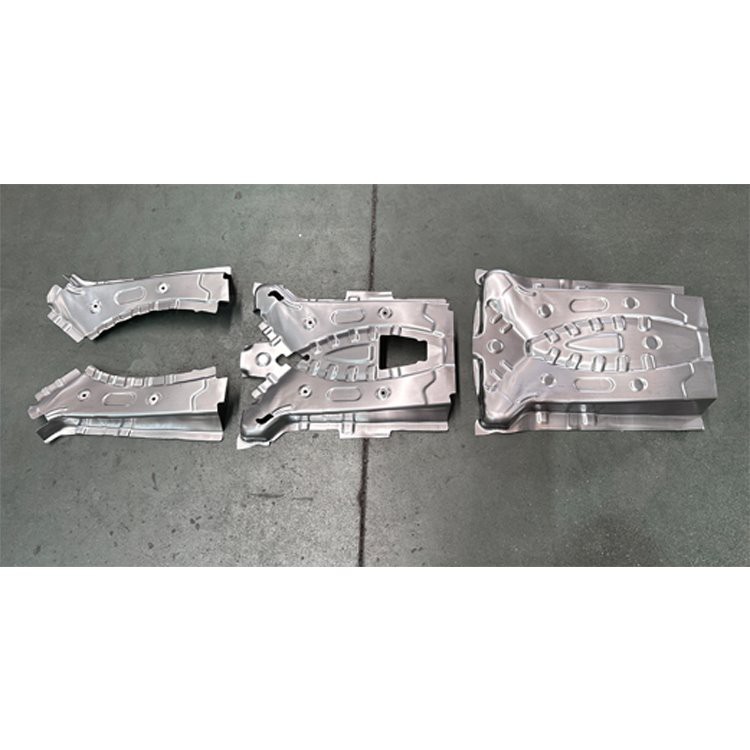

Case Study 2: Sheet Metal Progressive Tool
A sheet metal fabrication shop was producing deep draw parts using a Sheet Metal Progressive Tool. They were experiencing problems with the sheet metal sticking to the die, which led to part defects and increased downtime for tool cleaning. By switching to a lubricant with better anti-welding properties, they were able to eliminate the sticking issue, improve the production efficiency, and reduce the scrap rate.
Case Study 3: Casting Progressive Die
A foundry was using a casting progressive die to produce deep draw parts from cast materials. They were using an oil-based lubricant, but they were having difficulties in removing the lubricant from the parts after the forming process. They switched to a water-based lubricant, which not only provided good lubrication but also made the cleaning process much easier. This resulted in improved part quality and reduced environmental impact Casting Progressive Die.
Conclusion
Choosing the right lubricant for deep draw parts production is a critical decision that can have a significant impact on the quality of the parts, the tool life, and the production efficiency. By considering factors such as the material of the sheet metal, drawing ratio, tooling material, production volume, and environmental and safety requirements, you can select a lubricant that meets your specific needs.
Testing and evaluating the lubricants in your production environment is essential to ensure optimal performance. Real-world case studies have shown that the right lubricant can solve common problems in deep drawing, such as part defects, tool wear, and production inefficiencies.
If you are in the market for high-quality deep draw parts and need advice on lubricant selection, feel free to contact us for a consultation. We are a leading deep draw parts supplier with extensive experience in the industry, and we are committed to providing our customers with the best solutions for their production needs.
References
- "Metal Forming Lubrication: Principles and Practice" by George E. Totten and Michael J. McGuire
- "Handbook of Lubrication and Tribology, Volume III: Applications" edited by Bhushan Bharat
- "Deep Drawing of Sheet Metals: Fundamentals and Applications" by K. Narasimhan