Hey there! I'm from a high speed stamping supply company, and today I wanna chat about how high speed stamping deals with different grain orientations in materials. It's a pretty crucial topic in our line of work, so let's dig in!
First off, let's talk about what grain orientation is. In metals, the grains are like tiny building blocks. They form in a certain pattern during the manufacturing process of the metal sheet. The way these grains are aligned can have a huge impact on how the material behaves when we're stamping it.
When we're doing high speed stamping, we're dealing with a whole bunch of different materials, each with its own unique grain orientation. Some materials might have a random grain orientation, while others could have a very distinct direction. And this can make a big difference in the stamping process.
One of the main challenges we face with different grain orientations is the way the material deforms. Metals with a strong grain orientation tend to deform more easily in the direction of the grains. This means that if we're not careful, we could end up with parts that are warped or have uneven edges. For example, if we're stamping a flat piece of metal with a distinct grain direction and we try to bend it perpendicular to the grains, it might crack or split.
So, how do we handle this? Well, one of the first things we do is analyze the material before we start stamping. We use a variety of techniques to determine the grain orientation, such as microscopy or X-ray diffraction. This allows us to understand the material's properties and plan our stamping process accordingly.
Once we know the grain orientation, we can adjust our stamping tools and processes. For instance, we might change the angle of the punch or the die to align with the grain direction. This helps to reduce the stress on the material and ensures a more uniform deformation. We also pay close attention to the speed and force of the stamping operation. By controlling these parameters, we can minimize the risk of cracking or other defects.
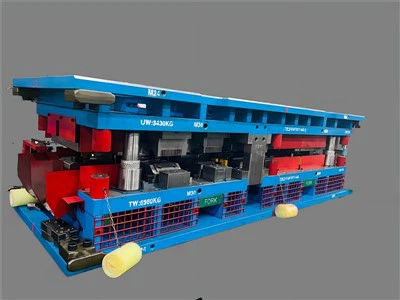
Another important factor is the design of the stamping tools. At our company, we have a wide range of Metal Stamping Tool And Die options that are specifically designed to handle different grain orientations. These tools are made with high precision and quality materials to ensure a smooth and efficient stamping process.
For example, our High Precision Stamping Die is engineered to provide accurate and consistent results, even when working with materials with complex grain patterns. It has a special surface finish that reduces friction and wear, which is especially important when stamping at high speeds.
In addition to the tool design, we also use advanced lubrication techniques. Lubricants play a crucial role in high speed stamping, especially when dealing with different grain orientations. They help to reduce friction between the material and the stamping tools, which can prevent galling and improve the surface quality of the stamped parts. We carefully select the lubricants based on the material and the stamping process to ensure optimal performance.
Now, let's talk about some of the specific applications where handling different grain orientations is important. One of the most common applications is in the automotive industry. Cars are made up of thousands of stamped parts, and each one needs to be of the highest quality. The grain orientation of the metal used in these parts can affect their strength, durability, and appearance. By using high speed stamping techniques that take into account the grain orientation, we can produce parts that meet the strict requirements of the automotive industry.
Another application is in the electronics industry. Electronic devices are becoming smaller and more complex, and the stamped parts used in them need to be highly precise. The grain orientation of the metal can affect the electrical conductivity and mechanical properties of these parts. Our high speed stamping processes are designed to handle these challenges and produce parts that are reliable and efficient.
In the aerospace industry, the requirements are even more stringent. The parts used in aircraft need to be extremely strong and lightweight. The grain orientation of the metal can have a significant impact on these properties. By carefully controlling the stamping process and taking into account the grain orientation, we can produce parts that meet the high standards of the aerospace industry.
We also offer Compound Tool And Progressive Tool solutions that are ideal for handling different grain orientations in high volume production. These tools allow us to perform multiple stamping operations in a single pass, which increases efficiency and reduces costs.
In conclusion, handling different grain orientations in materials is a complex but essential part of high speed stamping. At our company, we have the expertise and technology to analyze the grain orientation of the materials we work with and adjust our stamping processes accordingly. By using high precision tools, advanced lubrication techniques, and careful process control, we can produce high quality stamped parts that meet the needs of a wide range of industries.


If you're in the market for high speed stamping services or have any questions about how we handle different grain orientations, don't hesitate to get in touch. We'd love to have a chat with you and see how we can help with your stamping needs.
References
- "Metal Forming Handbook: Processes and Applications" by G. E. Dieter
- "Stamping Die Design Handbook" by Peter Ulintz