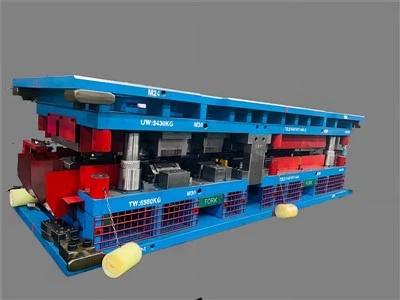
In the realm of manufacturing, prototype dies play a pivotal role in product development and production. As a seasoned prototype die supplier, I've witnessed firsthand the critical nature of die accuracy and its far - reaching implications for various industries. In this blog, I'll delve into the factors that influence the accuracy of a prototype die, the methods to measure it, and why it matters in the real - world manufacturing scenario.
Factors Affecting the Accuracy of a Prototype Die
Material Selection
The choice of material for a prototype die is fundamental to its accuracy. Different materials possess distinct properties such as hardness, toughness, and thermal conductivity. For instance, high - speed steel is often favored for its excellent wear resistance and high hardness, which can maintain the die's shape and dimensions over multiple stamping operations. On the other hand, carbide materials offer even greater hardness and wear resistance, making them suitable for applications where extreme precision and long - term durability are required.
However, the material's properties also need to be balanced with the manufacturing process. Some materials may be more difficult to machine, which can introduce errors during the die - making process. Therefore, as a prototype die supplier, we carefully evaluate the material based on the specific requirements of the project, including the type of metal to be stamped, the production volume, and the desired level of accuracy.
Manufacturing Process
The manufacturing process of a prototype die is a complex and multi - step operation that can significantly impact its accuracy. Precision machining techniques such as CNC (Computer Numerical Control) milling and EDM (Electrical Discharge Machining) are commonly used to create the intricate shapes and features of a die.


CNC milling allows for high - precision cutting of the die material based on a pre - programmed design. The accuracy of CNC milling depends on factors such as the quality of the machine tool, the cutting tools used, and the programming skills of the operator. Any small error in the programming or the machine's operation can lead to deviations in the die's dimensions.
EDM, on the other hand, is a non - traditional machining method that uses electrical discharges to erode the material. It is particularly useful for creating complex shapes and fine details that are difficult to achieve with conventional machining. However, EDM also has its limitations, such as the potential for surface roughness and the need for careful control of the electrical parameters to ensure accurate material removal.
Design and Engineering
A well - designed prototype die is the foundation of accuracy. The design process involves considering various factors, including the part geometry, the stamping process, and the material flow. For example, in a Compound Tool And Progressive Tool, the layout of the stations and the sequencing of the operations need to be carefully planned to ensure that the part is formed accurately and efficiently.
Advanced CAD (Computer - Aided Design) and CAE (Computer - Aided Engineering) tools are used to simulate the stamping process and predict potential issues such as springback, wrinkling, and cracking. By analyzing the simulation results, the design can be optimized to minimize these problems and improve the accuracy of the final part.
Measuring the Accuracy of a Prototype Die
Dimensional Inspection
Dimensional inspection is the most straightforward method to measure the accuracy of a prototype die. This involves using precision measuring instruments such as calipers, micrometers, and coordinate measuring machines (CMMs). Calipers and micrometers are handheld tools that can provide quick and accurate measurements of basic dimensions such as length, width, and thickness.
CMMs, on the other hand, are highly accurate and automated measuring devices that can measure the three - dimensional coordinates of points on the die surface. They are capable of measuring complex geometries with high precision and can generate detailed reports of the die's dimensions, including any deviations from the design specifications.
Form and Surface Finish Inspection
In addition to dimensional accuracy, the form and surface finish of a prototype die also play an important role in its performance. Form errors such as flatness, straightness, and roundness can affect the stamping process and the quality of the final part. Surface finish, on the other hand, can influence the material flow and the friction between the die and the metal sheet.
Optical measurement techniques such as laser scanning and profilometry are commonly used to inspect the form and surface finish of a die. Laser scanning can create a three - dimensional model of the die surface, allowing for detailed analysis of its form and any surface irregularities. Profilometry measures the surface roughness and can provide information about the surface texture, which is crucial for ensuring proper lubrication and material flow during stamping.
The Importance of Prototype Die Accuracy in Manufacturing
Product Quality
The accuracy of a prototype die directly affects the quality of the stamped parts. A precise die can produce parts with consistent dimensions and excellent surface finish, which is essential for meeting the design requirements and the quality standards of the end - product. For example, in the automotive industry, high - precision stamped parts are used in critical components such as engine blocks and transmission systems. Any deviation in the part dimensions can lead to assembly issues and reduced performance of the vehicle.
Production Efficiency
Accurate prototype dies can also improve production efficiency. A well - designed and precise die can reduce the number of rejects and rework, which saves time and resources. It can also increase the production speed by allowing for faster stamping operations without sacrificing quality. In addition, accurate dies require less maintenance and adjustment, which further reduces downtime and increases the overall productivity of the manufacturing process.
Cost - Effectiveness
While the initial cost of a high - precision prototype die may be higher, it can result in significant cost savings in the long run. By producing high - quality parts with fewer rejects and rework, the overall production cost is reduced. Moreover, the longer lifespan of an accurate die means that it can be used for a larger number of stamping operations before needing to be replaced, which also contributes to cost - effectiveness.
Real - World Examples of Prototype Die Accuracy
Aerospace Industry
In the aerospace industry, the demand for high - precision stamped parts is extremely high. Prototype dies are used to produce components such as aircraft wings, fuselage sections, and engine parts. These parts need to have precise dimensions and excellent surface finish to ensure the safety and performance of the aircraft. For example, a small deviation in the thickness of a wing skin can affect the aerodynamics of the aircraft and lead to increased fuel consumption.
Electronics Industry
The electronics industry also relies heavily on accurate prototype dies for the production of components such as printed circuit boards (PCBs) and connectors. These components require tight tolerances to ensure proper electrical connectivity and functionality. A high - precision die can produce PCBs with fine traces and accurate hole sizes, which is crucial for the miniaturization and performance of electronic devices.
Conclusion
As a prototype die supplier, we understand the critical importance of die accuracy in the manufacturing process. The accuracy of a prototype die is influenced by multiple factors, including material selection, manufacturing process, and design. By using advanced manufacturing techniques, precision measuring instruments, and sophisticated design tools, we can ensure that our prototype dies meet the highest standards of accuracy.
If you are in need of high - quality prototype dies for your manufacturing project, we invite you to contact us for a detailed discussion. Our team of experts will work closely with you to understand your requirements and provide you with the best solutions. Whether you need a Compound Tool And Progressive Tool, a High Precision Stamping Die, or a Metal Stamping Tool And Die, we have the experience and expertise to deliver accurate and reliable products.
References
- Groover, M. P. (2010). Fundamentals of Modern Manufacturing: Materials, Processes, and Systems. Wiley.
- Kalpakjian, S., & Schmid, S. R. (2013). Manufacturing Engineering and Technology. Pearson.
- DeGarmo, E. P., Black, J. T., & Kohser, R. A. (2003). Materials and Processes in Manufacturing. Wiley.