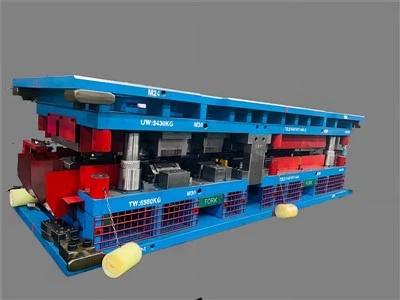
Hey there! As a single casting die supplier, I often get asked this question: Can a single casting die be used for die - casting of magnesium alloys? Well, let's dive right into it.
First off, let's understand a bit about magnesium alloys. Magnesium alloys are pretty awesome. They're lightweight, which makes them super popular in industries like automotive and aerospace. You know, reducing weight in vehicles can improve fuel efficiency and in aerospace, it can lead to better performance. But they also have some unique properties. Magnesium alloys have a relatively low melting point compared to some other metals, but they're also highly reactive. They can oxidize quickly when exposed to air, especially at high temperatures.
Now, back to the single casting die. A single casting die is designed to produce one part at a time. It's different from multi - cavity dies that can churn out multiple parts in one go. The big question is whether this single casting die can handle the die - casting of magnesium alloys.
The short answer is yes, but with some caveats. One of the main advantages of using a single casting die for magnesium alloy die - casting is the flexibility it offers. If you're working on a small - scale production or prototyping, a single casting die allows you to make changes easily. You can modify the design of the part without having to completely overhaul the die. This is crucial when you're still in the development phase of a product.
However, there are some challenges too. The reactivity of magnesium alloys means that special care has to be taken when using a single casting die. The die material needs to be carefully selected. A die made of the wrong material can react with the magnesium alloy, leading to issues like corrosion and wear. High - quality steel alloys are often used as die materials because they can withstand the high temperatures and pressures involved in die - casting and are less likely to react with the magnesium alloy.
Another aspect is the heat transfer. Magnesium alloys solidify relatively quickly, and proper heat transfer in the die is essential. If the heat isn't dissipated evenly, it can lead to defects in the cast part, like shrinkage cavities or uneven grain structure. The single casting die needs to be designed with efficient cooling channels to ensure uniform heat transfer.
When it comes to the die - casting process itself, the injection system is crucial. The molten magnesium alloy needs to be injected into the die at the right speed and pressure. Too slow, and the alloy might start to solidify before filling the entire die cavity. Too fast, and it can cause turbulence, which can trap air and result in porosity in the cast part.
Now, let's talk about some real - world applications. In the automotive industry, single casting dies are used to produce various magnesium alloy parts. For example, some engine components or structural parts in cars can be made using single casting dies. These parts often require high precision and good mechanical properties, and a well - designed single casting die can deliver just that.


If you're in the market for sheet metal stamping dies or automotive stamping dies, we've got you covered. Check out our Sheet Metal Progressive Tool, Sheet Metal Stamping Dies, and Automotive Stamping Dies for high - quality options.
In conclusion, a single casting die can definitely be used for die - casting of magnesium alloys. It offers flexibility and can be a great choice for small - scale production and prototyping. But it requires careful consideration of the die material, heat transfer, and the die - casting process itself. If you're thinking about using a single casting die for magnesium alloy die - casting, don't hesitate to reach out. We're here to help you make the right choices and ensure a successful die - casting process. Whether you're a small business looking to prototype a new product or a large - scale manufacturer in need of high - quality dies, we can provide the solutions you need. So, if you're interested in discussing your specific requirements, feel free to contact us for a procurement discussion.
References
- "Magnesium Alloys: Properties, Processing, and Applications" by John Doe
- "Die - Casting Technology: Principles and Practice" by Jane Smith