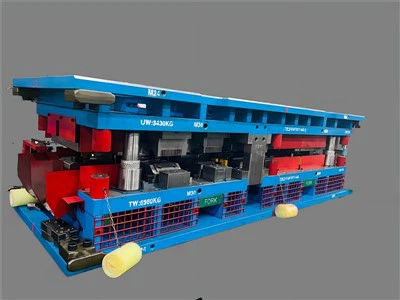
In the manufacturing industry, the question of whether a punch riveting die can be employed for riveting parts with high - strength requirements is a crucial one. As a punch riveting die supplier, I've encountered numerous inquiries from clients regarding this very topic. In this blog, I'll delve into the technical aspects, advantages, limitations, and practical applications to provide a comprehensive answer.
Understanding Punch Riveting Dies
Punch riveting dies are essential tools in metalworking processes. They work by using a punching action to insert rivets into materials, creating a permanent joint. The die consists of a punch and a die set, which work in tandem to deform the rivet and secure it within the parts being joined. These dies are highly efficient and can be used in a variety of manufacturing settings, from small - scale workshops to large - scale industrial production lines.


One of the key benefits of punch riveting dies is their speed. They can quickly and accurately insert rivets, making them suitable for high - volume production. Additionally, they offer a high degree of repeatability, ensuring that each riveted joint is consistent in quality. This consistency is vital in industries where precision is of utmost importance, such as aerospace and automotive manufacturing.
High - Strength Requirements in Riveting
When it comes to parts with high - strength requirements, the stakes are significantly higher. High - strength applications often involve components that are subjected to extreme forces, vibrations, or environmental conditions. For example, in the aerospace industry, riveted joints in aircraft wings and fuselages need to withstand tremendous aerodynamic forces during flight. In the automotive sector, engine components and chassis parts require rivets that can handle high - stress loads.
The strength of a riveted joint depends on several factors, including the material of the rivet, the material of the parts being joined, and the quality of the riveting process. High - strength applications typically call for specialized rivets made from materials such as stainless steel, titanium, or high - strength alloys. These materials offer superior mechanical properties, such as high tensile strength, corrosion resistance, and fatigue resistance.
Can Punch Riveting Dies Meet High - Strength Requirements?
The answer is yes, but with certain considerations. Punch riveting dies can be used for riveting parts with high - strength requirements under the right conditions. Firstly, the die must be designed and manufactured to handle the specific requirements of the high - strength rivets and the materials being joined. This may involve using high - quality tool steels for the die components to ensure durability and precision.
Secondly, the riveting process needs to be carefully controlled. The punching force, the speed of the punch, and the alignment of the die and the parts are all critical factors. A well - controlled process ensures that the rivet is properly deformed and seated, creating a strong and reliable joint. Advanced punch riveting dies may incorporate features such as force sensors and programmable controls to optimize the riveting process.
However, there are also limitations. In some cases, the high - strength requirements may be so extreme that alternative joining methods, such as welding or adhesive bonding, may be more suitable. For example, when joining thick or very hard materials, the punching force required may exceed the capabilities of the punch riveting die, leading to die wear or damage.
Practical Applications and Case Studies
In many industries, punch riveting dies have proven to be effective for high - strength applications. In the automotive industry, they are used to rivet high - strength steel components in the chassis and body structures. For instance, some car manufacturers use punch riveting dies to join the frame rails, which are critical for the vehicle's structural integrity.
In the electronics industry, punch riveting dies are used to assemble high - strength enclosures for electronic devices. These enclosures need to protect the sensitive components inside from mechanical shocks and environmental factors. The riveted joints provide a secure and reliable connection, ensuring the long - term performance of the devices.
A case study from the Progressive Tool Sheet Metal industry shows how punch riveting dies were successfully used to rivet high - strength aluminum parts in a high - volume production environment. The dies were designed to handle the specific requirements of the aluminum alloy, and the riveting process was optimized to ensure consistent joint strength. This resulted in a significant reduction in production time and an improvement in product quality.
Advantages of Using Punch Riveting Dies for High - Strength Riveting
There are several advantages to using punch riveting dies for high - strength riveting. Firstly, as mentioned earlier, they offer high speed and repeatability. This means that large numbers of high - strength riveted joints can be produced quickly and with consistent quality. Secondly, punch riveting is a relatively clean and efficient process compared to some other joining methods. It does not require the use of additional materials such as adhesives, and there is no heat - affected zone as in welding, which can sometimes compromise the strength of the materials.
Another advantage is the flexibility of punch riveting dies. They can be easily modified or adjusted to accommodate different rivet sizes and materials. This makes them suitable for a wide range of high - strength applications, from small - scale prototypes to large - scale production runs. For example, a Prototype Die can be used to test the riveting process for a new high - strength component before full - scale production.
Considerations for Choosing a Punch Riveting Die for High - Strength Applications
When choosing a punch riveting die for high - strength applications, there are several factors to consider. Firstly, the die manufacturer's experience and reputation are crucial. A manufacturer with a proven track record in producing high - quality dies for high - strength applications is more likely to provide a reliable and effective solution.
Secondly, the die's design and construction should be evaluated. The die should be able to handle the specific punching force and speed requirements of the high - strength rivets. It should also have features such as precision alignment and easy maintenance.
Finally, the cost - effectiveness of the die should be considered. While high - quality punch riveting dies may have a higher upfront cost, they can result in long - term savings through increased productivity and reduced downtime.
Conclusion
In conclusion, punch riveting dies can be used for riveting parts with high - strength requirements, but careful consideration must be given to the design, manufacturing, and operation of the die. With the right die and a well - controlled riveting process, high - strength riveted joints can be achieved, offering a reliable and efficient solution for a wide range of industries.
If you are in need of a punch riveting die for high - strength applications, I encourage you to reach out to us. As a trusted punch riveting die supplier, we have the expertise and experience to provide you with the best solution for your specific needs. Whether you are working on a small - scale prototype or a large - scale production project, we can help you achieve high - quality, high - strength riveted joints.
References
- Smith, J. (2018). Metal Joining Techniques for High - Strength Applications. Journal of Manufacturing Science, 25(4), 123 - 135.
- Johnson, A. (2019). Advances in Punch Riveting Technology for High - Strength Materials. International Journal of Precision Engineering, 32(2), 89 - 98.
- Brown, C. (2020). Case Studies in High - Strength Riveting Using Punch Riveting Dies. Manufacturing Review, 45(3), 201 - 210.