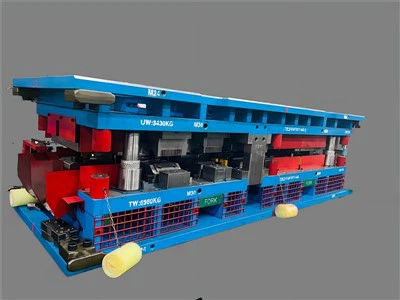
Hey there! As a supplier of single casting dies, I often get asked about the materials commonly used to make these dies. Well, let's dive right into it and explore the different materials that play a crucial role in the manufacturing of single casting dies.
Steel
Steel is hands - down one of the most widely used materials for single casting dies. There are several reasons for its popularity. First off, it has excellent strength. This means that the dies can withstand the high pressures and forces involved in the casting process without deforming easily. High - strength steel can handle repeated impacts and loads, which is essential as single casting dies are often used in high - volume production environments.
Tool steel is a specific type of steel that is frequently employed. It has special properties like high hardness, good wear resistance, and the ability to maintain its shape at high temperatures. For example, H13 tool steel is a common choice. It can resist thermal fatigue, which occurs when the die is repeatedly heated and cooled during the casting process. This helps in reducing cracks and extending the die's lifespan.
Another advantage of steel is its machinability. It can be easily cut, shaped, and drilled into the precise dimensions required for the single casting die. Manufacturers can use various machining techniques such as milling, turning, and grinding to create complex die geometries. This makes it possible to produce dies that can create intricate castings with high precision.


If you're interested in related products, you might want to check out our Steel sheet progressive die and Automotive Metal Stamping Die.
Aluminum
Aluminum is also a popular material for single casting dies, especially for applications where weight is a concern. Aluminum is much lighter than steel, which makes the dies easier to handle and transport. This can be a big advantage in smaller workshops or for applications where quick die changes are required.
Despite its low weight, aluminum can still offer decent strength. There are high - strength aluminum alloys available that can withstand the stresses of the casting process. These alloys have good thermal conductivity, which means they can transfer heat quickly. This is beneficial as it helps in faster cooling of the castings, reducing the cycle time and improving the overall productivity of the casting process.
Aluminum is also relatively inexpensive compared to some other materials. This makes it a cost - effective option for manufacturers, especially those who are just starting out or are working on a tight budget. However, it does have some limitations. Aluminum is not as hard as steel, so it may wear out more quickly in high - wear applications. But for low - volume or less demanding casting jobs, it can be a great choice.
Copper - Based Alloys
Copper - based alloys, such as beryllium copper, are known for their excellent thermal conductivity and high electrical conductivity. In single casting die applications, the high thermal conductivity is a major plus. It allows for rapid heat transfer from the molten metal to the die, which helps in achieving uniform solidification of the casting. This results in better - quality castings with fewer defects.
These alloys also have good corrosion resistance, which is important, especially when the casting process involves the use of certain chemicals or molten metals that could potentially corrode the die. Beryllium copper, in particular, has high strength and hardness, as well as good fatigue resistance. This enables the dies to withstand repeated use over a long period of time.
However, it's worth noting that working with beryllium copper requires special safety precautions due to the toxicity of beryllium. So, proper handling and safety measures need to be in place during the manufacturing and use of dies made from this alloy.
Titanium
Titanium is a high - performance material that is sometimes used for single casting dies, especially in specialized applications. Titanium has an extremely high strength - to - weight ratio. This means that dies made from titanium can be very strong while still being relatively lightweight.
It also has excellent corrosion resistance. Titanium dies can be used in harsh environments where other materials might corrode quickly. In addition, titanium can handle high temperatures without significant deformation, which makes it suitable for casting processes that involve high - temperature molten metals.
One drawback of titanium is its high cost. It is more expensive than steel, aluminum, and many other common die - making materials. Also, titanium is difficult to machine due to its high strength and low thermal conductivity. This can increase the manufacturing cost and time of the dies. But for applications where its unique properties are essential, such as in the aerospace or medical industries, titanium can be a great choice.
Choosing the Right Material
When it comes to choosing the right material for a single casting die, several factors need to be considered. The type of casting process is a major factor. For example, if it's a high - pressure die - casting process, a material with high strength like steel or titanium might be more suitable. On the other hand, for a low - pressure or gravity - casting process, aluminum could be a viable option.
The volume of production also matters. For high - volume production, a wear - resistant material with a long lifespan is preferred. Materials like tool steel or beryllium copper are good choices here. For low - volume production, cost might be a more important factor, and aluminum could be the way to go.
The complexity of the casting also plays a role. If the casting has intricate details, a material that is easy to machine, like steel or aluminum, would be better. The material of the cast part itself is also crucial. For example, if the cast part is made of a corrosive metal, a die material with good corrosion resistance, such as titanium or a copper - based alloy, should be selected.
As a single casting die supplier, I understand that each customer's needs are unique. That's why we offer a wide range of die materials to meet different requirements. Whether you're looking for a high - strength steel die for a large - scale production or a lightweight aluminum die for a small - scale project, we've got you covered.
If you're in the market for a single casting die and want to discuss your specific needs, don't hesitate to reach out. We can help you choose the right material and design a die that will give you the best results for your casting process.
References
- "Materials Science and Engineering: An Introduction" by William D. Callister Jr. and David G. Rethwisch
- "Casting, Forming and Welding" by Amitabh Ghosh and Ashok Kumar Mallik
- Industry reports and research papers on die - making materials