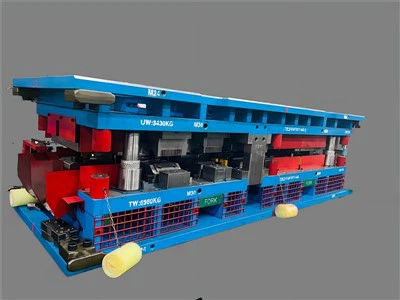
As a seasoned supplier of Transfer Dies, I've witnessed firsthand the intricate relationship between die surface hardness and the overall performance of these essential industrial tools. Transfer Dies play a pivotal role in modern manufacturing, especially in the automotive industry, where precision and efficiency are paramount. In this blog, I'll delve into the profound influence of die surface hardness on Transfer Dies, exploring its impact on various aspects such as tool life, part quality, and production efficiency.

Understanding Transfer Dies
Before we dive into the influence of die surface hardness, let's briefly understand what Transfer Die are. Transfer Dies are used in metal stamping processes to transfer a workpiece from one station to another, performing multiple operations such as punching, bending, and forming in a single pass. They are highly efficient and can produce complex parts with high precision, making them a popular choice in industries like automotive manufacturing.

The Role of Die Surface Hardness
Die surface hardness is a critical factor that affects the performance and longevity of Transfer Dies. Hardness refers to the ability of a material to resist deformation, wear, and abrasion. In the context of Transfer Dies, a harder die surface can withstand the high pressures and forces exerted during the stamping process, resulting in several benefits.
1. Extended Tool Life
One of the most significant advantages of a hard die surface is its ability to extend the tool life of Transfer Dies. During the stamping process, the die surface is subjected to repeated impacts and friction, which can cause wear and damage over time. A harder die surface is more resistant to these forces, reducing the rate of wear and extending the lifespan of the die. This not only reduces the frequency of die replacements but also lowers the overall production costs.
For example, in a high-volume automotive stamping operation, a Transfer Die with a hard surface can produce thousands of parts before requiring regrinding or replacement, compared to a die with a softer surface that may need to be replaced after a few hundred parts. This significant difference in tool life can have a substantial impact on the profitability of the manufacturing process.
2. Improved Part Quality
Die surface hardness also plays a crucial role in determining the quality of the stamped parts. A hard die surface can maintain its shape and dimensions more accurately during the stamping process, resulting in parts with consistent dimensions and high precision. This is particularly important in industries like automotive manufacturing, where tight tolerances are required to ensure the proper fit and function of the parts.
In addition, a hard die surface can reduce the occurrence of surface defects such as scratches, dents, and burrs on the stamped parts. These defects can not only affect the appearance of the parts but also compromise their functionality and durability. By using a Transfer Die with a hard surface, manufacturers can produce high-quality parts that meet the strictest industry standards.

3. Enhanced Production Efficiency
Another benefit of a hard die surface is its ability to enhance production efficiency. A harder die surface can withstand higher stamping speeds and pressures, allowing manufacturers to increase the production rate without sacrificing part quality. This is particularly important in high-volume manufacturing operations, where even a small increase in production efficiency can result in significant cost savings.
In addition, a hard die surface requires less frequent maintenance and regrinding, reducing the downtime associated with die servicing. This means that manufacturers can keep their production lines running continuously, maximizing the output and minimizing the production costs.
Factors Affecting Die Surface Hardness
Several factors can affect the surface hardness of Transfer Dies, including the material used to make the die, the heat treatment process, and the surface finishing techniques.
1. Die Material
The choice of die material is one of the most important factors that determine the surface hardness of Transfer Dies. Different materials have different hardness properties, and the selection of the appropriate material depends on the specific requirements of the stamping process.
Common materials used for Transfer Dies include tool steels, such as D2, A2, and H13, which are known for their high hardness, wear resistance, and toughness. These materials can be heat-treated to achieve the desired hardness level, making them suitable for a wide range of stamping applications.
2. Heat Treatment
Heat treatment is a critical process that can significantly affect the surface hardness of Transfer Dies. The heat treatment process involves heating the die to a specific temperature and then cooling it at a controlled rate to achieve the desired hardness and microstructure.
There are several types of heat treatment processes, including annealing, quenching, and tempering. Each process has its own advantages and disadvantages, and the selection of the appropriate heat treatment process depends on the specific requirements of the die material and the stamping process.
3. Surface Finishing
Surface finishing techniques can also affect the surface hardness of Transfer Dies. A smooth and polished die surface can reduce friction and wear, resulting in a longer tool life and better part quality. There are several surface finishing techniques available, including grinding, polishing, and coating.
Grinding is a common surface finishing technique that involves using a grinding wheel to remove material from the die surface, resulting in a smooth and flat surface. Polishing is a more advanced surface finishing technique that involves using a polishing compound to achieve an even smoother and more reflective surface. Coating is another surface finishing technique that involves applying a thin layer of material, such as titanium nitride or chromium nitride, to the die surface to improve its hardness, wear resistance, and corrosion resistance.
Balancing Hardness and Other Properties
While a hard die surface offers several benefits, it's important to note that hardness is not the only factor that affects the performance of Transfer Dies. Other properties, such as toughness, ductility, and thermal conductivity, also play a crucial role in determining the overall performance of the die.
For example, a die that is too hard may be brittle and prone to cracking, especially under high-stress conditions. On the other hand, a die that is too soft may wear out quickly and produce parts with poor quality. Therefore, it's important to strike a balance between hardness and other properties to ensure the optimal performance of the Transfer Die.
Conclusion
In conclusion, die surface hardness has a profound influence on the performance and longevity of Transfer Dies. A hard die surface can extend the tool life, improve the part quality, and enhance the production efficiency of the stamping process. However, it's important to consider other factors, such as the die material, heat treatment process, and surface finishing techniques, to ensure the optimal performance of the Transfer Die.
As a Transfer Die supplier, we understand the importance of die surface hardness and its impact on the manufacturing process. We use the latest materials and technologies to produce high-quality Transfer Dies with the optimal surface hardness and other properties. If you're looking for a reliable Transfer Die supplier, we invite you to contact us to discuss your specific requirements and explore how we can help you achieve your manufacturing goals.
References
- Kalpakjian, S., & Schmid, S. R. (2013). Manufacturing Engineering and Technology. Pearson.
- Dieter, G. E. (1986). Mechanical Metallurgy. McGraw-Hill.
- Groover, M. P. (2010). Fundamentals of Modern Manufacturing: Materials, Processes, and Systems. Wiley.