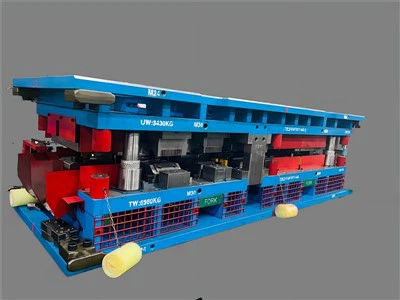
In the dynamic landscape of high-speed stamping, one critical factor that significantly impacts the process and its outcomes is the material thickness. As a seasoned high-speed stamping supplier, I've witnessed firsthand how material thickness can influence various aspects of high-speed stamping, from tooling design to the quality of the final products. In this blog, I'll delve into the multifaceted influence of material thickness on high-speed stamping, drawing on my years of experience in the industry.
Impact on Tooling Design
The material thickness is a fundamental consideration in the design of stamping tools. When dealing with thinner materials, the stamping tools can be designed with more precision and finer details. For instance, in the case of Progressive Tool Sheet Metal [/stamping-die/other-metal-stamping-dies/progressive-tool-sheet-metal.html], thinner materials allow for more intricate patterns and shapes to be stamped out. The tooling can be engineered with smaller clearances between the punch and the die, which is crucial for achieving high precision in the stamping process.


On the other hand, thicker materials pose different challenges to tooling design. The increased thickness requires more robust tooling to withstand the higher forces involved in the stamping process. The punches and dies need to be made of high-strength materials and have a larger cross-sectional area to prevent premature wear and breakage. High Precision Stamping Die [/stamping-die/other-metal-stamping-dies/high-precision-stamping-die.html] used for thicker materials often have a more substantial construction to ensure durability and accuracy.
Moreover, the design of the stamping tool also needs to account for the material's flow characteristics during the stamping process. Thicker materials tend to have more resistance to deformation, which can lead to uneven material flow and potential defects in the stamped parts. To address this, the tooling design may incorporate features such as reliefs and radii to facilitate smoother material flow and reduce the risk of cracking or tearing.
Influence on Stamping Speed
Material thickness has a direct impact on the stamping speed. Thinner materials generally allow for higher stamping speeds due to their lower resistance to deformation. The punches can penetrate the material more easily, and the cycle time can be reduced, resulting in increased productivity. In high-speed stamping operations, the ability to stamp at higher speeds is crucial for meeting production targets and reducing costs.
However, as the material thickness increases, the stamping speed needs to be adjusted accordingly. Thicker materials require more force to deform, and stamping at high speeds can lead to excessive tool wear, increased energy consumption, and even damage to the stamping equipment. Therefore, a balance needs to be struck between stamping speed and material thickness to ensure optimal performance and quality.
Effect on Product Quality
The quality of the stamped products is also significantly influenced by the material thickness. Thinner materials are more prone to wrinkling and tearing during the stamping process, especially if the tooling design or stamping parameters are not properly optimized. Wrinkles can affect the dimensional accuracy and surface finish of the parts, while tears can render the parts unusable.
To prevent these issues, special care needs to be taken when stamping thinner materials. This may include using appropriate lubricants to reduce friction, adjusting the stamping pressure and speed, and ensuring proper alignment of the tooling. Additionally, the use of advanced stamping techniques such as blank holding and drawbeads can help control the material flow and minimize the risk of wrinkling and tearing.
In contrast, thicker materials are less likely to wrinkle but may be more susceptible to other quality issues such as cracking and poor surface finish. The higher forces involved in stamping thicker materials can cause internal stresses in the parts, which may lead to cracking over time. To mitigate this, the stamping process may need to be carefully controlled, and the parts may require additional heat treatment or post-processing to relieve the internal stresses.
Cost Considerations
Material thickness also has implications for the overall cost of high-speed stamping. Thicker materials generally cost more per unit weight than thinner materials. Additionally, the tooling design and manufacturing costs for thicker materials are typically higher due to the need for more robust tooling. The increased energy consumption and longer cycle times associated with stamping thicker materials can also contribute to higher production costs.
However, it's important to note that the choice of material thickness is not solely based on cost. The functional requirements of the final product, such as strength, durability, and corrosion resistance, often dictate the appropriate material thickness. In some cases, using a slightly thicker material may be necessary to ensure the long-term performance and reliability of the product, even if it comes at a higher cost.
Case Studies
To illustrate the influence of material thickness on high-speed stamping, let's consider a few case studies. In one project, we were tasked with stamping a series of small, intricate parts from a thin sheet metal. By using a Progressive Tool Sheet Metal [/stamping-die/other-metal-stamping-dies/progressive-tool-sheet-metal.html] and optimizing the stamping parameters, we were able to achieve high precision and a high production rate. The thin material allowed for the creation of detailed features and a smooth surface finish, meeting the customer's strict quality requirements.
In another project, we had to stamp large, heavy-duty parts from a thick steel plate. This required the use of a High Precision Stamping Die [/stamping-die/other-metal-stamping-dies/high-precision-stamping-die.html] with a robust construction. We adjusted the stamping speed and pressure to accommodate the thicker material, and implemented additional quality control measures to ensure the parts were free from defects. Despite the challenges posed by the thick material, we were able to deliver high-quality parts within the specified time frame.
Conclusion
In conclusion, the material thickness plays a crucial role in high-speed stamping, influencing tooling design, stamping speed, product quality, and cost. As a high-speed stamping supplier, it's essential to have a deep understanding of the relationship between material thickness and the stamping process to provide the best possible solutions to our customers.
Whether you're in need of stamping services for thin or thick materials, we have the expertise and experience to meet your requirements. Our team of engineers and technicians is dedicated to optimizing the stamping process to ensure high quality, efficiency, and cost-effectiveness. If you're interested in learning more about our high-speed stamping capabilities or have a specific project in mind, please don't hesitate to contact us for a consultation. We look forward to working with you to achieve your stamping goals.
References
- Smith, J. (2018). High-Speed Stamping: Principles and Practice. Industrial Press Inc.
- Jones, A. (2020). The Impact of Material Properties on Stamping Processes. Journal of Manufacturing Science and Engineering, 142(6), 061007.
- Brown, R. (2019). Tooling Design for High-Speed Stamping. ASME International Mechanical Engineering Congress and Exposition.