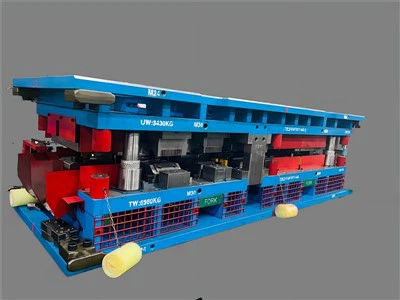
What is the impact resistance of a punch riveting die?
As a supplier of punch riveting dies, I often encounter inquiries from customers about the impact resistance of these dies. Impact resistance is a crucial property that directly affects the performance, durability, and cost - effectiveness of punch riveting dies. In this blog, I will delve into what impact resistance means in the context of punch riveting dies, its significance, and the factors that influence it.
Understanding Impact Resistance
Impact resistance refers to the ability of a punch riveting die to withstand sudden and intense forces without experiencing permanent deformation, cracking, or failure. During the punch riveting process, the die is subjected to high - speed impacts as the punch strikes the rivet and the workpiece. These impacts generate significant stress within the die material. A die with good impact resistance can endure these stresses over multiple cycles without losing its shape or functionality.
Significance of Impact Resistance
1. Product Quality
High impact resistance ensures that the punch riveting die maintains its precise shape and dimensions throughout its service life. This is essential for producing consistent and high - quality riveted joints. If the die deforms due to poor impact resistance, the rivets may not be properly formed, leading to weak joints, misaligned components, and ultimately, defective products.
2. Die Lifespan
A die with excellent impact resistance can withstand a large number of impact cycles before it needs to be replaced. This extends the die's lifespan, reducing the frequency of die changes and the associated costs, including die manufacturing, downtime for die replacement, and labor costs. For example, in a high - volume production environment, a die with long - lasting impact resistance can save a significant amount of money over time.
3. Production Efficiency
When a die has good impact resistance, there are fewer instances of die failure during the production process. This means less downtime for die repairs or replacements, resulting in increased production efficiency. Manufacturers can achieve higher output levels and meet production deadlines more easily.
Factors Affecting Impact Resistance
1. Material Selection
The choice of material for the punch riveting die is one of the most critical factors influencing its impact resistance. Common materials used for punch riveting dies include tool steels, such as D2, A2, and H13. Tool steels are known for their high hardness, wear resistance, and toughness.
For example, H13 steel is a popular choice for punch riveting dies due to its excellent combination of strength, toughness, and heat resistance. It can withstand high - temperature impacts during the riveting process and has good resistance to thermal fatigue. Another option is carbide, which offers extremely high hardness and wear resistance. However, carbide is more brittle than tool steel, so it may not be suitable for applications with high - impact loads unless properly designed and supported. You can learn more about high - quality dies made from such materials at High Precision Stamping Die.
2. Heat Treatment
Heat treatment is a process used to modify the mechanical properties of the die material. Proper heat treatment can significantly improve the impact resistance of the punch riveting die. For instance, quenching and tempering are common heat - treatment processes for tool steels. Quenching involves rapidly cooling the heated steel to increase its hardness, while tempering is used to relieve internal stresses and improve toughness.
If the heat treatment is not done correctly, the die may be too hard and brittle, leading to cracking under impact, or too soft, resulting in premature deformation. Therefore, precise control of the heat - treatment parameters, such as temperature, heating and cooling rates, and holding time, is essential to achieve the optimal balance between hardness and toughness.
3. Die Design
The design of the punch riveting die also plays a crucial role in its impact resistance. A well - designed die distributes the impact forces evenly across its structure, reducing the stress concentration at specific points. For example, rounded corners and smooth transitions in the die design can help to minimize stress risers, which are areas where the stress is significantly higher than the average stress in the material.
In addition, the shape and size of the punch and the die cavity should be carefully designed to ensure proper rivet formation and to reduce the impact forces on the die. Progressive die designs, such as those found in Progressive Sheet Metal Dies, can be optimized to handle high - volume production while maintaining good impact resistance.
4. Operating Conditions
The operating conditions, such as the impact speed, load magnitude, and frequency of impacts, can have a significant impact on the die's impact resistance. Higher impact speeds and loads generally increase the stress on the die, reducing its lifespan. Therefore, it is important to operate the punch riveting machine within the recommended parameters to ensure the longevity of the die.
Lubrication also plays a role in the operating conditions. Proper lubrication reduces friction between the punch, rivet, and die, which can help to dissipate heat and reduce the impact forces. Insufficient lubrication can lead to increased wear and heat generation, potentially causing the die to fail prematurely.
Testing Impact Resistance
To ensure the quality and performance of punch riveting dies, various testing methods can be used to evaluate their impact resistance. One common method is the Charpy impact test, which measures the energy absorbed by the die material when it is subjected to a sudden impact. A higher energy absorption value indicates better impact resistance.
Another approach is to conduct real - world testing in a production environment. By monitoring the die's performance over a large number of impact cycles, manufacturers can assess its durability and identify any potential issues early on. Prototype testing, as described in Prototype Die, can be particularly useful in this regard, allowing for adjustments to be made to the die design or material selection before full - scale production.
Conclusion
In conclusion, the impact resistance of a punch riveting die is a critical factor that affects product quality, die lifespan, and production efficiency. By carefully considering material selection, heat treatment, die design, and operating conditions, manufacturers can ensure that their punch riveting dies have excellent impact resistance. As a punch riveting die supplier, we are committed to providing high - quality dies that meet the specific requirements of our customers. If you are in the market for punch riveting dies or have any questions about their impact resistance, please do not hesitate to contact us for a detailed discussion and to explore potential procurement opportunities.


References
- "Tool and Manufacturing Engineers Handbook", Society of Manufacturing Engineers.
- "Materials Science and Engineering: An Introduction", William D. Callister Jr. and David G. Rethwisch.
- Industry - specific research papers on punch riveting die technology.