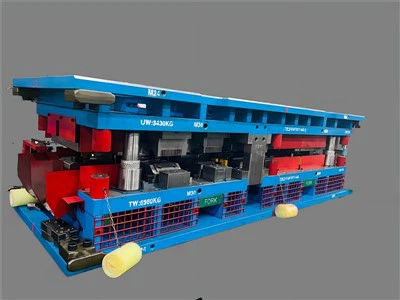
Hey there! As a supplier of Transfer Dies, I've seen firsthand how the properties of materials can have a huge impact on these essential tools. In this blog, I'm gonna break down what these impacts are and why they matter.
First off, let's talk about what a Transfer Die is. A Transfer Die is a specialized tool used in the metal - stamping industry. It allows for the movement of a workpiece from one station to another during the stamping process, enabling complex shapes to be formed efficiently. If you want to know more about Transfer Dies, check out this link: Transfer Die.
One of the most significant material properties that affects a Transfer Die is hardness. Hardness refers to a material's ability to resist deformation, indentation, or scratching. When it comes to Transfer Dies, a high - hardness material is often preferred. Why? Well, during the stamping process, the die is subjected to a lot of pressure. If the material of the die isn't hard enough, it can wear down quickly. This leads to issues like inaccurate part dimensions and a shorter lifespan for the die.
For example, if we're stamping parts from a thick sheet of high - strength steel, a die made from a low - hardness material won't be able to withstand the force. The die surface might start to deform, and the stamped parts may have rough edges or inconsistent shapes. On the other hand, a die made from a high - hardness tool steel, like D2 or A2, can handle the pressure much better. These steels have excellent wear resistance, which means they can maintain their shape and accuracy over a large number of stamping cycles.


Another important property is toughness. Toughness is the ability of a material to absorb energy and deform plastically before fracturing. In a Transfer Die, toughness is crucial because the die experiences shock loads during the stamping process. If a die is too brittle (low toughness), it can crack or break under the impact.
Let's say we're using a Transfer Die to stamp a part with a complex shape that requires multiple hits. A brittle die might develop cracks after just a few cycles. This not only ruins the die but can also cause production delays and increase costs. A tough material, such as some grades of alloy steel, can absorb the shock energy and prevent cracking. It allows the die to withstand the repeated impacts without failing.
The thermal properties of the material also play a big role. During stamping, a significant amount of heat is generated due to the friction between the die and the workpiece. If the material of the die doesn't have good thermal conductivity, the heat can build up in the die. This can lead to thermal expansion, which can change the dimensions of the die and affect the accuracy of the stamped parts.
Moreover, high temperatures can also cause the material to lose its hardness and strength over time. For instance, a die made from a material with poor thermal conductivity might experience localized overheating. This can result in softening of the die surface, leading to premature wear. Materials like copper - based alloys are known for their good thermal conductivity. Using a die insert made from a copper - based alloy can help dissipate the heat more effectively, keeping the die at a more stable temperature.
The chemical properties of the material are equally important. In some stamping applications, the workpiece might be made from a material that is corrosive or reactive. If the die material isn't resistant to these chemicals, it can corrode or react with the workpiece. This can damage the die surface and contaminate the stamped parts.
For example, if we're stamping parts from aluminum alloy, which can be slightly corrosive in certain environments, a die made from a material that isn't corrosion - resistant will start to corrode. This can lead to pitting on the die surface and affect the quality of the stamped aluminum parts. Using a die material with good corrosion resistance, like stainless steel, can prevent this issue and ensure a longer lifespan for the die.
Now, let's consider how these material properties interact with each other. Sometimes, a material might have excellent hardness but low toughness. In this case, while the die might resist wear well, it could be prone to cracking under shock loads. On the other hand, a material with high toughness but low hardness might not be able to maintain its shape accurately during long - term stamping operations.
As a Transfer Die supplier, we need to carefully select the right material based on the specific requirements of the stamping job. We also offer Custom Stamping Dies that can be tailored to the unique needs of our customers. Whether it's a simple part or a complex component, we can choose the appropriate material to ensure the best performance of the die.
In addition to custom stamping dies, we also provide Sheet Metal Progressive Tool. These tools are similar to Transfer Dies in some ways but have their own set of requirements when it comes to material properties. The choice of material for a sheet metal progressive tool also depends on factors like the type of sheet metal being stamped, the complexity of the part, and the production volume.
If you're in the market for a Transfer Die or other stamping tools, it's important to understand how material properties can impact the performance of these tools. The right material can make a huge difference in terms of the quality of the stamped parts, the lifespan of the die, and the overall cost - effectiveness of your production process.
So, if you're looking for high - quality stamping tools that are optimized for the specific material properties of your application, don't hesitate to reach out. We're here to help you find the best solution for your stamping needs. Whether you have a small - scale project or a large - volume production run, we have the expertise and resources to deliver top - notch Transfer Dies and other stamping tools.
In conclusion, the material properties of a Transfer Die have far - reaching impacts on its performance, durability, and the quality of the stamped parts. By carefully considering hardness, toughness, thermal properties, and chemical properties, we can select the most suitable material for each stamping application. If you're interested in learning more or discussing your stamping requirements, feel free to get in touch with us. We're eager to work with you and help you achieve the best results in your stamping operations.
References
- ASM Handbook: Properties and Selection: Irons, Steels, and High - Performance Alloys
- Metal Stamping Handbook by Society of Manufacturing Engineers